
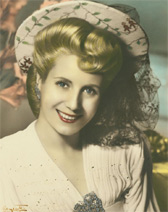
Eva Peron
Evita — The Eternal Icon of Argentina’s Poor | First Lady of Argentina
Born on May 7, 1919
Died on July 26, 1952
Age at death: 33
Profession: Actress, Political Leader
Place of Birth: Los Toldos, Buenos Aires Province, Argentina
Place of Death: Buenos Aires, Argentina
María Eva Duarte de Perón, universally known as Evita, was one of the most extraordinary women Latin America has ever produced. An actress turned political leader, she became a powerful symbol of social justice, women’s rights, and the struggle of the poor. As the second wife of Juan Domingo Perón, she played a decisive role in shaping modern Argentine politics and remains a lasting cultural and political icon.
María Eva Duarte de Perón was born on May 7, 1919, in the town of Los Toldos, Argentina, as the illegitimate child of Juan Duarte and Juana Ibarguren. Duarte, who was already married, later abandoned Eva and her mother, plunging them into severe hardship. At the time, children born out of wedlock were legally and socially marginalized in Argentina. Years later, Evita returned to her birthplace and destroyed her birth records in an attempt to erase the stigma of her origins.
Her greatest dream was to become an actress. After a childhood marked by poverty in small provincial towns, Evita moved to Buenos Aires in the 1930s to pursue her ambitions. She found work at a radio station, gradually building a public profile through radio dramas and performances.
In 1943, she met Juan Domingo Perón, who was then serving as Secretary of Labor and Social Security. Evita became deeply involved in supporting Perón’s political rise, offering him unprecedented public backing and helping to shape his popular image among workers and the poor.
In 1945, Perón was arrested by political rivals who feared his growing popularity. In response, Evita mobilized workers, unions, and supporters, leading to massive demonstrations in Buenos Aires. Approximately 300,000 people gathered to demand Perón’s release, ultimately forcing the government to free him. Shortly afterward, on October 21, 1945, Eva and Juan Perón were married.
Following Perón’s election, Evita’s political influence expanded significantly. Although she held no traditional elected office, she became a central figure in government affairs. As head of social initiatives and later as Minister of Labor, she focused on increasing wages, improving working conditions, and expanding social welfare for Argentina’s poorest citizens. She became a voice for the marginalized and earned deep loyalty from workers, women, and trade unions.
By 1951, Evita began considering a candidacy for Vice President. Her growing power alarmed many military leaders, who strongly opposed the possibility of a woman—and particularly Evita—assuming constitutional authority to succeed the president. Despite this opposition, she received overwhelming public support from workers, unions, and women, a level of enthusiasm that even Perón himself found astonishing.
That same year, Evita’s health began to deteriorate. Although the public was told she had undergone an appendectomy, she was in fact suffering from advanced uterine cancer. Severe fatigue and physical weakness increasingly limited her ability to function. Multiple surgeries failed to halt the progression of the disease, and she eventually became unable to stand without assistance.
Just days after Juan Perón was re-elected president for a second term, Eva Perón was honored in a state ceremony and proclaimed the “Spiritual Leader of the Nation.” Seeking treatment, she traveled to the United States, where she underwent chemotherapy—an experimental and uncommon procedure at the time and the first of its kind for an Argentine citizen.
Despite all efforts, Evita’s condition worsened, and she died on July 26, 1952, at the age of 33. Her death plunged Argentina into national mourning. Her body was embalmed so that the public could continue to pay tribute, reinforcing her near-mythical status among the people.
Following the military coup that overthrew Perón’s government, Evita’s preserved body disappeared for sixteen years. The military regime banned all documentation related to the Peróns. In 1973, after the end of military rule and Perón’s return from exile, he was elected president for the third time. After his death in 1974, Evita’s remains were finally returned from Spain and buried in the family tomb in Buenos Aires.
Immortalized in countless books, films, and cultural works, María Eva Duarte de Perón remains a legendary figure in Argentine history—an enduring symbol of compassion, power, controversy, and devotion to the poor.
Source: Biyografiler.com
Frequently asked questions about Eva Peron
Who is Eva Peron?, Eva Peron biography, Eva Peron life story, Eva Peron age, Eva Peron facts, Eva Peron birthplace, Eva Peron photos, Eva Peron videos, Eva Peron career

Lamine Yamal
Professional footballer

Erling Haaland
Professional footballer

Austin Abrams
Actor

Keanu Reeves
Actor

Kylian Mbappe
Professional footballer

Bad Bunny
Rapper, Songwriter


Hongjoong
Singer, Rapper, Songwriter, Composer

Ludacris
Rapper, Actor

Kwon Eunbi
Singer

Sarah Wayne Callies
Actress, Screenwriter, Producer, Director

LaTavia Roberson
Singer, Actress, Entrepreneur
Kylian Mbappe
Professional footballer
Lamine Yamal
Professional footballer

Luiz Inacio Lula da Silva
Politician, President

Nicki Minaj
Rapper, Singer, Songwriter, Actress

Zhang Yiming
Entrepreneur, Software Developer

Javier Milei
Economist, Politician, President