
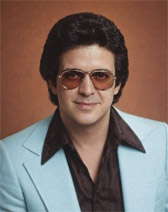
Hector Lavoe
“The Singer of Singers” and one of salsa’s most iconic voices
Born on September 30, 1946
Died on June 29, 1993
Age at death: 47
Profession: Singer, Musician
Place of Birth: Ponce, Puerto Rico
Place of Death: New York City, United States
Héctor Lavoe, born Héctor Juan Pérez Martínez, was a Puerto Rican singer widely regarded as one of the most influential and iconic voices in salsa music history. Known as “The Singer of Singers,” Héctor Lavoe played a central role in the global popularization of salsa during the 1960s, 1970s, and 1980s. His distinctive vocal style, improvisational brilliance, and emotional delivery placed him alongside legendary Latin music figures such as Celia Cruz and Rubén Blades, while his collaborations with Willie Colón became foundational to the genre’s evolution.
Early Life and Musical Roots
Héctor Lavoe was born on September 30, 1946, in Puerto Rico’s city of Ponce, to Francisca Martínez and Luis Pérez. Raised in a musically inclined family, he developed an early passion for music and enrolled at the Instituto de Música Juan Morel Campos, where he received formal training and drew inspiration from musicians such as Jesús Sánchez Erazo. His first instrument was the saxophone, but his natural vocal talent soon became his defining gift.
Even in his youth, Héctor Lavoe displayed a remarkable ability to interpret songs with emotional depth, a quality that would later distinguish him in the competitive world of Latin music.
Move to New York and Early Career
In 1963, at just 16 years old, Héctor Lavoe moved to New York City, a cultural hub for Latin music. There, he began performing with groups such as Orquesta New York, Kako All-Stars, and bands led by Johnny Pacheco. This period allowed him to immerse himself in the vibrant salsa scene and refine his craft.
His breakthrough came in 1967 when he joined the orchestra of Willie Colón as a lead vocalist. Together, they formed one of the most influential partnerships in salsa history, producing hits such as “Aguanilé,” “Tiburón,” and “El gran varón.” Their albums, including El Malo and Cosa Nuestra, became genre-defining works.
Solo Career and Global Success
By the mid-1970s, Héctor Lavoe launched a successful solo career, further solidifying his legacy. Songs like “El Cantante,” “Periódico de Ayer,” and “Bandolera” became timeless classics, showcasing his expressive voice and improvisational skill known as *soneo*.
During this period, he was also a key member of the legendary Fania All-Stars, performing on international stages and contributing to the worldwide expansion of salsa. His ability to connect with audiences made him a defining figure of Latin music’s golden era.
Personal Struggles and Tragedies
Despite his professional success, Héctor Lavoe’s life was marked by profound personal struggles. In 1979, he suffered from severe depression and developed a drug addiction, undergoing rehabilitation but later relapsing due to ongoing hardships.
His life was further devastated by a series of tragedies, including the accidental death of his 17-year-old son, Héctor Jr., in 1987, and the destruction of his home in a fire. In 1988, after a canceled concert in Puerto Rico, he attempted suicide by jumping from a hotel balcony in San Juan. Although he survived, his health and stability never fully recovered.
Final Years and Death
In his later years, Héctor Lavoe continued to record music despite declining health. Diagnosed with HIV, his condition worsened over time, leading to his death on June 29, 1993, in New York City at the age of 46 due to AIDS-related complications.
His life story—marked by extraordinary talent and profound hardship—has become emblematic of the emotional depth often reflected in his music.
Legacy and Cultural Impact
Héctor Lavoe remains one of the greatest vocalists in salsa history, with a legacy that continues to influence generations of musicians. His life was portrayed in the film El Cantante, starring Marc Anthony and Jennifer Lopez, further cementing his cultural significance.
In 2023, Rolling Stone ranked Héctor Lavoe among the 200 greatest singers of all time, placing him at number 73. His music continues to resonate globally, ensuring that his voice remains timeless within the world of Latin music.
Discography
Studio Albums:
1975 – La Voz – (Studio Album)
1976 – De Ti Depende – (Studio Album)
1978 – Comedia – (Studio Album)
1979 – Recordando a Felipe Pirela – (Studio Album)
1979 – Feliz Navidad – (Studio Album)
1980 – El Sabio – (Studio Album)
1981 – Que Sentimiento! – (Studio Album)
1985 – Reventó – (Studio Album)
1987 – Strikes Back – (Studio Album)
1993 – The Master & The Protege – (Studio Album)
With Willie Colón:
1967 – El Malo – (Studio Album)
1968 – The Hustler – (Studio Album)
1969 – Guisando – (Studio Album)
1970 – Cosa Nuestra – (Studio Album)
1971 – La Gran Fuga – (Studio Album)
1971 – Asalto Navideño – (Studio Album)
1972 – El Juicio – (Studio Album)
1973 – Lo Mato – (Studio Album)
1973 – Asalto Navideño, Vol. 2 – (Studio Album)
1975 – The Good, the Bad, the Ugly – (Studio Album)
1983 – Vigilante – (Studio Album)
Film Appearances
1972 – Our Latin Thing – (Feature Film)
1976 – Salsa – (Feature Film)
1983 – The Last Fight – (Feature Film)
1986 – Live in Africa – (Feature Film)
Source: Biyografiler.com
Frequently asked questions about Hector Lavoe
Who is Hector Lavoe?, Hector Lavoe biography, Hector Lavoe life story, Hector Lavoe age, Hector Lavoe facts, Hector Lavoe birthplace, Hector Lavoe photos, Hector Lavoe videos, Hector Lavoe career
Related Biographies


Lamine Yamal
Professional footballer

Sam Altman
Entrepreneur, Investor, CEO

Kylian Mbappe
Professional footballer

Alice Weidel
Politician, Economist

Erling Haaland
Professional footballer

Giorgia Meloni
Politician, Journalist


Hongjoong
Singer, Rapper, Songwriter, Composer

Ludacris
Rapper, Actor

Kwon Eunbi
Singer

Sarah Wayne Callies
Actress, Screenwriter, Producer, Director

LaTavia Roberson
Singer, Actress, Entrepreneur
Sam Altman
Entrepreneur, Investor, CEO

Monica Bellucci
Actress, Model

Aaron Paul
Actor

Zohran Mamdani
Politician, Musician

Zinedine Zidane
Professional footballer
Kylian Mbappe
Professional footballer