
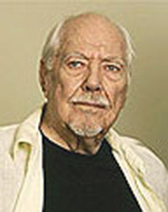
Robert Altman
The architect of ensemble cinema and anti-Hollywood filmmaking
Born on February 20, 1925
Died on November 20, 2006
Age at death: 81
Profession: Film Director, Producer, Screenwriter
Place of Birth: Kansas City, Missouri, United States
Place of Death: Los Angeles, California, United States
Robert Bernard Altman, widely known as Robert Altman, was an American film director, producer, and screenwriter whose career reshaped the language of modern American cinema. Renowned for his stylized yet deeply naturalistic films, Altman developed a distinctive narrative approach built on overlapping dialogue, large ensemble casts, and a critical view of American institutions. Despite maintaining an openly anti-Hollywood stance throughout much of his career, he came to be recognized as one of the most innovative and influential filmmakers in the history of the American film industry.
Over a career spanning more than five decades, Robert Altman created landmark works such as MASH, Nashville, Short Cuts, and Gosford Park. His body of work consistently challenged classical storytelling conventions while offering sharp social, political, and cultural commentary. Although frequently overlooked by the Academy during his most productive years, Altman ultimately received an honorary Academy Award in recognition of his lifelong contribution to cinema. Among the directors who openly acknowledged his influence was independent filmmaker Paul Thomas Anderson, who cited Altman as a major creative inspiration.
Early Life and Background
Robert Altman was born on February 20, 1925, in Kansas City, Missouri. His father, Bernard Clement Altman, was a successful insurance executive, providing the family with financial stability. Altman was of English, German, and Irish descent; his grandfather Frank Altman had earlier modified the family surname from “Altmann.” He received his education at St. Peter’s School, Rockhurst High School, Southwest High School, and later Wentworth Military Academy.
In 1943, at the age of eighteen, Altman enlisted in the United States Army Air Forces. During World War II, he served as a pilot, flying numerous combat missions. It was during one of these flights that he reportedly saw Hollywood illuminated from the air for the first time, an image that left a lasting impression on him and subtly foreshadowed his eventual path toward filmmaking.
Early Career and Entry into Film
After completing his military service in 1947, Robert Altman relocated to Los Angeles and began exploring opportunities in the film industry. His earliest experiences included acting in a minor role in The Secret Life of Walter Mitty and achieving early recognition as a screenwriter with the 1948 film Bodyguard, which marked a promising start to his creative career.
Encouraged by this success, Altman moved to New York, where he met George W. George, with whom he collaborated on numerous articles, screenplays, and musical projects. Despite their productivity, sustained success eluded him, prompting Altman to return to Hollywood. After a brief and ultimately unsuccessful venture running an animal care business, he returned to Kansas City in 1950, viewing the setback not as defeat but as an opportunity to rebuild his connection to cinema.
Calvin Company and Directorial Development
Altman’s decisive professional turning point came when he joined the Calvin Company, an industrial and documentary film production firm, as a screenwriter. He quickly transitioned into directing, producing dozens of short industrial films. This period proved crucial in refining his technical skills and nurturing his unconventional storytelling instincts outside the constraints of mainstream Hollywood.
In 1955, Robert Altman left the company and directed his first low-budget feature film, The Delinquents, in collaboration with Elmer Rhoden Jr. Released in 1957, the film achieved remarkable commercial success, earning approximately one million dollars at the box office and establishing Altman as a filmmaker capable of working efficiently outside studio orthodoxy.
Television Years and Professional Recognition
Altman’s growing reputation attracted the attention of Alfred Hitchcock, who invited him to direct episodes of the television anthology series Alfred Hitchcock Presents. Between 1958 and 1964, Altman became a prolific television director, working on series such as Combat!, Bonanza, Whirlybirds, and Route 66.
This extensive television experience sharpened his ability to work with actors, manage complex narratives, and experiment with form. However, creative conflicts—particularly with studio executives such as Jack Warner of Warner Bros.—reinforced Altman’s anti-Hollywood convictions and contributed to a temporary period of professional marginalization.
Breakthrough with MASH and the Altman Style
After years of relative obscurity, Robert Altman accepted the offer to direct MASH. The film became a major box-office success and marked a dramatic resurgence in his career. Its satirical tone, improvisational dialogue, and loose narrative structure announced the arrival of what critics soon termed the “Altman style.”
Building on this success, Altman directed a series of influential films including McCabe & Mrs. Miller (1971), The Long Goodbye (1974), and Nashville (1975). These works solidified his reputation as a filmmaker unafraid to challenge genre conventions and confront American social myths.
Independent Production and Artistic Freedom
In 1976, seeking complete creative autonomy, Robert Altman founded his own production company, Lions Gate Films. This independence allowed him to pursue unconventional projects such as A Wedding, 3 Women, and Quintet, films that emphasized psychological depth and narrative experimentation.
In 1980, Altman directed Popeye, notable as Robin Williams’s first major film role. The film became one of Altman’s highest-grossing projects, though critical reactions remained divided. Throughout the 1980s, Altman continued producing both critically acclaimed works like Secret Honor and less successful ventures such as O.C. & Stiggs. His television miniseries Tanner ’88 earned him an Emmy Award.
Late-Career Renaissance
Robert Altman experienced a significant late-career revival with The Player (1992), a sharp satire of the Hollywood system. The film earned him Academy Award nominations and won Best Director honors at both the Cannes Film Festival and the BAFTA Awards.
He followed this success with Short Cuts, which received widespread acclaim and further Academy Award recognition. In 2001, Gosford Park was released to exceptional critical praise, with many critics considering it the finest film of the year and one of Altman’s crowning achievements.
Personal Life and Death
Robert Altman was married three times and had six children and twelve grandchildren. He spent many years battling leukemia alongside his wife, Kathryn Reed Altman. In 2006, he received the Academy’s Lifetime Achievement Award, a long-overdue acknowledgment of his enduring influence on cinema.
Shortly after receiving this honor, Robert Altman passed away on November 20, 2006, in Los Angeles, California, at the age of eighty-one. His death marked the end of a career defined by artistic independence, narrative innovation, and an uncompromising vision that permanently altered the landscape of American filmmaking.
Source: Biyografiler.com
Frequently asked questions about Robert Altman
Who is Robert Altman?, Robert Altman biography, Robert Altman life story, Robert Altman age, Robert Altman facts, Robert Altman birthplace, Robert Altman photos, Robert Altman videos, Robert Altman career
Related Biographies


Lamine Yamal
Professional footballer

Sam Altman
Entrepreneur, Investor, CEO

Kylian Mbappe
Professional footballer

Alice Weidel
Politician, Economist

Erling Haaland
Professional footballer

Giorgia Meloni
Politician, Journalist


Hongjoong
Singer, Rapper, Songwriter, Composer

Ludacris
Rapper, Actor

Kwon Eunbi
Singer

Sarah Wayne Callies
Actress, Screenwriter, Producer, Director

LaTavia Roberson
Singer, Actress, Entrepreneur
Lamine Yamal
Professional footballer

Kaia Gerber
Model, Actress
Kylian Mbappe
Professional footballer
Sam Altman
Entrepreneur, Investor, CEO

Austin Abrams
Actor
Giorgia Meloni
Politician, Journalist