
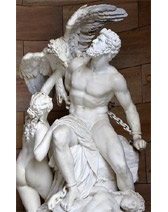
Prometheus
The Titan who defied the gods to give fire and knowledge to humanity
Born on -
Age: -
Profession: Mythological Figure
Place of Birth: Mythological (Ancient Greece)
Prometheus is one of the most celebrated Titans in Greek Mythology, revered as the creator and protector of humankind. Known for his intelligence and foresight, Prometheus stands as a symbol of rebellion against divine authority, often compared to mythological and literary figures who challenge power for the sake of humanity, much like Lucifer in later traditions or Faust in European literature. His story, immortalized in ancient texts by Hesiod and dramatized by Aeschylus, represents the enduring tension between knowledge, power, and freedom.
Origins and Mythological Background
According to ancient sources, Prometheus was the son of the Titan Iapetus and Clymene (sometimes identified as Asia). He was the brother of Atlas, Epimetheus, and Menoetius. Unlike his siblings—particularly Atlas, who was condemned to hold up the heavens—Prometheus distinguished himself through wisdom and strategic thinking, traits reflected in the meaning of his name: “forethought.”
The name Prometheus derives from Indo-European roots meaning “to think ahead,” emphasizing his role as a visionary figure. In comparative mythology, he is sometimes likened to deities such as Agni from Hindu Mythology, both associated with fire and the transmission of divine power to humanity.
The Titanomachy and Alliance with Zeus
During the great war between the Titans and the Olympian gods—known as the Titanomachy—Prometheus chose to side with Zeus and the Olympians, despite his Titan lineage. This strategic decision contributed to the victory of the Olympian order and initially earned him the favor of Zeus.
However, beneath this alliance lay a deeper philosophical divide. While Zeus sought to consolidate divine authority, Prometheus increasingly sympathized with the fragile condition of humankind. His loyalty was not to power, but to progress and compassion.
Creator of Humanity and the Gift of Fire
Prometheus is credited in many versions of the myth with shaping humanity from clay, giving form to mortal life. Observing their vulnerability, he sought to elevate humans beyond their primitive state. In defiance of Zeus, he stole fire from the forge of Hephaestus and gifted it to mankind.
This act was transformative: fire symbolized not only warmth and survival, but also knowledge, craft, and technological advancement. Through this gift, Prometheus enabled humanity to develop skills such as metalworking, art, and science—making him a foundational figure in the mythological origins of civilization.
Punishment and Eternal Suffering
Zeus, enraged by this defiance, condemned Prometheus to an eternal punishment. He was bound to a rock in the Caucasus Mountains, where each day an eagle—often associated with Zeus—would devour his liver. Each night, the organ would regenerate, ensuring that his torment continued indefinitely.
This powerful image of suffering and endurance was immortalized in the tragedy Prometheus Bound by Aeschylus, where Prometheus is portrayed as a defiant martyr, enduring pain for the sake of humanity. His punishment symbolizes the cost of knowledge and the consequences of challenging absolute authority.
Rescue by Heracles
The cycle of torment was eventually broken by Heracles (known in Roman mythology as Hercules), the son of Zeus and a hero representing strength and redemption. During his legendary labors, Heracles killed the eagle and freed Prometheus from his chains.
This act not only liberated Prometheus but also symbolized a reconciliation between divine power and human progress. In some versions of the myth, Zeus ultimately forgives Prometheus, acknowledging the value of his actions.
Pandora and the Consequences of Defiance
As part of his retaliation, Zeus devised a plan to punish humanity as well. He instructed Hephaestus to create the first woman, Pandora, whose beauty concealed a dangerous purpose. She was sent to Epimetheus, despite Prometheus’ warning never to accept gifts from the gods.
When Pandora opened the vessel—later mistranslated as Pandora’s Box—all forms of suffering, disease, and misfortune were released into the world. Only hope remained inside, offering a fragile consolation to humanity. This episode highlights the unintended consequences of divine and human actions intertwined.
Symbolism and Cultural Legacy
Prometheus has endured as one of the most powerful symbols in Western thought. He represents intellectual curiosity, resistance to tyranny, and the pursuit of knowledge, often invoked alongside thinkers and rebels who challenged established systems, from Galileo Galilei to Friedrich Nietzsche.
In modern interpretations, Prometheus embodies the spirit of innovation and the ethical dilemmas of progress—particularly in science and technology. His myth continues to resonate as a timeless narrative about sacrifice, enlightenment, and the price of advancing human civilization.
Source: Biyografiler.com
Frequently asked questions about Prometheus
Who is Prometheus?, Prometheus biography, Prometheus life story, Prometheus age, Prometheus facts, Prometheus birthplace, Prometheus photos, Prometheus videos, Prometheus career
Related Biographies



Lamine Yamal
Professional footballer

Sam Altman
Entrepreneur, Investor, CEO

Kylian Mbappe
Professional footballer

Alice Weidel
Politician, Economist

Erling Haaland
Professional footballer

Giorgia Meloni
Politician, Journalist


Hongjoong
Singer, Rapper, Songwriter, Composer

Ludacris
Rapper, Actor

Kwon Eunbi
Singer

Sarah Wayne Callies
Actress, Screenwriter, Producer, Director

LaTavia Roberson
Singer, Actress, Entrepreneur
Lamine Yamal
Professional footballer

Xi Jinping
Politician, Statesman, Head of State

Austin Abrams
Actor

Pedro Sanchez
Politician

Claudia Sheinbaum
President, Politician, Scientist, Academic

Colman Domingo
Actor, Director, Producer