
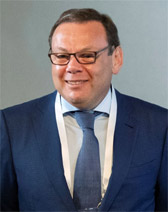
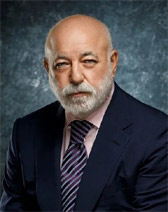
Mikhail Fridman
Russian-Israeli billionaire and co-founder of Alfa Group
Born on April 21, 1964
Age: 62
Profession: Businessperson, Investor
Place of Birth: Lviv, Ukraine
Mikhail Fridman is a Russian-Israeli billionaire businessman and oligarch, best known as one of the founding figures behind Alfa Group, a powerful multinational consortium that rose during the collapse of the Soviet Union. Building his empire alongside key partners such as German Khan, Alexey Kuzmichev, and later Petr Aven, Mikhail Fridman became one of the defining architects of post-Soviet capitalism, often mentioned in the same context as influential Russian business magnates like Roman Abramovich and Oleg Deripaska.
Early Life and Background
Mikhail Fridman was born on April 21, 1964, in Ukraine’s city of Lviv, then part of the Soviet Union. Raised in a Jewish family, he experienced early forms of institutional discrimination, which he later cited as a factor shaping his resilience and ambition. Like other prominent Jewish intellectual figures such as Joseph Brodsky, his background influenced both his worldview and his determination to succeed within restrictive systems.
After relocating to Russia, Mikhail Fridman pursued higher education at the Moscow Institute of Steel and Alloys, graduating with honors in 1986 as a metallurgical engineer. During his university years, he began organizing events and engaging in small-scale entrepreneurial ventures, demonstrating a mindset comparable to emerging business figures of the late Soviet era who capitalized on the gradual loosening of economic controls under Mikhail Gorbachev.
Career Beginnings
Following a brief period working as an engineer, Mikhail Fridman quickly pivoted toward business as reforms under Mikhail Gorbachev opened new economic opportunities. In 1988, he launched a window-cleaning cooperative—an early example of private enterprise in the Soviet Union—before expanding into import and trade activities.
In 1989, together with German Khan and Alexey Kuzmichev, he founded Alfa-Eco, which would later evolve into Alfa Group. This move mirrored the trajectory of other emerging oligarchs who leveraged privatization and market liberalization to build powerful financial-industrial networks.
Rise of Alfa Group and Banking Influence
In 1991, Mikhail Fridman established Alfa-Bank, which would grow into one of the largest private banks in Russia. Through aggressive expansion and strategic positioning, Alfa-Bank became a cornerstone of the Russian financial system, comparable in influence to institutions shaped by figures like Viktor Vekselberg and Mikhail Prokhorov.
Throughout the 1990s, Alfa Group expanded rapidly into oil, telecommunications, retail, and finance. The partnership with Petr Aven proved particularly significant, as the two developed a coordinated strategy that strengthened the group’s dominance across multiple sectors. By the end of the decade, Mikhail Fridman had firmly established himself as one of the most powerful businessmen in the post-Soviet landscape.
Energy Sector and Global Expansion
Mikhail Fridman played a pivotal role in the energy sector through the acquisition of TNK, which later formed a major joint venture with BP, creating TNK-BP. As chairman and CEO, he oversaw the transformation of the company into one of the world’s largest privately held oil producers, placing him on the global stage alongside energy figures connected to Western giants.
The 2013 sale of TNK-BP to Rosneft marked a turning point, generating billions of dollars and reinforcing Mikhail Fridman’s reputation as a strategic dealmaker. In the same year, he founded LetterOne, headquartered in Luxembourg, positioning himself within the global investment elite alongside figures such as George Soros and Warren Buffett, though with a distinct focus on cross-sector industrial investments.
Diversified Investments and Business Philosophy
Beyond energy and banking, Mikhail Fridman expanded into retail and telecommunications through investments in X5 Retail Group and VimpelCom (later VEON). His involvement in global ventures, including investments in Uber, reflected a shift toward technology-driven markets, aligning him with broader global trends shaped by entrepreneurs like Elon Musk and Jeff Bezos.
Fridman also articulated a broader vision for the future economy, introducing the concept of the “Indigo Age,” which emphasizes creativity, innovation, and human capital over traditional resource-based wealth. This intellectual positioning distinguished him from many oligarchs and placed him closer to forward-looking business thinkers in the global arena.
Sanctions and Controversies
In 2022, following Russia’s invasion of Ukraine, Mikhail Fridman was subjected to sanctions by the European Union and the United Kingdom. As a result, he stepped down from active roles within Alfa Group and LetterOne, significantly altering his public and business presence.
Although he publicly called for an end to the war, Mikhail Fridman remained at the center of legal and political scrutiny. Like other sanctioned oligarchs, his case became part of a broader international debate about the relationship between wealth, power, and political influence in modern geopolitics.
Philanthropy and Cultural Engagement
In addition to his business ventures, Mikhail Fridman has been active in philanthropy, particularly in supporting Jewish communities worldwide. He is one of the founders of the Genesis Philanthropy Group, an organization aimed at strengthening Jewish identity and cultural continuity.
He has also supported cultural initiatives such as the Alfa Jazz Fest, contributing to the promotion of arts and music in Eastern Europe. These activities highlight a broader dimension of his influence beyond finance and industry.
Personal Life
Mikhail Fridman spent many years living in Moscow before relocating to London, reflecting the increasingly global lifestyle of high-net-worth individuals. His first marriage, to Olga, resulted in two daughters, Katia (Ekaterina) and Larisa (Lora). He later married Oksana Ozhelskaya, with whom he has additional children.
Known for his long-term philanthropic outlook, Mikhail Fridman has stated his intention to donate a significant portion of his wealth to charitable causes after his death. As of 2026, his net worth is estimated to exceed $13 billion, securing his place among the world’s most influential business figures.
Source: Biyografiler.com
Frequently asked questions about Mikhail Fridman
Who is Mikhail Fridman?, Mikhail Fridman biography, Mikhail Fridman life story, Mikhail Fridman age, Mikhail Fridman facts, Mikhail Fridman birthplace, Mikhail Fridman photos, Mikhail Fridman videos, Mikhail Fridman career
Related Biographies

Lamine Yamal
Professional footballer

Erling Haaland
Professional footballer

Kylian Mbappe
Professional footballer

Austin Abrams
Actor

Bad Bunny
Rapper, Songwriter

Sam Altman
Entrepreneur, Investor, CEO


Hongjoong
Singer, Rapper, Songwriter, Composer

Ludacris
Rapper, Actor

Kwon Eunbi
Singer

Sarah Wayne Callies
Actress, Screenwriter, Producer, Director

LaTavia Roberson
Singer, Actress, Entrepreneur

Amber Heard
Actress, Model
Lamine Yamal
Professional footballer
Bad Bunny
Rapper, Songwriter
Erling Haaland
Professional footballer
Kylian Mbappe
Professional footballer
Austin Abrams
Actor