
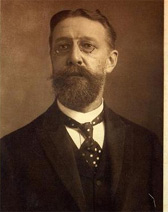
Max Weber
Founder of Modern Sociology
Born on April 21, 1864
Died on June 14, 1920
Age at death: 56
Profession: Philosopher, Sociologist, Economist
Place of Birth: Erfurt, Germany
Place of Death: Munich, Germany
Max Weber was a German philosopher, sociologist, and expert in political economy. He is widely regarded as the thinker who transformed sociology into a modern scientific discipline, and the influence of his ideas continues to shape social sciences today.
Max Weber was born on April 21, 1864, in Erfurt, Germany, as the eldest child in a family of seven. His full name was Karl Emil Maximilian Weber. His father, Sir Max Weber, was a liberal politician, while his mother, Helene Fallenstein, was a moderate Protestant. In 1882, he began his university education at Heidelberg University Faculty of Law, while also studying economics, medieval history, and theology.
Max Weber and his brother Alfred Weber, who was also a sociologist and economist, grew up under the strong influence of their father’s political life. At the age of twelve, in 1876, he wrote two texts as Christmas gifts for his family. By the age of fourteen, he was already composing writings that referenced major thinkers, demonstrating his early inclination toward specialization in the social sciences. In 1884, he began working at Berlin University, later serving intermittently in the German army in Strasbourg and briefly working at Göttingen University.
In the following years, Max Weber worked as a trainee lawyer and returned to Berlin University, where he earned the title of associate professor. In 1894, he was appointed Professor of Economics at Freiburg University, and two years later, he moved to Heidelberg University. Due to severe insomnia and nervous disorders, after a highly productive period in the 1890s, he was unable to write even a single page between 1898 and the end of 1902, and ultimately resigned from his professorship in 1903.
During World War I, Max Weber served as the director of a military hospital in Heidelberg. In 1915 and 1916, he was appointed to a commission tasked with maintaining German dominance in Belgium and Poland after the war. Over time, his views on the war and on the expansion of the German Empire evolved significantly. In 1918, he joined the “Workers’ and Soldiers’ Council” in Heidelberg, served as an advisor to the German Armistice Commission that participated in the Treaty of Versailles, and was appointed a member of the Weimar Constitution Commission. Notably, Article 48, which he strongly supported, was later used by Adolf Hitler to suppress opposition and establish his dictatorship.
Max Weber’s contributions to German politics remain the subject of ongoing debate. He resumed teaching first at University of Vienna and then, in 1919, at University of Munich. In Munich, he founded Germany’s first sociology institute, although it suffered from a lack of sufficient staff. Weber did not teach regularly, at times giving only private lectures. He supported himself partly through these lectures and largely through an inheritance he received in 1907.
Contributions to Economics and Sociology: Within his theory of rational action related to social behavior, Max Weber viewed rationalization as the most fundamental and distinctive form of action in capitalist Western society. He argued that one of the sources of this rationalization lay in the cultural transformations brought about by Protestant ethics. According to Weber, although Protestant ethics was not the sole or primary cause of capitalism, it fostered a culture that emphasized individualism, hard work, discipline, rational behavior, and self-confidence, thereby playing a crucial role in the emergence and development of capitalism.
By opposing economic determinism and emphasizing the role of culture—especially religion—in shaping human behavior, highlighting individuals’ subjective orientations in social relations, and criticizing the claim that capitalism would inevitably collapse, Max Weber took a critical stance against institutionalized Marxism. Alongside Friedrich Nietzsche, he strongly criticized orthodox Marxist thought. He gained international recognition with his 1904 publication “The Protestant Ethic and the Spirit of Capitalism”, a work that laid the groundwork for analyzing economic systems through culture and religion.
This work was the only one published as a book during Max Weber’s lifetime. In the same year, he traveled to the United States and participated in the Congress of Arts and Sciences at the World’s Fair (Louisiana Purchase Exposition).
In 1893, Max Weber married his cousin and future feminist writer Marianne Schnitger. They had one son. After Weber’s death, his wife compiled and published his newspaper articles in book form.
Max Weber died on June 14, 1920, in Munich, Germany, at the age of 56, after contracting pneumonia caused by the Spanish flu.
Books:
1904 – The Protestant Ethic and the Spirit of Capitalism
Source: Biyografiler.com
Frequently asked questions about Max Weber
Who is Max Weber?, Max Weber biography, Max Weber life story, Max Weber age, Max Weber facts, Max Weber birthplace, Max Weber photos, Max Weber videos, Max Weber career
Related Biographies

Lamine Yamal
Professional footballer

Erling Haaland
Professional footballer

Kylian Mbappe
Professional footballer

Austin Abrams
Actor

Bad Bunny
Rapper, Songwriter

Sam Altman
Entrepreneur, Investor, CEO


Hongjoong
Singer, Rapper, Songwriter, Composer

Ludacris
Rapper, Actor

Kwon Eunbi
Singer

Sarah Wayne Callies
Actress, Screenwriter, Producer, Director

LaTavia Roberson
Singer, Actress, Entrepreneur

Amber Heard
Actress, Model
Lamine Yamal
Professional footballer
Bad Bunny
Rapper, Songwriter
Erling Haaland
Professional footballer
Kylian Mbappe
Professional footballer
Austin Abrams
Actor