
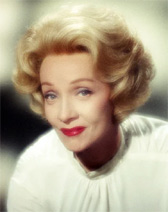
Marlene Dietrich
The Androgynous Icon of Classic Hollywood
Born on December 27, 1901
Died on May 6, 1992
Age at death: 91
Profession: Actress, Singer
Place of Birth: Schöneberg, Berlin, Germany
Place of Death: Paris, France
Marlene Dietrich, born Marie Magdalene Dietrich, was a German-born actress and singer who became one of the most enduring icons of 20th-century cinema. Renowned for her androgynous style, smoky voice, intellectual charisma, and bold defiance of conventions, she left a permanent mark on film, music, fashion, and popular culture.
Marlene Dietrich was born on December 27, 1901, in Schöneberg, Berlin. Her father, Louis Erich Otto Dietrich, was a police lieutenant who died when she was eleven years old. Her mother later married Colonel Eduard von Losch, who was killed during World War I. Dietrich received formal training in violin and piano and later attended acting courses at the Max Reinhardt Theatre School in 1921.
She began her professional life as a cabaret singer and entered cinema in Berlin in 1922. Over the following years, she appeared in more than a dozen silent films and became a familiar presence on stage in Berlin and Vienna between 1925 and 1929. Her intelligence, artistic curiosity, and cosmopolitan circle quickly distinguished her within the cultural elite of the Weimar era.
Dietrich’s breakthrough came in 1930 with The Blue Angel (Der blaue Engel), directed by Josef von Sternberg. Her portrayal of the seductive cabaret singer Lola-Lola, with her iconic stockings and unapologetic sensuality, transformed her overnight into an international star. This role marked a decisive turning point in her career.
After the success of The Blue Angel, Marlene Dietrich moved to the United States and began working in Hollywood. She never returned to Germany after the rise of the Nazi regime under Adolf Hitler. On March 6, 1937, she became a citizen of the United States.
During the 1930s and 1940s, she starred in a series of major Hollywood films, including Blonde Venus (1932) opposite Cary Grant, Shanghai Express, Dishonored, and Destry Rides Again (1939), in which she appeared alongside James Stewart. Her performances combined emotional restraint, irony, and sexual ambiguity, redefining female screen presence.
Throughout World War II, Marlene Dietrich actively supported the Allied forces. She performed for soldiers on the front lines, sang in multiple languages, and openly opposed Nazism. In the 1950s and 1960s, she enjoyed renewed success as a concert performer, becoming one of the most influential cultural figures of her time.
Dietrich maintained close friendships with prominent intellectuals and artists, including Ernest Hemingway, Katharine Hepburn, Jean Cocteau, Edward G. Robinson, and Kenneth Tynan. She was deeply interested in literature and poetry and was known for her sharp wit and provocative statements, famously declaring that attraction should transcend gender.
She married director’s assistant Rudolf Sieber on May 17, 1924. Their daughter, Maria Riva, was born on December 13, 1924. Although the couple lived together for only five years, they remained legally married until Sieber’s death from cancer in 1976.
On September 29, 1975, during a performance in Sydney, Marlene Dietrich fell from the stage and fractured her hip, effectively ending her performing career. For the final twelve years of her life, she lived in near isolation in her apartment on Avenue Montaigne in Paris, receiving only a small circle of close friends.
Marlene Dietrich died on May 6, 1992, in Paris at the age of 91. In accordance with her wishes, she was buried in Berlin, the city of her birth.
Selected Filmography:
1930 – The Blue Angel
1932 – Blonde Venus
1932 – Shanghai Express
1934 – The Scarlet Empress
1935 – The Devil Is a Woman
1939 – Destry Rides Again
1941 – Seven Sinners
1942 – The Spoilers
1957 – Witness for the Prosecution
1961 – Judgment at Nuremberg
2014 – From Caligari to Hitler: German Cinema in the Age of the Masses (Archive Footage) (Film)
2011 – Vito (Archive Footage) (Film)
1984 – Marlene (Voice / Herself) (Film)
1978 – Just a Gigolo (Semering) (Film)
1965 – The Love Goddesses (Archive Footage / Herself) (Film)
1964 – Paris in August (Herself) (Film)
1961 – Judgment at Nuremberg (Mrs. Bertholt) (Film)
1958 – The Inn of the Sixth Happiness (Tanya) (Film)
1957 – Witness for the Prosecution (Christine Helm) (Film)
1952 – Rancho Notorious (Altar Keane) (Film)
1951 – No Highway in the Sky (Monica Teasdale) (Film)
1950 – Stage Fright (Charlotte Inwood) (Film)
1947 – Golden Earrings (Lydia) (Film)
1944 – Kismet (Jamilla) (Film)
1942 – The Spoilers (Cherry Malotte) (Film)
1941 – Manpower (Fay Duval) (Film)
1940 – Seven Sinners (Bijou Blanche) (Film)
1939 – Destry Rides Again (Frenchy) (Film)
1937 – Angel (Maria Barker) (Film)
1936 – The Garden of Allah (Domini Enfilden) (Film)
1936 – Desire (Madeleine de Beaupre) (Film)
1935 – The Devil Is a Woman (Concha Perez) (Film)
1933 – The Song of Songs (Lily Czepanek) (Film)
1932 – Shanghai Express (Shanghai Lily) (Film)
1932 – Blonde Venus (Helen Faraday) (Film)
1931 – Dishonored (Marie Kolverer / X-27) (Film)
1930 – Morocco (Amy Jolly) (Film)
1930 – The Blue Angel (Lola Lola) (Film)
1926 – Madame Wants No Children (Dancer) (Film)
1923 – Tragedy of Love (Film)
1923 – So sind die Männer (Film)
Source: Biyografiler.com
Frequently asked questions about Marlene Dietrich
Who is Marlene Dietrich?, Marlene Dietrich biography, Marlene Dietrich life story, Marlene Dietrich age, Marlene Dietrich facts, Marlene Dietrich birthplace, Marlene Dietrich photos, Marlene Dietrich videos, Marlene Dietrich career
Related Biographies

Lamine Yamal
Professional footballer

Sam Altman
Entrepreneur, Investor, CEO

Kylian Mbappe
Professional footballer

Alice Weidel
Politician, Economist

Erling Haaland
Professional footballer

Giorgia Meloni
Politician, Journalist


Hongjoong
Singer, Rapper, Songwriter, Composer

Ludacris
Rapper, Actor

Kwon Eunbi
Singer

Sarah Wayne Callies
Actress, Screenwriter, Producer, Director

LaTavia Roberson
Singer, Actress, Entrepreneur
Sam Altman
Entrepreneur, Investor, CEO

Kaia Gerber
Model, Actress
Lamine Yamal
Professional footballer
Kylian Mbappe
Professional footballer

Austin Abrams
Actor

Zohran Mamdani
Politician, Musician