
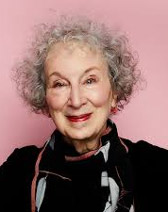
Margaret Atwood
Canadian writer known for The Handmaid's Tale, Alias Grace, The Blind Assassin, Oryx and Crake and The Testaments. She won the Booker Prize in 2000 and 2019, published her memoir Book of Lives: A Memoir of Sorts in 2025, and received the Joan Margarit International Poetry Prize in 2026.
Born on November 18, 1939
Age: 87
Profession: Novelist, Poet
Place of Birth: Ottawa, Ontario, Canada
Margaret Atwood, born Margaret Eleanor Atwood on November 18, 1939, in Ottawa, Canada, is a Canadian novelist, poet, essayist and literary critic. Since the 1960s, she has published novels, poetry, short stories, essays, children's books and graphic novels. Her best-known works include The Handmaid's Tale, Alias Grace, The Blind Assassin, Oryx and Crake and The Testaments. Her fiction frequently examines gender, political authority, social control, environmental destruction and survival. She has received two Booker Prizes, the Arthur C. Clarke Award, the Franz Kafka Prize and numerous Canadian literary honors.
Early Life and Family Background
Margaret Atwood was born on November 18, 1939, in Ottawa, Ontario, Canada. Her father, Carl Edmund Atwood, was a forest entomologist, and her mother, Margaret Dorothy Killam, was trained in nutrition and dietetics.
Because of her father's research into forest insects, Atwood spent much of her childhood in rural areas of Quebec and Ontario. Her family regularly stayed in remote locations, where she became familiar with forests, wildlife and outdoor life. Experiences of this environment subsequently appeared in her writing, particularly in works concerning survival, nature and the relationship between human beings and their surroundings.
She developed an interest in reading and writing as a child. Her family moved to Toronto, and she began attending school regularly at the age of eleven. She later studied at Victoria College, part of the University of Toronto, where she specialized in English literature and graduated in 1961.
Atwood continued her education at Radcliffe College in Cambridge, Massachusetts, receiving a master's degree in 1962. She subsequently undertook further graduate studies at Harvard University, focusing on literature and related fields. Her academic education included classical literature, mythology and English literary traditions.
Early Poetry and Literary Career
Margaret Atwood began her publishing career as a poet. In 1961, she published Double Persephone, a small poetry collection printed by Hawkshead Press. The book received the E. J. Pratt Medal.
Her next major collection, The Circle Game, first appeared in a limited edition in 1964, followed by a more widely distributed edition in 1966. It won the 1966 Governor General's Award for Poetry, bringing her wider recognition in Canadian literary circles.
Her early poetry addressed subjects including human behavior, nature, mythology, personal relationships and materialism. She continued publishing poetry throughout the following decades while developing her career as a novelist and literary critic.
First Novels and Canadian Literature
In 1969, Margaret Atwood published her first novel, The Edible Woman. The story follows Marian MacAlpin, a young woman whose relationship with food changes as she approaches marriage. Through this character, Atwood examines consumer culture, expectations surrounding marriage, female identity and control over the body.
Her second novel, Surfacing (1972), follows a woman who returns to rural Quebec to search for her missing father. The narrative explores identity, memory, the natural environment and the relationship between Canadian society and its cultural history.
In the same year, Atwood published Survival: A Thematic Guide to Canadian Literature, a critical study examining recurring themes in Canadian writing, particularly survival and national identity.
Her subsequent novels included Lady Oracle (1976), Life Before Man (1979) and Bodily Harm (1981). These works continued her examination of personal relationships, social expectations, political conflict and the circumstances facing women.
The Handmaid's Tale
In 1985, Margaret Atwood published The Handmaid's Tale, a dystopian novel set in the fictional Republic of Gilead. In this authoritarian society, women are deprived of basic rights, and fertile women known as Handmaids are subjected to reproductive control by the ruling regime.
The novel is narrated by Offred, a woman forced into reproductive servitude. Through her experiences, Atwood examines religious authoritarianism, political power, gender discrimination, language, surveillance and resistance.
Atwood has described the novel as speculative fiction, emphasizing that the forms of oppression and social control depicted in it have historical precedents. The book received the Governor General's Award for 1986 and the inaugural Arthur C. Clarke Award in 1987.
The Handmaid's Tale was adapted into a 1990 film, an opera, theatrical productions and a graphic novel. Its television adaptation, which began airing in 2017, starred Elisabeth Moss and introduced the story to a new generation of viewers. The series concluded in 2025 after six seasons.
Cat's Eye, The Robber Bride and Alias Grace
Margaret Atwood published Cat's Eye in 1988. The novel follows Elaine Risley, a painter who revisits her childhood experiences, particularly her relationships with other girls and the psychological effects of bullying. Memory, female friendship and artistic identity are central to the narrative.
Her 1993 novel The Robber Bride focuses on three women whose lives are disrupted by another woman, Zenia. The story examines friendship, betrayal, personal identity and the ways individuals construct accounts of their own experiences.
In 1996, Atwood published Alias Grace, a historical novel inspired by the case of Grace Marks, an Irish-born Canadian servant convicted in connection with an 1843 double murder.
Set in nineteenth-century Canada, the novel investigates questions of memory, crime, class, gender, mental illness and the reliability of testimony. It was adapted into a television miniseries in 2017, starring Sarah Gadon.
The Blind Assassin and First Booker Prize
In 2000, Margaret Atwood published The Blind Assassin, a novel that combines family history, social conflict, personal testimony and stories within stories.
The narrative centers on Iris Chase, an elderly woman reflecting on her family's history and the death of her younger sister. It incorporates another fictional narrative containing elements of science fiction.
The novel won the 2000 Booker Prize. Its structure, combining different narrative voices and periods, provided another example of Atwood's experimentation with literary form.
The MaddAddam Trilogy
In 2003, Margaret Atwood published Oryx and Crake, the first novel in what became the MaddAddam trilogy.
The story takes place in a world affected by genetic engineering, biotechnology, corporate power and ecological destruction. It follows characters whose lives are shaped by scientific experiments and the collapse of human society.
The trilogy continued with The Year of the Flood in 2009 and concluded with MaddAddam in 2013.
Across the three novels, Atwood develops interconnected narratives concerning environmental breakdown, technological intervention, epidemics, economic inequality and the possible future of humanity.
The Testaments and Second Booker Prize
In 2019, Margaret Atwood returned to the fictional world of Gilead with The Testaments, a sequel to The Handmaid's Tale.
The novel takes place fifteen years after the events described at the end of the earlier book. Its narrative is presented through three female perspectives, including that of Aunt Lydia, a senior figure within Gilead's political and religious system.
The Testaments won the 2019 Booker Prize, which Atwood shared with Bernardine Evaristo for her novel Girl, Woman, Other. The award made Atwood a two-time Booker Prize winner.
Poetry, Short Stories and Later Publications
Margaret Atwood has continued publishing poetry and short fiction alongside her novels. Her collections include The Animals in That Country, You Are Happy, True Stories and Morning in the Burned House.
Her short-story collections include Wilderness Tips (1991), Moral Disorder (2006), Stone Mattress (2014) and Old Babes in the Wood (2023).
In 2020, she published Dearly, her first new poetry collection in more than a decade. The poems examine aging, memory, personal loss, the natural world and the passage of time.
In 2024, Paper Boat: New and Selected Poems, 1961–2023 brought together poems written across more than six decades of her career.
On November 4, 2025, Atwood published Book of Lives: A Memoir of Sorts, an autobiographical work tracing her childhood, education, literary career, family relationships and the experiences associated with writing her books.
Literary Organizations, Free Expression and Technology
Beyond her literary work, Margaret Atwood has participated in debates concerning freedom of expression, censorship, women's rights, environmental protection and writers' responsibilities in public life.
Several of her books, particularly The Handmaid's Tale, have been challenged or restricted in schools and libraries. Atwood has publicly opposed book bans and restrictions on access to literature.
She has supported literary organizations including the Writers' Trust of Canada and the Griffin Poetry Prize. She also served as president of the Writers' Union of Canada from 1981 to 1982 and of the English-speaking Canadian Centre of PEN International from 1984 to 1986.
Atwood helped develop LongPen, a technology enabling authors to sign books remotely through an electronically controlled writing device. The project was designed to allow writers to participate in book signings without being physically present.
Personal Life
Margaret Atwood married American writer Jim Polk in 1968. Their marriage ended in divorce in 1973.
She subsequently began a relationship with Canadian novelist Graeme Gibson in 1973. They remained partners for more than four decades but did not marry.
Their daughter, Eleanor Jess Atwood Gibson, was born in 1976. Graeme Gibson died on September 18, 2019, after living with dementia.
Awards and Literary Recognition
Margaret Atwood has received awards for fiction, poetry and literary criticism, including two Booker Prizes, two Governor General's Awards, the Arthur C. Clarke Award and the Franz Kafka Prize.
In 2008, she received the Prince of Asturias Award for Literature. In 2017, she was awarded the Franz Kafka Prize and the Peace Prize of the German Book Trade.
In May 2026, Atwood received the third Joan Margarit International Poetry Prize in Toronto. The award was presented by King Felipe VI of Spain in recognition of her poetry and literary career.
Major Novels
- 1969 – The Edible Woman
- 1972 – Surfacing
- 1976 – Lady Oracle
- 1979 – Life Before Man
- 1981 – Bodily Harm
- 1985 – The Handmaid's Tale
- 1988 – Cat's Eye
- 1993 – The Robber Bride
- 1996 – Alias Grace
- 2000 – The Blind Assassin
- 2003 – Oryx and Crake
- 2005 – The Penelopiad
- 2009 – The Year of the Flood
- 2013 – MaddAddam
- 2015 – The Heart Goes Last
- 2016 – Hag-Seed
- 2019 – The Testaments
Major Poetry and Short-Story Collections
- 1961 – Double Persephone – Poetry
- 1964 / 1966 – The Circle Game – Poetry
- 1968 – The Animals in That Country – Poetry
- 1974 – You Are Happy – Poetry
- 1981 – True Stories – Poetry
- 1991 – Wilderness Tips – Short stories
- 1995 – Morning in the Burned House – Poetry
- 2006 – Moral Disorder – Short stories
- 2014 – Stone Mattress – Short stories
- 2020 – Dearly – Poetry
- 2023 – Old Babes in the Wood – Short stories
- 2024 – Paper Boat: New and Selected Poems, 1961–2023 – Selected poetry
Major Nonfiction Books
- 1972 – Survival: A Thematic Guide to Canadian Literature – Literary criticism
- 2002 – Negotiating with the Dead – Essays on writing
- 2008 – Payback: Debt and the Shadow Side of Wealth – Essays and criticism
- 2011 – In Other Worlds: SF and the Human Imagination – Literary study
- 2022 – Burning Questions – Essays
- 2025 – Book of Lives: A Memoir of Sorts – Memoir
Selected Awards
- 1966 – Governor General's Award – The Circle Game
- 1986 – Governor General's Award – The Handmaid's Tale
- 1987 – Arthur C. Clarke Award – The Handmaid's Tale
- 2000 – Booker Prize – The Blind Assassin
- 2008 – Prince of Asturias Award for Literature
- 2017 – Franz Kafka Prize
- 2017 – Peace Prize of the German Book Trade
- 2019 – Booker Prize – The Testaments
- 2026 – Joan Margarit International Poetry Prize
Source: Biyografiler.com
Frequently asked questions about Margaret Atwood
Who is Margaret Atwood?, Margaret Atwood biography, Margaret Atwood life story, Margaret Atwood age, Margaret Atwood facts, Margaret Atwood birthplace, Margaret Atwood photos, Margaret Atwood videos, Margaret Atwood career
Related Biographies

Lamine Yamal
Professional footballer

Jensen Huang
Entrepreneur, CEO, Engineer

Erling Haaland
Professional footballer

Brad Pitt
Actor

Leonardo DiCaprio
Actor

Nayib Bukele
Politician, Business Leader

Marc Andreessen
Engineer, Entrepreneur

Manuel Pellegrini
Football Manager, Former Professional Footballer

Manuel Neuer
Professional footballer

Malin Maria Akerman
Model, Actress

Malcolm McDowell
Actor, Voice Actor

Margaret Mitchell
Novelist, Journalist

Hunter Schafer
Actress, Model

Chase Infiniti
Actress

Elizabeth Holmes
Entrepreneur, CEO

Jennifer Lawrence
Actress

Ilia Malinin
Figure Skater

Maddie Ziegler
Dancer