

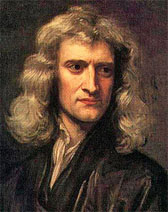
John Napier
The Inventor of Logarithms
Born on February 1, 1550
Died on April 3, 1617
Age at death: 67
Profession: Mathematician, Astronomer
Place of Birth: Edinburgh, Scotland
Place of Death: Merchiston Castle, Edinburgh, Scotland
John Napier is widely known as the inventor of logarithms. He discovered logarithms in order to simplify multiplication and division, revolutionizing numerical computation and laying foundations for modern mathematics.
John Napier was born in 1550 in Edinburgh, Scotland, into a wealthy and noble family. His father was Archibald Napier, and his mother was Janet Bothwell. As the Baron of Merchiston, he belonged to the Scottish nobility. Exceptionally intelligent from an early age, he was admitted to the University of St Andrews in 1563 at the age of thirteen. He showed a strong interest in trigonometry and computational techniques. While studying at St Andrews, he resided at St Salvator’s College, where the university principal John Rutherford personally oversaw his education. During these years, he also developed a deep interest in theology, an interest that continued throughout his life.
There is no clear evidence that John Napier formally graduated from the University of St Andrews. However, it is known that he left Scotland to pursue further education in France and Italy. He returned to his homeland in 1571 and married Elizabeth Stirling in 1573. The couple had two children. Thanks to the estates inherited from his father, Napier lived a financially comfortable life. In 1574, a castle was constructed on his Gartness estate.
While living at Gartness Castle, John Napier devoted himself to agriculture and found time to work on subjects of personal interest, including religious politics, farming, and mathematics. In his search for ways to simplify numerical calculations, he first devised a method of multiplication and division using small rods marked with numbers, later known as “Napier’s Bones.”
His most significant achievement came with the discovery of logarithms, designed to simplify multiplication and division. In 1614, he published his first table of logarithms in the book A Description of the Marvellous Rule of Logarithms. This monumental work took nearly twenty years to complete. Between 1618 and 1624, Napier published two refined logarithmic tables. He produced numerous works on the subject, and two of his books, published in 1617, laid the foundations for early calculating machines.
John Napier is believed to have begun working on logarithms around 1594. His logarithmic method was formally presented in 1614 in Mirifici Logarithmorum Canonis Descriptio. The book contained fifty-seven pages of explanations and ninety pages of numerical tables related to natural logarithms. By comparing arithmetic and geometric progressions, he introduced the concept of logarithms into mathematics. Unlike modern formulations, his system defined logarithms as a decreasing function of a number.
He coined the term “logarithm” by combining the ancient Greek words “logos,” meaning ratio, and “arithmos,” meaning number. The accuracy and usefulness of his method were quickly recognized, and his works were translated into multiple languages. Logarithms soon became indispensable in astronomy, navigation, and trigonometric calculations. Astronomers such as Johannes Kepler rapidly adopted Napier’s logarithms for planetary motion calculations, significantly reducing the complexity of astronomical computation.
A copy of John Napier’s 1614 work was sent to Gresham College professor Henry Briggs. Briggs immediately recognized the importance of logarithms and worked closely on refining Napier’s tables. His improvements transformed Napier’s original system into the base-10 common logarithms that would later become standard. Napier accepted Briggs’ suggestions; however, due to declining health, he entrusted Briggs with completing the revised tables. These were published in 1624 and became known as common logarithms.
Napier’s ideas also influenced broader scientific thought. The computational advantages provided by logarithms indirectly supported the work of scientists such as Galileo Galilei and later Isaac Newton, whose studies in physics, astronomy, and mathematical analysis relied heavily on efficient numerical methods.
Napier also advanced the decimal notation introduced earlier by Simon Stevin and played a decisive role in popularizing the use of the decimal point. Through his work, the decimal point or comma used in fractional numbers became widespread across Europe. Although his calculations were largely algebraic, Napier did not explicitly define a logarithmic base; nevertheless, his system effectively operated using a base equivalent to 1/e.
In 1617, John Napier published Rabdologiae, or the Two Books of Numbering Rods, in which he presented a mechanical method for simplifying calculations using numbered rods. These rods, often made of ivory and resembling bones, were arranged side by side to perform multiplication and division. This device, later known as “Napier’s Bones,” enabled many mathematical operations to be carried out mechanically and directly influenced later mechanical calculators developed by figures such as Blaise Pascal and Gottfried Wilhelm Leibniz.
After the death of his father, Napier moved in 1608 to Merchiston Castle in Edinburgh. Suffering from gout, John Napier died there on 3 April 1617 at the age of sixty-seven, leaving behind a legacy that permanently transformed mathematics, scientific computation, and the development of mechanical and theoretical calculation methods.
Source: Biyografiler.com
Frequently asked questions about John Napier
Who is John Napier?, John Napier biography, John Napier life story, John Napier age, John Napier facts, John Napier birthplace, John Napier photos, John Napier videos, John Napier career
Related Biographies



Lamine Yamal
Professional footballer

Kylian Mbappe
Professional footballer

Erling Haaland
Professional footballer

Sam Altman
Entrepreneur, Investor, CEO

Bad Bunny
Rapper, Songwriter

Brad Pitt
Actor


Hongjoong
Singer, Rapper, Songwriter, Composer

Ludacris
Rapper, Actor

Kwon Eunbi
Singer

Sarah Wayne Callies
Actress, Screenwriter, Producer, Director

LaTavia Roberson
Singer, Actress, Entrepreneur
Lamine Yamal
Professional footballer
Brad Pitt
Actor

Stephen King
Novelist, Screenwriter
Sam Altman
Entrepreneur, Investor, CEO

Keanu Reeves
Actor

Quentin Tarantino
Film Director, Actor, Screenwriter