
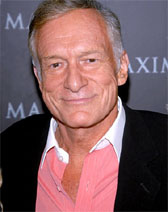
Hugh Hefner
Founder of Playboy and one of the most influential figures in modern media and publishing
Born on April 9, 1926
Died on September 27, 2017
Age at death: 91
Profession: Businessperson
Place of Birth: Chicago, Illinois, United States
Place of Death: Los Angeles, California, United States
Hugh Marston Hefner was an American businessman, publisher, and cultural provocateur best known as the founder of Playboy magazine. More than a magazine editor, Hefner was a media entrepreneur who reshaped postwar American attitudes toward sexuality, freedom of expression, lifestyle, and censorship. Through Playboy, he built a global brand that extended far beyond print, influencing journalism, television, literature, fashion, and popular culture for more than six decades.
Early Life and Family Background
Hugh Hefner was born on April 9, 1926, in Chicago, Illinois, into a conservative Midwestern household. He had one younger brother, Keith Hefner. His mother, Grace Caroline Hefner, was of Swedish descent, while his father, Glenn Lucius Hefner, was of German and English ancestry. Both parents held traditional values that emphasized restraint, discipline, and moral conformity.
This strict upbringing would later profoundly shape Hefner’s worldview. He often described his childhood as emotionally reserved, a formative experience that contributed to his later rejection of social repression and his advocacy for personal freedom, sexual openness, and individual expression.
Hefner attended Steinmetz High School in Chicago, where he showed early interest in drawing, cartooning, and writing. Even in adolescence, he was drawn to publishing as both a creative outlet and a means of shaping public discourse.
Military Service and Academic Formation
Between 1944 and 1946, Hugh Hefner served in the United States Army. Rather than combat duty, he worked as a writer for a military newspaper, gaining practical experience in journalism, editing, and structured publication under pressure.
After his military service, Hefner enrolled at the University of Illinois at Urbana-Champaign, where he studied psychology, creative writing, and art. He graduated in 1949, having developed a multidisciplinary intellectual foundation that combined behavioral science with storytelling and visual communication.
He later pursued graduate studies at Northwestern University, focusing on sociology and American sex laws. This academic engagement with censorship, morality, and legal regulation would later become central to Playboy’s editorial mission and legal battles.
Early Career and Break with Esquire
Hugh Hefner began his professional career as a copywriter at Esquire magazine, one of the most prominent men’s publications of the era. Although he admired Esquire’s blend of culture and style, he became increasingly frustrated by creative limitations and financial constraints.
In January 1952, after being denied a requested raise, Hefner resigned. The decision marked a turning point, as it pushed him toward founding his own publication rather than remaining within an established editorial hierarchy.
Determined to create a magazine that reflected his own vision, Hefner began developing a concept that combined sophisticated lifestyle content with sexual imagery and serious journalism.
The Founding of Playboy
In 1953, borrowing $1,000 from his mother, Hugh Hefner launched the first issue of Playboy magazine. Unsure of its future, the inaugural issue did not even include a publication date.
The debut issue famously featured a nude photograph of Marilyn Monroe taken in 1949 for a calendar. The issue sold out rapidly, immediately establishing Playboy as a cultural phenomenon and commercial success.
From the outset, Playboy differentiated itself by publishing not only erotic imagery but also interviews, fiction, political commentary, and cultural essays. This hybrid approach distinguished it sharply from competing adult magazines.
Editorial Philosophy and Intellectual Ambition
Hugh Hefner believed Playboy should serve as a platform for ideas as much as images. Under his leadership, the magazine published essays and interviews with politicians, philosophers, artists, and activists, positioning itself at the intersection of pleasure and intellect.
Playboy played a notable role in American literary culture. Hefner took a major risk by publishing Ray Bradbury’s Fahrenheit 451 at a time when the novel was considered too controversial. The work later gained classic status and was adapted for cinema by Francois Truffaut.
This editorial courage reinforced Playboy’s reputation as a defender of free expression and intellectual exploration.
Playboy Enterprises and Business Expansion
Under Hefner’s leadership, Playboy evolved into a global multimedia empire. Playboy Enterprises expanded into television, film production, nightclubs, licensed merchandise, and international editions.
The Playboy Clubs, launched in the early 1960s, became iconic symbols of modern leisure culture, blending exclusivity, nightlife, and brand identity. The company also developed television programs such as Playboy’s Penthouse and Playboy After Dark, which brought Hefner’s lifestyle philosophy into American living rooms.
By the late 20th century, Playboy had become one of the most recognizable lifestyle brands in the world, anchored by its tuxedo-wearing rabbit logo.
Censorship Battles and Legal Struggles
Hugh Hefner was deeply involved in numerous legal battles over obscenity, postal distribution, and censorship. Playboy was frequently targeted by conservative groups and government authorities seeking to restrict its circulation.
Hefner consistently positioned himself as a defender of the First Amendment, arguing that sexual expression and intellectual freedom were inseparable. Many landmark legal victories involving Playboy helped redefine the boundaries of permissible speech in American media.
These struggles cemented Hefner’s role not only as a publisher but also as a civil liberties advocate.
Political and Social Influence
Playboy was among the first major magazines to feature African American writers, artists, and public figures on equal footing, reflecting Hefner’s opposition to racial segregation and discrimination.
The magazine also addressed topics such as civil rights, abortion, contraception, and LGBTQ+ issues long before they entered mainstream media discourse. Through interviews and essays, Playboy helped normalize conversations that were once considered taboo.
This political dimension of Hefner’s work often remains overshadowed by his public image but represents a substantial part of his historical significance.
Life at the Playboy Mansion
In 1971, Hugh Hefner relocated from Chicago to Los Angeles, settling in the Playboy Mansion in Holmby Hills. The mansion became both his residence and a symbol of the Playboy brand.
For decades, the Playboy Mansion functioned as a social hub for celebrities, artists, and media figures. Hefner’s lifestyle, marked by constant companionship and high-profile gatherings, became inseparable from his public persona.
Many women who lived at or were associated with the mansion later gained fame, including Holly Madison and Kendra Wilkinson. Hefner also had relationships with twins Karissa Shannon and Kristina Shannon, reinforcing his controversial image.
Personal Life and Marriages
Hugh Hefner was married three times. His first marriage was to Mildred Williams in 1949. The couple divorced in 1959 and had two children: Christie Hefner and David Hefner.
In 1989, Hefner married model and actress Kimberley Conrad. They divorced in 2010 and had two sons, Marston Hefner and Cooper Hefner.
On December 31, 2012, Hefner married model and singer Crystal Harris, more than sixty years his junior, a union that attracted intense media scrutiny.
Later Years, Death, and Burial
Hugh Hefner spent his final years at the Playboy Mansion in Los Angeles. Long before his death, he purchased a burial plot at Westwood Village Memorial Park Cemetery next to Marilyn Monroe, symbolically closing the circle of Playboy’s origin story.
He died on September 27, 2017, at the age of ninety-one. His death marked the end of one of the longest and most influential publishing careers in modern history.
Legacy and Ongoing Debate
Hugh Hefner left behind a deeply complex legacy. Playboy’s readership statistics—approximately 81% male and 19% female, with nearly 40% married readers—challenged simplistic narratives about its audience.
While Hefner is celebrated for advancing freedom of expression and redefining lifestyle publishing, he is also the subject of modern criticism concerning power dynamics, gender representation, and the culture surrounding the Playboy Mansion.
Despite these debates, Hefner’s influence on media, branding, sexuality, and publishing remains undeniable. His work permanently altered the boundaries of what mass media could discuss—and how boldly it could do so.
Source: Biyografiler.com
Frequently asked questions about Hugh Hefner
Who is Hugh Hefner?, Hugh Hefner biography, Hugh Hefner life story, Hugh Hefner age, Hugh Hefner facts, Hugh Hefner birthplace, Hugh Hefner photos, Hugh Hefner videos, Hugh Hefner career
Related Biographies


Lamine Yamal
Professional footballer

Sam Altman
Entrepreneur, Investor, CEO

Kylian Mbappe
Professional footballer

Alice Weidel
Politician, Economist

Erling Haaland
Professional footballer

Giorgia Meloni
Politician, Journalist


Hongjoong
Singer, Rapper, Songwriter, Composer

Ludacris
Rapper, Actor

Kwon Eunbi
Singer

Sarah Wayne Callies
Actress, Screenwriter, Producer, Director

LaTavia Roberson
Singer, Actress, Entrepreneur
Lamine Yamal
Professional footballer

Lady Gaga
Singer, Musician, Songwriter, Actress, Producer

Jean Jacques Rousseau
Philosopher, Writer, Composer

Delcy Rodriguez
Politician, Lawyer, Diplomat


Taylor Swift
Singer, Musician, Songwriter