
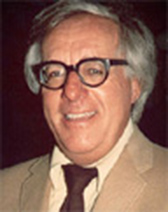
Ray Bradbury
Born on August 22, 1920
Died on June 5, 2012
Age at death: 92
Profession: Writer, Novelist
Place of Birth: Waukegan, Illinois, United States
Place of Death: Los Angeles, California, United States
Raymond Douglas Bradbury was an American writer celebrated for his imaginative range and extraordinary productivity. He is best known for the dystopian novel Fahrenheit 451, one of the most frequently adapted literary works in cinema and theatre history, as well as classics such as Something Wicked This Way Comes. Over a career spanning more than seventy years, Bradbury authored more than 400 short stories and novellas, wrote over 20 plays, dozens of children’s books, non-fiction works, and television screenplays, and appeared in more than 50 anthology collections, making him one of the most prolific writers of the modern era.
Early Life and Family Background
Ray Bradbury was born on August 22, 1920, in Waukegan, Illinois. He was the son of a Swedish immigrant mother and a father who worked installing telephone lines. His childhood in Waukegan would later become the emotional and symbolic foundation for many of his fictional settings.
As a young boy, Bradbury developed a deep attachment to libraries, particularly the Carnegie Library in Waukegan. He spent countless hours reading, absorbing mythology, fantasy, and classic literature, unknowingly laying the groundwork for the worlds he would later create.
In 1934, when Bradbury was thirteen, his family moved to Los Angeles. The relocation marked a major emotional shift, separating him from the town that had shaped his imagination, yet placing him closer to the emerging worlds of publishing, film, and popular culture.
Education Outside the Academy
Ray Bradbury attended Los Angeles High School and graduated in 1938. Despite being an excellent student, he chose not to attend college, largely due to financial hardship and personal conviction.
Instead of formal higher education, Bradbury famously educated himself through public libraries. After graduation, he supported himself by selling newspapers while dedicating his free time to reading and writing.
This unconventional path became central to his identity as a writer, reinforcing his lifelong belief that imagination and discipline mattered more than academic credentials.
Libraries and Literary Philosophy
Bradbury often spoke passionately about the formative role libraries played in his life. For him, libraries were not merely repositories of books but gateways to freedom, knowledge, and self-creation.
“I was educated in the library. I don’t believe in colleges and universities. Libraries raised me. I spent three days a week for ten years educating myself.”
This philosophy would later become a thematic backbone of Fahrenheit 451, a novel centered on censorship, book burning, and the preservation of knowledge.
Early Writing and Science Fiction Circles
Influenced by early science fiction heroes such as Flash Gordon and Buck Rogers, Ray Bradbury began writing stories in his teens. By 1938, he was selling short fiction to fanzines and amateur publications.
He joined the Los Angeles Science Fiction Society, where he met influential writers including Robert A. Heinlein, Fredric Brown, and Jack Williamson. These relationships helped refine his craft and integrate him into professional literary circles.
In 1938, Bradbury published his first short story, “Hollerbochen’s Dilemma,” in the fan magazine *Imagination!* marking his official literary debut.
Fanzines and First Publications
In 1939, Ray Bradbury launched his own fan magazine, *Futuria Fantasia*. Although only four issues were produced, each printed in limited quantities, the project provided Bradbury with invaluable editorial and publishing experience.
While the magazine was short-lived, it significantly contributed to his development as a writer and editor, sharpening his understanding of audience, pacing, and narrative impact.
This period represented Bradbury’s transition from amateur enthusiasm to professional ambition.
Professional Breakthrough
In 1941, Bradbury sold his short story “Pendulum” to *Super Science Stories* magazine for $15. This marked the first time he earned money solely through his writing.
Within two years, he committed fully to writing, abandoning all other forms of employment. His dedication quickly paid off, as his stories began appearing regularly in major science fiction and fantasy magazines.
In 1947, he published his first book, Dark Carnival, a collection of short stories that showcased his lyrical prose and thematic preoccupations with fear, nostalgia, and human fragility.
Major Works and Literary Identity
Ray Bradbury achieved worldwide recognition with the publication of Fahrenheit 451, a dystopian novel examining censorship, conformity, and the suppression of intellectual freedom. The book became a defining text of the twentieth century and was later adapted into film by Francois Truffaut.
Other landmark works include The Martian Chronicles, Something Wicked This Way Comes, and numerous short story collections that blurred the boundaries between science fiction, fantasy, horror, and literary fiction.
Although widely labeled a science fiction writer, Bradbury rejected the term, insisting that most of his work belonged to fantasy rather than speculative science.
“I don’t write science fiction. I’ve only written one science fiction book, and that’s Fahrenheit 451. Science fiction is a depiction of reality. Fantasy is not.”
Later Life and Personal Affairs
In 1947, Ray Bradbury married Marguerite McClure. The couple had four daughters and remained together for decades, forming a stable family life that contrasted with the often dark themes of his fiction.
Bradbury lived primarily in Los Angeles, continuing to write well into old age. His works were adapted into films, television series, stage productions, comic books, and radio dramas, and he became the subject of the documentary Ray Bradbury: Story of a Writer.
Even in his later years, Bradbury remained a vocal advocate for reading, libraries, and imaginative freedom.
Death and Legacy
Ray Bradbury died on June 5, 2012, in Los Angeles, California, at the age of ninety-two. His death marked the end of one of the most influential literary careers of the twentieth and early twenty-first centuries.
Bradbury’s legacy endures through his timeless works, which continue to be read, adapted, and studied worldwide. His writings remain central to discussions of censorship, imagination, childhood, and the moral responsibility of storytelling.
Source: Biyografiler.com
Frequently asked questions about Ray Bradbury
Who is Ray Bradbury?, Ray Bradbury biography, Ray Bradbury life story, Ray Bradbury age, Ray Bradbury facts, Ray Bradbury birthplace, Ray Bradbury photos, Ray Bradbury videos, Ray Bradbury career
Related Biographies

Lamine Yamal
Professional footballer

Sam Altman
Entrepreneur, Investor, CEO

Kylian Mbappe
Professional footballer

Alice Weidel
Politician, Economist

Erling Haaland
Professional footballer

Giorgia Meloni
Politician, Journalist


Hongjoong
Singer, Rapper, Songwriter, Composer

Ludacris
Rapper, Actor

Kwon Eunbi
Singer

Sarah Wayne Callies
Actress, Screenwriter, Producer, Director

LaTavia Roberson
Singer, Actress, Entrepreneur
Lamine Yamal
Professional footballer

Lady Gaga
Singer, Musician, Songwriter, Actress, Producer

Jean Jacques Rousseau
Philosopher, Writer, Composer

Delcy Rodriguez
Politician, Lawyer, Diplomat


Taylor Swift
Singer, Musician, Songwriter