
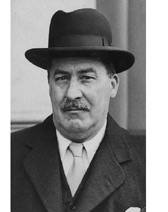
Howard Carter
Discoverer of Tutankhamun’s Tomb
Born on May 9, 1874
Died on March 2, 1939
Age at death: 65
Profession: Archaeologist
Place of Birth: Kensington, London, United Kingdom
Place of Death: Kensington, London, United Kingdom
Howard Carter was a British archaeologist and Egyptologist best known for discovering the tomb of Pharaoh Tutankhamun in 1922 in the Valley of the Kings near Luxor, Egypt. His groundbreaking find remains one of the most significant archaeological discoveries of the twentieth century. Through perseverance, technical skill, and collaboration with aristocratic patron Lord Carnarvon, Howard Carter transformed modern understanding of ancient Egyptian civilization.
Early Life and Artistic Foundations
Howard Carter was born on May 9, 1874, in Kensington, London, to Samuel John Carter and Martha Joyce Carter. Although born in London, he spent much of his childhood in Swaffham, Norfolk, living with his aunts. His father was a skilled artist, and it was through his father’s artistic connections that Carter first entered the world of archaeology.
Rather than receiving extensive formal academic training, Carter developed his expertise through practical experience. His talent for detailed drawing opened the doors of Egyptology to him at a young age, laying the foundation for a career that would blend art and archaeology.
Early Work in Egypt
At just 17 years old, in 1891, Howard Carter traveled to Egypt to work with the Egypt Exploration Fund at Beni Hasan, documenting Middle Kingdom tombs. Over the next several years, he worked under leading archaeologists in sites such as Amarna, Deir el-Bahari, Thebes, Edfu, and Abu Simbel. His precise and innovative recording techniques for wall reliefs and inscriptions earned widespread praise.
In 1892, at age eighteen, he joined the excavations of Sir Flinders Petrie at Tell el-Amarna. Between 1894 and 1899, he worked with Édouard Naville at Deir el-Bahari. In 1899, Carter was appointed Chief Inspector of the Egyptian Antiquities Service by the Egyptian government, a remarkable achievement for someone so young. He played a key role in identifying and preserving sites, including work connected to the mortuary temple of Queen Hatshepsut, who ruled Egypt for 22 years.
The Saqqara Incident and Professional Setback
In 1905, following what became known as the Saqqara Incident—a violent clash between Egyptian site guards and French tourists—Howard Carter refused to apologize on behalf of his Egyptian staff. His decision led to his resignation from the Antiquities Service. For nearly three years afterward, he found himself without stable employment in archaeology.
During this difficult period, Carter moved to Luxor and supported himself by selling watercolor paintings to tourists. He also worked as a freelance artist for Theodore Davis, another excavator in the Valley of the Kings. Though financially unstable, this phase demonstrated Carter’s resilience and deep attachment to Egypt.
Partnership with Lord Carnarvon
In 1907, Howard Carter was hired by Lord Carnarvon, a wealthy British aristocrat fascinated by Egyptology. From that point forward, Carnarvon financed Carter’s excavations while Carter supervised field operations. In 1914, Carnarvon secured the concession to excavate the Valley of the Kings, and Carter was reappointed to manage the project.
Excavations were interrupted by World War I, during which Carter worked as a diplomatic courier and translator for the British government. After the war, he resumed his search in the Valley of the Kings, convinced that the tomb of Tutankhamun remained undiscovered.
Discovery of Tutankhamun’s Tomb
On November 4, 1922, Howard Carter made the discovery that would define his legacy: the intact tomb of Pharaoh Tutankhamun. On November 29, 1922, the tomb was officially opened. The extraordinary preservation of treasures inside the burial chamber stunned the world. When asked if he could see anything, Carter famously replied:
“Yes, wonderful things.”The discovery generated global media attention. Carter granted exclusive reporting rights to The Times, a decision that angered segments of the Egyptian press. Tensions also emerged between Carter and Lord Carnarvon. In April 1923, Lord Carnarvon died in Cairo from blood poisoning, fueling widespread rumors of the so-called “Curse of the Pharaoh.” Newspapers sensationalized claims that an inscription warned: “Death shall come on swift wings to him who disturbs the peace of the king.” Though largely mythical, the curse narrative became permanently linked to the discovery.
Excavation and Later Career
The excavation of Tutankhamun’s treasures continued for nearly a decade, concluding in 1932. Howard Carter meticulously cataloged thousands of artifacts, producing detailed records that remain invaluable to Egyptologists.
After returning to London in 1932, he worked as a consultant and lecturer, touring the United States to speak about ancient Egypt and Tutankhamun. His lectures significantly increased American interest in Egyptian antiquities during the interwar period.
Following Lord Carnarvon’s death, Carter reportedly developed a relationship with Carnarvon’s daughter, Lady Evelyn Herbert, despite earlier objections from her father.
Final Years and Death
Despite the fame of his discovery, Howard Carter experienced financial difficulties in his later years. He died on March 2, 1939, in Kensington, London, from lymphoma at the age of 65. He was buried in Putney Vale Cemetery.
Although others involved in the excavation passed away earlier, Carter himself lived for seventeen years after opening the tomb, weakening popular myths surrounding the “curse.” Today, his name remains inseparable from the discovery of Tutankhamun and the golden age of Egyptology.
Major Publications
1904 – The Tomb of Thutmose IV
1923–1933 – The Tomb of Tutankhamun (Three Volumes)
Source: Biyografiler.com
Frequently asked questions about Howard Carter
Who is Howard Carter?, Howard Carter biography, Howard Carter life story, Howard Carter age, Howard Carter facts, Howard Carter birthplace, Howard Carter photos, Howard Carter videos, Howard Carter career

Lamine Yamal
Professional footballer

Erling Haaland
Professional footballer

Kylian Mbappe
Professional footballer

Ousmane Dembélé
Professional footballer

Taylor Swift
Singer, Musician, Songwriter

Ronaldinho
Professional footballer

Giovanni Ferrero
Businessperson

Cynthia Erivo
Singer, Actress, Songwriter, Producer

Mike Markkula
Businessperson, Entrepreneur

Carol Burnett
Actress, Singer

LeToya Luckett
Singer, Songwriter, Actress

Vince Gilligan
Screenwriter, Director, Producer
Erling Haaland
Professional footballer
Lamine Yamal
Professional footballer

Ilya Sutskever
Computer Scientist, Researcher
Kylian Mbappe
Professional footballer
Taylor Swift
Singer, Musician, Songwriter

Ariana Grande
Singer, Songwriter, Actress