

Gabriel García Márquez
A leading figure of magical realism in Latin American literature and one of the most influential writers of the twentieth century.
Born on March 6, 1927
Died on April 17, 2014
Age at death: 87
Profession: Novelist, Journalist, Screenwriter
Place of Birth: Aracataca, Magdalena, Colombia
Place of Death: Mexico City, Mexico
Gabriel García Márquez won the Neustadt International Prize for Literature in 1972 and the Nobel Prize in Literature in 1982. He is regarded as one of the most important writers of the twentieth century and a central figure of the literary movement known as magical realism.
Gabriel García Márquez was born on March 6, 1927, in Aracataca, Colombia, as the eldest of eleven children in a poor family. He completed middle school in Barranquilla and, thanks to a government scholarship, attended high school in Bogotá. He studied law and journalism at the National University of Colombia and later at the University of Cartagena, but left his education unfinished.
García Márquez began his career in journalism in 1948. In 1950, he became the Rome and Paris correspondent for the Bogotá-based newspaper El Espectador. In 1954, the newspaper officially sent him to Rome. From then on, he spent most of his life abroad, living in Paris, Venezuela, and eventually Mexico City. Despite gaining international fame through his novels, he continued to work as a journalist throughout his life.
In 1958, García Márquez returned to Colombia and continued his journalistic career in Caracas, the capital of Venezuela. In 1960, he moved to Mexico, where he worked as a journalist and screenwriter. During this period, he developed a close friendship with Fidel Castro.
In 1973, he moved to Barcelona, Spain. Later, in 1983, after facing accusations of having links with a guerrilla group, he settled permanently in Mexico, where he lived until his death. García Márquez also played a role in facilitating negotiations between the Colombian government and the country’s largest guerrilla movement, the Revolutionary Armed Forces of Colombia (FARC).
García Márquez is one of the leading representatives of magical realism in Latin American literature. His exceptional command of language allowed him to reflect poetic power even in prose. In The Story of a Shipwrecked Sailor, he recounts the true story of sailor Luis Alejandro Velasco, who survived ten days adrift on a raft after his ship sank. In No One Writes to the Colonel, the protagonist is portrayed as a deeply lonely figure trapped in his inner world.
The novel that brought him worldwide fame was One Hundred Years of Solitude, published in 1967. At the time of its release, García Márquez was living in extreme poverty, yet the success of the book enabled him to pay off all his debts. Translated into more than thirty languages and selling over fifty million copies, the novel was described by *The New York Times* as the most important literary work to be read since the Old Testament.
In 1985, he published Love in the Time of Cholera, a novel that attracted strong interest from Hollywood. Producer Scott Steindorff pursued the film rights for three years before finally obtaining permission. The novel was adapted into a feature film in 2007.
In 1981, García Márquez published Chronicle of a Death Foretold, which tells the story of the murder of Santiago Nasar. In 1989, he wrote The General in His Labyrinth, focusing on the final months of Simón Bolívar’s life.
In 1996, he published News of a Kidnapping, which recounts the stories of ten people abducted by the Colombian drug cartel led by Pablo Escobar. That same year, he wrote an article for *The New York Times* offering an alternative account of the story of migrant child Elian Gonzalez.
During the mid-1970s, García Márquez declared that he would not publish any new books until Chilean dictator Augusto Pinochet was overthrown. His friends believed this statement was intended to create a calculated impact, and the author himself did not remain faithful to it, publishing Love in the Time of Cholera shortly afterward.
In 1958, García Márquez married Mercedes Barcha Pardo, with whom he had two sons, Rodrigo García and Gonzalo García. He died on April 17, 2014, in Mexico City, at the age of eighty-seven.
After his death, his personal archive was sold by his family for 2.2 million dollars to the University of Texas in Austin, United States.
Selected Works
Leaf Storm
No One Writes to the Colonel
Big Mama’s Funeral
In Evil Hour
One Hundred Years of Solitude
The Autumn of the Patriarch
Chronicle of a Death Foretold
Love in the Time of Cholera
The General in His Labyrinth
Strange Pilgrims
Of Love and Other Demons
Memories of My Melancholy Whores
The Story of a Shipwrecked Sailor
Living to Tell the Tale
Source: Biyografiler.com
Gabriel García Márquez Movies
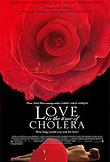
Love in the Time of Cholera
Release Date: August 31, 2007
Director: Mike Newell
Writer: Ronald Harwood, Gabriel García Márquez
Cast: Benjamin Bratt, Javier Bardem, Gina Bernard Forbes, Giovanna Mezzogiorno, Juan Ángel, Liev Schreiber
Frequently asked questions about Gabriel García Márquez
Who is Gabriel García Márquez?, Gabriel García Márquez biography, Gabriel García Márquez life story, Gabriel García Márquez age, Gabriel García Márquez facts, Gabriel García Márquez birthplace, Gabriel García Márquez photos, Gabriel García Márquez videos, Gabriel García Márquez career
Related Biographies

Lamine Yamal
Professional footballer

Kylian Mbappe
Professional footballer

Erling Haaland
Professional footballer

Sam Altman
Entrepreneur, Investor, CEO

Bad Bunny
Rapper, Songwriter

Brad Pitt
Actor


Hongjoong
Singer, Rapper, Songwriter, Composer

Ludacris
Rapper, Actor

Kwon Eunbi
Singer

Sarah Wayne Callies
Actress, Screenwriter, Producer, Director

LaTavia Roberson
Singer, Actress, Entrepreneur
Erling Haaland
Professional footballer

Tim Berners Lee
Computer Scientist, Professor

Amber Heard
Actress, Model

Tim Roth
Actor, Director
Brad Pitt
Actor

Delcy Rodriguez
Politician, Lawyer, Diplomat