
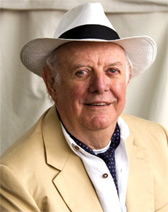
Dario Fo
Radical theatre innovator and Nobel Prize–winning dramatist
Born on March 24, 1926
Died on October 13, 2016
Age at death: 90
Profession: Director, Actor
Place of Birth: Sangiano, Lombardy, Italy
Place of Death: Milan, Italy
Dario Fo was one of the most influential and provocative figures in modern European theatre, internationally recognized for his sharp political satire, revival of popular theatrical traditions, and uncompromising opposition to institutional power. Frequently compared to figures such as Bertolt Brecht and Molière for his use of comedy as a vehicle for political confrontation, he blended farce, commedia dell’arte, and agitprop performance to reshape contemporary theatre into a tool of social criticism and civic resistance.
Early Life and Background
Dario Fo was born on March 24, 1926, in Sangiano, a small town in northern Italy. He was the son of Felice Fo, a locomotive engineer, and Pina Rota Fo. His upbringing in a working-class environment deeply influenced his later political worldview and artistic orientation, closely aligning with the class-conscious cultural thought articulated by Italian intellectuals such as Antonio Gramsci. He had one brother, Fulvio Fo, and a sister, Bianca Fo Garambois, who also became a writer.
In 1940, Fo moved to Milan to continue his education. He enrolled at the Brera Academy of Fine Arts, where he studied painting and architecture. During this formative period, he was exposed to avant-garde artistic movements and the legacy of modern European visual culture, experiences that later shaped the visual and physical language of his theatrical work.
Career Beginnings
Dario Fo began his professional theatre career in 1952 in Milan as a stage actor. In his early years, he collaborated on satirical revues for small cabarets and theatres, often assisting established writers. His rapid rise within the Italian theatre scene occurred alongside figures such as Eduardo De Filippo, though Fo’s style soon diverged through its more aggressive political satire and physical exaggeration.
He emerged not only as a playwright and actor but also as a mime performer and director. His work was frequently described as theatrical caricature, positioning him as a social agitator and “radical clown,” a modern echo of medieval jesters and popular storytellers who challenged authority through laughter.
Collaboration with Franca Rame
In 1954, Dario Fo married Italian theatre actress Franca Rame, marking the beginning of one of the most significant artistic partnerships in twentieth-century theatre. Their collaboration is often cited alongside other historic theatre duos in Europe, as their creative and political lives became inseparable. In 1959, the couple founded the Dario Fo–Franca Rame Theatre Company, which became a central platform for their politically engaged productions.
Their appearance on the popular television program “Canzonissima,” where they performed satirical sketches, brought them national recognition. However, as their work increasingly targeted political power and social injustice, they faced censorship and were gradually excluded from state television, a fate shared by many politically outspoken artists of the era.
Political Theatre and Popular Performance
Throughout the 1960s and 1970s, Dario Fo and Franca Rame developed a form of political agitprop theatre rooted in the traditions of commedia dell’arte. Their performances were often deliberately vulgar, confrontational, and improvisational, aimed at exposing corruption, class oppression, and institutional hypocrisy, much like the political theatre movements emerging across Europe and Latin America during the same period.
In 1968, they co-founded the New Stage Theatre, which maintained close ties to the Italian Communist Party. Two years later, they launched the People’s Theatre Collective, bringing performances directly to factories, parks, and public spaces, recalling the socially engaged performances championed by earlier political artists and activists.
Among his most celebrated works from this period are Morte accidentale di un anarchico (1970; Accidental Death of an Anarchist) and Non si paga, non si paga! (1974; Can’t Pay? Won’t Pay!). As a performer, Fo became especially renowned for his one-man show Mistero Buffo (1973), a contemporary reinterpretation of medieval mystery plays that shifted with each audience and political context.
Nobel Prize and International Recognition
In 1997, Dario Fo was awarded the Nobel Prize in Literature, joining a lineage of politically engaged laureates and reinforcing his status as one of the most important theatrical voices of the twentieth century. The Nobel Committee’s decision placed him in the same tradition as writers such as George Bernard Shaw and Jean-Paul Sartre, whose work similarly fused literature with political commitment.
His plays were frequently labeled scandalous, and he was arrested on multiple occasions, including during live performances. Despite—or because of—this controversy, his works were translated into more than 30 languages and staged across Europe, Latin America, Africa, and Asia, including Turkey, Argentina, Sweden, Chile, the United Kingdom, South Africa, South Korea, and Sri Lanka.
Political Views and Public Engagement
Dario Fo openly identified as an atheist and a Marxist-Leninist. In his later years, he became an outspoken supporter of Italy’s anti-establishment Five Star Movement, sharply criticizing the government of Matteo Renzi and mainstream political institutions, positioning himself alongside other European intellectuals who challenged neoliberal governance.
Speaking at a movement rally, he famously urged supporters: “Turn everything upside down! We couldn’t do it—now you must.”
Personal Life
Dario Fo and Franca Rame had one son, Jacopo Fo, born on March 31, 1955. Franca Rame passed away on May 29, 2013, bringing an end to one of the longest and most influential creative partnerships in modern European theatre.
Death
Dario Fo died on October 13, 2016, in Milan at the age of 90. His death marked the end of a theatrical era defined by dissent, satire, and radical popular engagement.
Awards
- 1981 – Sonning Prize
- 1986 – Obie Award
- 1997 – Nobel Prize in Literature (for Accidental Death of an Anarchist)
- 1997 – Italian Gold Medal for Culture and Art (State Medal)
Major Works
- 1960 – He Had Two Pistols with Black and White Eyes
- 1969 – One for All, All for One!
- 1970 – Accidental Death of an Anarchist
- 1974 – Can’t Pay? Won’t Pay!
- 1978 – The Story of the Tiger
- 1984 – Elizabeth, Almost by Chance a Woman
- 1989 – The Pope and the Witch
- 1997 – The Actor’s Manual
- 1998 – Help! The People Are Coming!
- 2004 – The First Seven Years
Theatrical Works
- 1958 – Un morto da vendere (A Corpse for Sale)
- 1958 – Everyone Smokes and All Harm Comes from Thieves
- 1959 – The Archangels Don’t Play Pinball
- 1960 – He Had Two Pistols with Black and White Eyes
- 1961 – Who Steals a Foot Is Lucky in Love
- 1963 – Isabella, Three Sailing Ships and a Con Man
- 1967 – The Lady Must Be Thrown Out
- 1968 – Great Pantomime with Flags and Puppets
- 1968 – Death and Resurrection of a Puppet
- 1969 – Mistero Buffo
- 1970 – Accidental Death of an Anarchist
- 1972 – Fedayn
- 1972 – An Arab Woman Speaks
- 1974 – Can’t Pay? Won’t Pay!
- 1977 – All House, Bed and Church
- 1977 – A Woman Alone
- 1978 – The Story of the Tiger
- 1983 – Open Couple, Half Open
- 1989 – The Pope and the Witch
- 1992 – Johan Padan and the Discovery of the Americas
- 1995 – Leonardo: Flight, Count and Love
- 1997 – The Devil with Breasts
- 2003 – The Two-Headed Anomaly
- 2009 – Francis, the Holy Jester
Books
- Women’s Plays I – Eleven Plays
- Let’s Talk About Women
- Women’s Plays II: The Almost Completely Open Family
- Can’t Pay? Won’t Pay!
- Almost a Woman: Elizabeth
- Accidental Death of an Anarchist
- Free Marino! Marino Is Innocent!
- Horns, Trumpets and Raspberries
- An Ordinary Day and Twelve Other Comedies
- Sex? No Thanks
Source: Biyografiler.com
Frequently asked questions about Dario Fo
Who is Dario Fo?, Dario Fo biography, Dario Fo life story, Dario Fo age, Dario Fo facts, Dario Fo birthplace, Dario Fo photos, Dario Fo videos, Dario Fo career
Related Biographies

Lamine Yamal
Professional footballer

Kylian Mbappe
Professional footballer

Sam Altman
Entrepreneur, Investor, CEO

Erling Haaland
Professional footballer

Alice Weidel
Politician, Economist

Giorgia Meloni
Politician, Journalist


Hongjoong
Singer, Rapper, Songwriter, Composer

Ludacris
Rapper, Actor

Kwon Eunbi
Singer

Sarah Wayne Callies
Actress, Screenwriter, Producer, Director

LaTavia Roberson
Singer, Actress, Entrepreneur

Snoop Dogg
Rapper, Singer, Actor

Sergio Perez
Formula 1 Driver

Naomi Watts
Actress

Brad Pitt
Actor

Eileen Gu
Freestyle Skier, Model

Josh Duhamel
Actor