
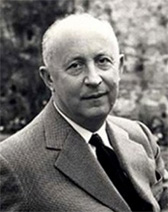
Christian Dior
Founder of the House of Dior and creator of the “New Look” silhouette
Born on January 21, 1905
Died on October 23, 1957
Age at death: 52
Profession: Fashion Designer, Entrepreneur
Place of Birth: Granville, Normandy, France
Place of Death: Montecatini Terme, Italy
Christian Dior was a French fashion designer and the founder of the legendary fashion house Christian Dior, one of the most influential couture maisons in history. By introducing the revolutionary “New Look” after the Second World War, Dior reshaped women’s fashion, revived Paris as the global center of haute couture, and permanently altered the visual language of 20th-century style.
Early Life and Education
Christian Dior was born on January 21, 1905, in the seaside town of Granville in Normandy, France. He was the son of industrialist Maurice Dior and Isabelle Cardamone. The Dior family made its fortune in fertilizer manufacturing, allowing Christian to grow up in relative privilege during his early years.
At the age of ten, Dior moved with his four siblings to Paris. After completing his early education, he enrolled at the Institut d'Études Politiques de Paris to study political science, fulfilling his family’s wish that he pursue a diplomatic career. However, Dior’s true interests lay elsewhere—in art, architecture, fashion, and illustration.
Artistic Ambitions and Financial Hardship
Rejecting a conventional career path, Christian Dior began selling fashion sketches for small sums, often earning just a few cents per drawing. With financial assistance from his father, he opened a small art gallery in Paris in 1928. The gallery showcased modern and avant-garde artists, including works associated with figures such as Pablo Picasso.
The global economic crisis of 1931 devastated the Dior family’s finances, forcing the gallery to close. During this period of hardship, Dior supported himself by designing hat illustrations for Le Figaro and creating sketches for various Parisian fashion houses.
Early Fashion Career and Wartime Years
Throughout the 1930s and early 1940s, Christian Dior worked with Swiss-born designer Robert Piguet, where he refined his understanding of couture construction and silhouette. In 1941, he temporarily left Paris and moved to southern France, working in agriculture. After completing his military service in 1942, he returned to Paris and joined the fashion house of Lucien Lelong, where he worked alongside fellow designer Pierre Balmain.
During the German occupation of France, Dior—like many Parisian couturiers—designed clothing for the wives of Nazi officers and French collaborators. While controversial in retrospect, this period allowed couture houses to survive and preserved Paris’s fashion infrastructure.
Founding the House of Dior
On December 16, 1946, with financial backing from textile magnate Marcel Boussac, Christian Dior founded his own fashion house at Avenue Montaigne in Paris. The maison quickly positioned itself at the forefront of postwar fashion innovation.
In January 1947, Dior presented his first couture collection, officially titled Corolle. The collection was famously described as a “New Look” by Carmel Snow, editor-in-chief of Harper’s Bazaar, a phrase that instantly entered fashion history and defined an entire era.
The “New Look” and Silhouette Revolution
The “New Look” stood in stark contrast to the austere, masculine styles of wartime fashion. Dior himself referred to the silhouette as the “Figure 8,” characterized by rounded shoulders and bust, a dramatically cinched waist, and voluminous skirts. The design celebrated opulence, sensuality, and structure.
Following this breakthrough, Christian Dior introduced a series of named silhouettes that shaped the evolution of couture: the asymmetrical “Zig-Zag Line” (1948), the “Vertical Line” (1950), the flower-inspired “Tulip Line” (1953), and later the “H Line,” “A Line,” and “Y Line” (1954–55). These innovations established Dior as a master of form and proportion.
Dior famously declared, “I designed the flower woman,” encapsulating his vision of femininity. His designs featured corseted bodices, padded hips, petticoats, and rich fabrics that flared outward from the waist, creating an unmistakably sculpted silhouette.
Critical Reaction and Cultural Impact
Initially, Dior’s lavish use of fabric provoked backlash from women accustomed to wartime rationing. During early Paris fashion shoots, models wearing Dior’s designs were reportedly confronted by market women angered by the perceived extravagance. As postwar shortages eased, however, resistance faded.
The “New Look” ultimately transformed women’s fashion and reestablished Paris as the world’s fashion capital. Dior’s clientele ranged from European royalty to Hollywood icons such as Marlene Dietrich and Ava Gardner. Fashion editors including Diana Vreeland of Vogue championed his vision internationally.
Global Expansion and Commercial Success
By 1949, the House of Dior achieved sales of approximately 12.7 million dollars. That same year, Dior opened a boutique in New York City and expanded to London in 1954. By the early 1950s, the brand operated in Mexico, Canada, Cuba, and Italy, becoming a truly global fashion enterprise.
Perfume and Brand Diversification
In 1948, Christian Dior launched Christian Dior Parfums, beginning the brand’s expansion beyond couture. The Dior name soon appeared on accessories including ties, hats, gloves, handbags, jewelry, lingerie, and scarves—anticipating the modern luxury fashion conglomerate model.
Death and Succession
Christian Dior died suddenly of a heart attack on October 23, 1957, while vacationing in Montecatini Terme, Italy. He was 52 years old.
Following his death, Dior’s 21-year-old assistant, Yves Saint Laurent, was appointed head designer of the House of Dior. Saint Laurent’s appointment marked the beginning of a lineage of influential designers who would later include figures such as John Galliano and Maria Grazia Chiuri.
Legacy
Today, Dior’s birthplace in Granville operates as the Christian Dior Museum, preserving his personal history and creative legacy. His influence continues to shape contemporary fashion, from haute couture to ready-to-wear.
Christian Dior remains one of the most transformative figures in fashion history—a designer who not only redefined women’s silhouettes but also laid the foundations for the modern global luxury fashion industry.
Source: Biyografiler.com
Frequently asked questions about Christian Dior
Who is Christian Dior?, Christian Dior biography, Christian Dior life story, Christian Dior age, Christian Dior facts, Christian Dior birthplace, Christian Dior photos, Christian Dior videos, Christian Dior career
Related Biographies


Lamine Yamal
Professional footballer

Sam Altman
Entrepreneur, Investor, CEO

Kylian Mbappe
Professional footballer

Alice Weidel
Politician, Economist

Erling Haaland
Professional footballer

Giorgia Meloni
Politician, Journalist


Hongjoong
Singer, Rapper, Songwriter, Composer

Ludacris
Rapper, Actor

Kwon Eunbi
Singer

Sarah Wayne Callies
Actress, Screenwriter, Producer, Director

LaTavia Roberson
Singer, Actress, Entrepreneur
Sam Altman
Entrepreneur, Investor, CEO

Kaia Gerber
Model, Actress
Lamine Yamal
Professional footballer

Austin Abrams
Actor
Kylian Mbappe
Professional footballer

Zohran Mamdani
Politician, Musician