
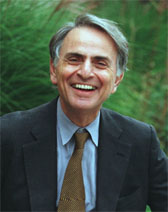
Carl Sagan
A pioneering astronomer and astrobiologist who helped bring science to the public and advanced the search for extraterrestrial intelligence.
Born on November 9, 1934
Died on December 20, 1996
Age at death: 62
Profession: Astronomer, Author
Place of Birth: Brooklyn, New York, United States
Place of Death: Seattle, Washington, United States
Carl Edward Sagan was an American astronomer, astrobiologist, astrophysicist, author, and one of the most influential science communicators of the 20th century. He was a pioneer of astrobiology and made major contributions to the advancement of the Search for Extraterrestrial Intelligence (SETI). Through his scientific work and popular writings, he succeeded in making complex scientific ideas accessible to millions around the world.
Carl Edward Sagan was born on November 9, 1934, in Brooklyn, New York. His father, Samuel Sagan, was a tailor, and his mother, Rachel Molly Gruber, was a homemaker. Raised in a Jewish family, Sagan displayed an early fascination with science and the cosmos. He studied physics, astronomy, and astrophysics at the University of Chicago, graduating in 1955. He earned a master’s degree in physics in 1956 and completed his doctorate in astronomy and astrophysics in 1960. During his student years, he worked in the laboratory of geneticist Hermann Joseph Muller.
In the early 1960s, very little was known about the surface conditions of Venus. Sagan prepared a report analyzing possible scenarios and argued that the planet was extremely hot and dry. He contributed to the design and planning of NASA’s Mariner missions at the Caltech Jet Propulsion Laboratory. The success of the Mariner 2 mission in 1962 confirmed his predictions with direct observational data.
Sagan worked briefly as a genetic research assistant at the Stanford University School of Medicine. He later joined Harvard University, where he served as a lecturer and astronomy assistant for five years. In 1968, he moved to Cornell University as an associate professor, and in 1971 he became a full professor of astronomy and space sciences, eventually leading a major research laboratory.
Throughout the 1970s, Sagan’s work earned him numerous prestigious awards, including NASA Medals in 1972 and 1977, the Joseph Priestley Award in 1975, and the Pulitzer Prize in 1977. In 1975, he was appointed the second director of Cornell’s Center for Radiophysics and Space Research. He also served as editor-in-chief of the international scientific journal Icarus from 1968 to 1979 and acted as a consultant on multiple space missions.
Sagan played a central role in unmanned space missions exploring the Solar System. He proposed the idea of attaching messages to spacecraft leaving the Solar System for potential extraterrestrial intelligences. The first such message was the gold plaque aboard Pioneer 10. His most detailed contribution was the Voyager Golden Record, placed aboard the Voyager spacecraft and containing images, sounds of nature, music, and greetings in 55 languages.
The Voyager Golden Record includes 115 images, natural sounds, and music such as Johnny B. Goode. A Turkish greeting on the record was spoken by Professor Kuniholm, a colleague of Sagan, sending the message: “Dear Turkish-speaking friends, may your mornings be blessed.”
Sagan was among the first scientists to propose that Saturn’s moon Titan and Jupiter’s moon Europa could possess oceans. In Europa’s case, he suggested a subsurface ocean that might provide a potential habitat for life. This hypothesis was later indirectly supported by data from the Galileo spacecraft. He also contributed significantly to understanding Jupiter’s atmosphere, seasonal changes on Mars, and the extreme greenhouse conditions on Venus, drawing early attention to the dangers of global warming on Earth.
In 1985, Sagan published the novel Contact, which was adapted into a feature film in 1997, directed by Robert Zemeckis and starring Jodie Foster and Matthew Mcconaughey. His global influence peaked with the 13-part television series Cosmos, which presented humanity’s scientific knowledge in an inspiring and accessible form.
Sagan’s political and social activism intensified after his marriage to novelist and activist Ann Druyan. He participated in civil resistance against nuclear weapons and emphasized the ethical responsibilities of scientists.
Sagan was married three times. His first marriage was to Lynn Margulis in 1957; they divorced in 1964 and had two children, Dorion Sagan and Jeremy Sagan. He married Linda Salzman Sagan in 1968; they divorced in 1981 and had one son, Nick Sagan. In 1981, he married Ann Druyan, with whom he had two children, Sasha Sagan and Samuel Sagan.
Carl Edward Sagan died on December 20, 1996, in Seattle, Washington, at the age of sixty-two from myelodysplastic syndrome, a severe bone marrow disease.
Quotations
As long as God is imagined as a bearded old man sitting in the sky and running the universe, the idea is absurd. — Carl Sagan
If we have been deceived long enough, we reject any evidence of the deception. — Carl Sagan
The universe is a pretty big place. If it's just us, it seems like an awful waste of space. — Carl Sagan
Somewhere, something incredible is waiting to be known. — Carl Sagan
Books
Source: Biyografiler.com
Carl Sagan Movies
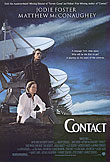
Contact
Release Date: July 11, 1997
Director: Robert Zemeckis
Writer: Carl Sagan
Cast: Jodie Foster, Jena Malone, Matthew McConaughey, David Morse, Geoffrey Blake, William Fichtner
Frequently asked questions about Carl Sagan
Who is Carl Sagan?, Carl Sagan biography, Carl Sagan life story, Carl Sagan age, Carl Sagan facts, Carl Sagan birthplace, Carl Sagan photos, Carl Sagan videos, Carl Sagan career
Related Biographies

Lamine Yamal
Professional footballer

Kylian Mbappe
Professional footballer

Erling Haaland
Professional footballer

Sam Altman
Entrepreneur, Investor, CEO

Austin Abrams
Actor

Bad Bunny
Rapper, Songwriter


Hongjoong
Singer, Rapper, Songwriter, Composer

Ludacris
Rapper, Actor

Kwon Eunbi
Singer

Sarah Wayne Callies
Actress, Screenwriter, Producer, Director

LaTavia Roberson
Singer, Actress, Entrepreneur

Adam Sandler
Actor

Cillian Murphy
Actor

Pedro Sanchez
Politician
Lamine Yamal
Professional footballer
Austin Abrams
Actor

Brad Pitt
Actor