
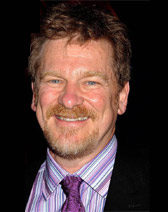
Roger Allers
Born on June 29, 1949
Died on January 17, 2026
Age at death: 77
Profession: Film Director, Screenwriter
Place of Birth: Rye, New York, United States
Place of Death:
Roger Allers was an American film director, screenwriter, animator, storyboard artist, and playwright whose creative vision helped define the modern golden age of animated cinema. He was best known as the co-director of Disney Animation’s The Lion King (1994), the highest-grossing traditional animated film of all time, and as the co-writer of its Broadway musical adaptation. Over a career spanning more than four decades, Allers played a central role in shaping some of the most influential animated films in cinematic history.
Early Life and Background
Roger Allers was born on June 29, 1949, in Rye, New York, and grew up in Scottsdale, Arizona. His fascination with animation began at the age of five after watching Walt Disney’s Peter Pan (1953), an experience that left a lasting impression and sparked his dream of becoming an animator. Although the death of Walt Disney in 1966 briefly cast doubt on that ambition, Allers continued to pursue artistic training with determination.
He enrolled at Arizona State University, where he earned a Bachelor of Fine Arts degree. During his academic years, his interest in animation was reignited through formal study and experimentation. After graduating, Allers spent two years traveling and living in Greece, a formative period that broadened his cultural perspective. It was during this time that he met Leslee Hackenson, whom he would later marry.
Career Beginnings and Early Professional Work
Roger Allers began his professional career at Lisberger Studios, contributing as an animator to projects such as Sesame Street, The Electric Company, and various commercial productions. In 1978, he relocated to Los Angeles with Steven Lisberger to work on Animalympics (1980), marking his first involvement in a feature-length animated film.
He soon joined the storyboard team for Tron (1982), one of the earliest major motion pictures to make extensive use of computer-generated imagery. This experience placed Allers at the forefront of a rapidly evolving animation landscape and established his reputation as a versatile and forward-thinking visual storyteller.
International Experience and Expanding Scope
Allers’ career took on an international dimension in the early 1980s. He worked with Nelvana Studios in Canada on Rock & Rule (1983) and later traveled to Japan to contribute to Little Nemo: Adventures in Slumberland (1989). While in Tokyo, he led Japanese animation teams, gaining firsthand experience with different animation cultures and production philosophies.
This period significantly enriched his artistic approach, blending Western narrative traditions with international visual sensibilities. The skills and insights he gained abroad would later inform his work on major studio productions in the United States.
Disney Renaissance and Major Achievements
In the mid-1980s, Roger Allers returned to Los Angeles and joined Walt Disney Animation Studios. He began as a storyboard artist on Oliver & Company (1988) and quickly became involved in a succession of landmark films, including The Little Mermaid (1989), The Prince and the Pauper (1990), and The Rescuers Down Under (1990).
His role expanded further when he served as Head of Story on Beauty and the Beast (1991), leading the team responsible for visualizing the screenplay by Linda Woolverton. He also contributed to Aladdin (1992), before reaching a career-defining milestone as co-director of The Lion King (1994) alongside Rob Minkoff. The film was universally acclaimed and is widely regarded as one of the most important animated features ever produced.
Broadway, Creative Independence, and Later Disney Work
Following the success of The Lion King, Roger Allers collaborated with Irene Mecchi to write the libretto for its Broadway musical adaptation. The production won the Tony Award for Best Musical, while Allers and Mecchi received a nomination for Best Book of a Musical.
Creative disagreements led Allers to depart from Disney’s Kingdom of the Sun project, later released as The Emperor’s New Groove. Nevertheless, he continued to contribute to Disney projects, including Lilo & Stitch (2002), and directed the Academy Award–nominated short film The Little Matchgirl (2006), which demonstrated his enduring commitment to emotionally resonant storytelling.
Post-Disney Career and Final Works
After leaving Disney, Roger Allers co-directed Sony Pictures Animation’s first feature-length film, Open Season (2006). He later wrote and directed The Prophet (2014), an animated adaptation of Kahlil Gibran’s philosophical work, which brought together multiple international animation styles and directors.
Throughout his career, Allers received numerous prestigious nominations, including Academy Award and Tony Award recognition, underscoring his lasting influence across both film and theater.
Personal Life
Roger Allers married Leslee Hackenson in 1977, and the couple divorced in 2020. He was the father of two children, Leah and Aidan. Despite his professional prominence, Allers maintained a relatively private personal life, focusing his public presence primarily on his creative work.
Death and Legacy
Roger Allers passed away on January 17, 2026, at the age of 76, in his home in Santa Monica, California, following a short illness. His death marked the loss of one of the defining creative figures of animation’s modern era.
Filmography
1980 – Animalympics (TV film)
1982 – Tron (feature film)
1983 – Rock & Rule (feature film)
1988 – Oliver & Company (feature film)
1989 – The Little Mermaid (feature film)
1989 – Little Nemo: Adventures in Slumberland (feature film)
1990 – The Rescuers Down Under (feature film)
1990 – The Prince and the Pauper (short film)
1991 – Beauty and the Beast (feature film)
1992 – Aladdin (feature film)
1994 – The Lion King (feature film)
2000 – The Emperor’s New Groove (feature film)
2002 – Lilo & Stitch (feature film)
2002 – The Sweatbox (documentary)
2002 – Return to Never Land (feature film)
2004 – The Lion King 1½ (feature film)
2006 – The Little Matchgirl (short film)
2006 – Open Season (feature film)
2007 – Surf’s Up (feature film)
2010 – Waking Sleeping Beauty (documentary)
2014 – The Prophet (feature film)
2018 – Howard (documentary)
2019 – The Lion King (feature film)
Source: Biyografiler.com
Frequently asked questions about Roger Allers
Who is Roger Allers?, Roger Allers biography, Roger Allers life story, Roger Allers age, Roger Allers facts, Roger Allers birthplace, Roger Allers photos, Roger Allers videos, Roger Allers career

Lamine Yamal
Professional footballer

Sam Altman
Entrepreneur, Investor, CEO

Kylian Mbappe
Professional footballer

Alice Weidel
Politician, Economist

Erling Haaland
Professional footballer

Giorgia Meloni
Politician, Journalist


Hongjoong
Singer, Rapper, Songwriter, Composer

Ludacris
Rapper, Actor

Kwon Eunbi
Singer

Sarah Wayne Callies
Actress, Screenwriter, Producer, Director

LaTavia Roberson
Singer, Actress, Entrepreneur
Lamine Yamal
Professional footballer

Claudia Sheinbaum
President, Politician, Scientist, Academic

Austin Abrams
Actor

Colman Domingo
Actor, Director, Producer

Pedro Sanchez
Politician

Kaia Gerber
Model, Actress