

Pele
Born on October 23, 1940
Age: 86
Profession: Professional footballer
Place of Birth: Três Corações, Minas Gerais, Brazil
Edson Arantes do Nascimento, globally known as Pelé, and affectionately called “Dico” by his family, is widely regarded as the greatest footballer in the history of the sport. Scoring an extraordinary total of 1,281 goals during his career, he set a record that remains one of the most difficult to surpass in world football and secured his place among the greatest athletes of all time.
Pelé was born on October 23, 1940, in Três Corações, Brazil, into a very poor family as the son of Dondinho and Celeste Nascimento. His father was a former footballer whose career ended prematurely due to a broken leg. Pelé began playing football at a very young age alongside his father. His first team was Bauru Atlético Clube. Friends nicknamed him “Peli,” meaning mischievous, which later evolved into the name Pelé.
During his childhood, when he was not playing football, Pelé worked as a shoe shiner to help support his family. At the age of 11, he was discovered by former Brazilian international footballer Waldemar de Brito, who took him to São Paulo and introduced him to the technical staff of Santos FC. Pelé quickly made a name for himself and, at just 16 years old, joined Santos’ senior team in 1956. He scored a goal in his debut match against Corinthians, immediately attracting attention with his exceptional talent.
At only 17 years old, Pelé traveled to Sweden as part of Brazil’s squad for the 1958 FIFA World Cup, initially as a substitute. His dazzling performances soon earned him a place in the starting eleven. In the final, which Brazil won 5–2, Pelé scored two goals, and he finished the tournament with six goals in total, mesmerizing football fans worldwide. Brazil won their first World Cup, and Pelé became an international sensation.
After winning his first World Cup in 1958, Pelé went on to represent Brazil again in the 1962 World Cup in Chile. Although he was injured in the opening match and missed much of the tournament, Brazil successfully defended their title. In the 1966 World Cup held in England, Pelé suffered from extremely harsh defensive tactics by Bulgarian and Portuguese players and completed the tournament injured, yet his determination never wavered.
The pinnacle of his international career came in 1970 at the World Cup in Mexico. At the age of 29, Pelé led Brazil to a historic victory, defeating Italy 4–1 in the final. During this tournament, he scored Brazil’s 100th World Cup goal, helping his nation secure a third World Cup title and cementing his legacy in football history.
Despite receiving record-breaking transfer offers from major European clubs, Pelé remained in Brazil for many years. To prevent him from leaving the country, the Brazilian government even declared him a national treasure. Although he announced his retirement in 1974, he returned to football a year later by signing with New York Cosmos in the North American Soccer League.
Pelé played for the Cosmos for three seasons under a $7 million contract, becoming the highest-paid player in American football at the time. His presence significantly increased interest in soccer across the United States, introducing millions of Americans to the sport.
Throughout his football career, Pelé won three World Cups with Brazil. Between 1956 and 1974, he played 1,265 matches for Santos, scoring 1,124 goals. From 1975 to 1977, he played 111 matches for the Cosmos, scoring 65 goals. Wearing the Brazilian national team jersey between 1956 and 1971, Pelé averaged nearly one goal per international match, recording 92 hat-tricks and scoring 97 international goals, records that still stand today.
Over the course of 1,363 official matches, Pelé scored 1,281 goals. This remarkable record is followed by fellow Brazilian footballer Arthur Friedenreich, who scored 1,329 goals. Pelé officially retired from professional football in 1977.
On March 5, 1961, Pelé scored one of the most iconic goals in football history by dribbling past nearly the entire Fluminense team before calmly finishing in the penalty area. A commemorative plaque for this legendary goal was placed at the entrance of the historic Maracanã Stadium in Rio de Janeiro.
During the Nigerian Civil War between 1967 and 1970, a two-day ceasefire was reportedly declared so that opposing sides could watch Pelé play. In 1969, after being sent off following an argument with a referee, Pelé was called back onto the pitch due to crowd unrest, as Colombian fans demanded his return.
In 1981, Pelé appeared in the film Escape to Victory , directed by John Huston, alongside Michael Caine, Sylvester Stallone, and Max von Sydow. Pelé played the role of Corporal Luis Fernandez, while Max von Sydow portrayed Major Karl von Steiner.
Between 1994 and 1998, Pelé served as Brazil’s Minister of Sports, where he actively defended athletes’ rights and worked to reform sports legislation. In 1997, he presented the “Pelé Law,” focusing on footballers’ rights. Although initially unsuccessful, the law was enacted in 2001.
In June 2006, Pelé co-hosted the opening ceremony of the 2006 FIFA World Cup finals alongside supermodel Claudia Schiffer. In 2013, he became the first footballer to receive the FIFA Ballon d'Or Prix d'Honneur.
Pelé was married three times. His first marriage was to Rosemeri dos Reis Cholbi in 1966; they divorced in 1978 and had three children. His second marriage was to Assiria Lemos Seixas on April 30, 1994; they divorced in 2008 and had two children. In 2014, he married Marcia Aoki.
One of Pelé’s sons, Edinho, followed in his father’s footsteps by becoming a professional footballer at Santos, although he played as a goalkeeper.
After battling colon cancer, Pelé was hospitalized and placed in intensive care on December 3, 2022. He passed away on December 29, 2022, at the age of 82, at the Albert Einstein Hospital in São Paulo, Brazil.
Youth Career :
1947–1956 – Bauru AC
Professional Football Career :
1956–1974 – Santos
1975–1977 – New York Cosmos
National Team Career :
1957–1971 – Brazil
Films :
Actor :
2012 – Espíritu de triunfo (Himself) (Feature Film)
2009 – Puskás Hungary (Himself) (Feature Film)
2006 – Once in a Lifetime: The Extraordinary Story of the New York Cosmos (Himself) (Feature Film)
2006 – Annemler Tatilde (Himself) (Feature Film)
2004 – Die Martins-Passion (Himself) (Feature Film)
1981 – Escape to Victory (Luis Fernandez) (Feature Film)
Source: Biyografiler.com
Pele Movies
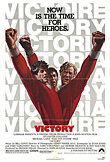
Victory
Release Date: July 30, 1981
Director: John Huston
Writer: Jeff Maguire, Djordje Milicevic, Yabo Yablonsky
Cast: Sylvester Stallone, Michael Caine, Pelé, Bobby Moore, Osvaldo Ardiles, Paul Van Himst, Kazimierz Deyna, Hallvar Thoresen, Mike Summerbee, Co Prins, Russell Osman, John Wark
Frequently asked questions about Pele
Who is Pele?, Pele biography, Pele life story, Pele age, Pele facts, Pele birthplace, Pele photos, Pele videos, Pele career
Related Biographies



Lamine Yamal
Professional footballer

Erling Haaland
Professional footballer

Kylian Mbappe
Professional footballer

Austin Abrams
Actor

Bad Bunny
Rapper, Songwriter

Sam Altman
Entrepreneur, Investor, CEO


Hongjoong
Singer, Rapper, Songwriter, Composer

Ludacris
Rapper, Actor

Kwon Eunbi
Singer

Sarah Wayne Callies
Actress, Screenwriter, Producer, Director

LaTavia Roberson
Singer, Actress, Entrepreneur

Margot Robbie
Actress
Bad Bunny
Rapper, Songwriter
Kylian Mbappe
Professional footballer

Neymar
Professional footballer

Pedro Sanchez
Politician

Ronaldinho
Professional footballer