

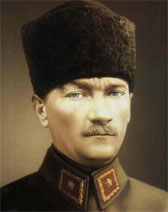
Muhammed Ali Cinnah
Founder of Pakistan, longtime leader of the All-India Muslim League, first Governor-General of Pakistan and first President of its Constituent Assembly. Known as Quaid-e-Azam (Great Leader) and Baba-e-Qaum (Father of the Nation).
Born on December 25, 1876
Died on September 11, 1948
Age at death: 72
Profession: Politician, Statesman, Lawyer
Place of Birth: Karachi, British India (now Pakistan)
Place of Death: Karachi, Pakistan
Muhammad Ali Jinnah (1876–1948) was a lawyer and politician who founded Pakistan and served as its first Governor-General from 1947 until his death. He led the All-India Muslim League for many years and was known by the title Quaid-e-Azam, meaning "Great Leader." During the early years of his political career, he advocated cooperation between Hindus and Muslims in the movement for Indian self-government. He later became the principal political representative of the demand for a separate Muslim state in British India.
Early Life and Education
Muhammad Ali Jinnah was born on December 25, 1876, in Karachi, then part of British India, into a merchant family. He received his early education in Karachi, attending Sindh Madrasatul Islam and the Christian Mission School.
In 1892, he traveled to England, where he began studying law in London. He enrolled at Lincoln's Inn and was called to the Bar in 1895.
During his years in London, Muhammad Ali Jinnah followed British politics and attended debates in the House of Commons. He became acquainted with Indian nationalist leader Dadabhai Naoroji and participated in political activities associated with Naoroji's parliamentary career.
Legal Career and Entry into Politics
In 1896, Muhammad Ali Jinnah returned to India and began practicing law in Bombay. He briefly served in a judicial capacity before developing his career as a barrister. By the early twentieth century, he had become increasingly involved in political affairs.
In 1906, he attended a session of the Indian National Congress in Calcutta as private secretary to Dadabhai Naoroji, who presided over the meeting.
In 1910, Jinnah was elected to the Imperial Legislative Council from Bombay. During this period, he supported constitutional reforms, greater Indian self-government and cooperation between Hindu and Muslim political leaders. He worked with politicians including Gopal Krishna Gokhale.
Initially cautious about the All-India Muslim League, which had been established in 1906, Jinnah joined the organization in 1913. He worked to establish cooperation between the League and the Indian National Congress.
He participated in negotiations leading to the Lucknow Pact of 1916, an agreement between the two organizations concerning constitutional reforms and Muslim political representation.
Because of his efforts to promote cooperation between the two communities, he was described as an "Ambassador of Hindu-Muslim Unity." He was also active in the Home Rule League and served as president of its Bombay branch.
Disagreements with Mahatma Gandhi
Following the First World War, Muhammad Ali Jinnah opposed the Rowlatt Act, which expanded the British colonial government's powers of detention and political repression. On March 28, 1919, he resigned from the Imperial Legislative Council in protest, sending a letter to Viceroy Lord Chelmsford.
During the same period, Mahatma Gandhi began promoting mass civil disobedience and non-cooperation with British authorities. Jinnah preferred constitutional and parliamentary methods and opposed Gandhi's approach to political mobilization.
Their disagreements intensified, and Jinnah left the Indian National Congress in 1920. He also declined to participate in the Khilafat Movement.
After a period of reduced political involvement, he returned to the Imperial Legislative Council in 1923. During the 1920s, increasing political and communal tensions between Hindus and Muslims complicated his efforts to achieve constitutional cooperation between the two communities.
Years in London and Return to Indian Politics
Muhammad Ali Jinnah participated in the Round Table Conferences held in London in 1930 and 1931, where representatives discussed constitutional reforms and the future government of British India.
During these years, he also maintained contact with poet and political thinker Muhammad Iqbal, who advocated greater political autonomy for Muslims in northwestern India.
Disappointed by developments in Indian politics, Jinnah remained in England for a period and continued his legal work.
In 1934, following appeals from Muslim League leaders, he returned to India and resumed leadership of the organization. He was also elected to the Central Legislative Assembly from Bombay.
He worked to bring together the League's different factions, strengthen its organization and expand its support among Muslim voters.
The Demand for Pakistan
The provincial elections of 1937, held under the Government of India Act 1935, brought the Indian National Congress to power in several provinces, while the Muslim League performed below expectations.
Relations between Congress provincial governments and the Muslim League subsequently deteriorated. Muhammad Ali Jinnah increasingly argued that Muslims constituted a distinct political community whose interests required constitutional safeguards and separate political representation.
The idea of separate political arrangements for Muslims had previously been discussed by thinkers and political leaders including Muhammad Iqbal. By the late 1930s, it had become a central issue in Muslim League politics.
During the League's annual session in Lahore, held from March 22 to 24, 1940, a resolution was adopted calling for independent political entities in Muslim-majority regions of British India. The resolution was formally moved on March 23 and became known as the Lahore Resolution, later widely referred to as the Pakistan Resolution.
The resolution formed the political basis for the Muslim League's subsequent campaign for the creation of Pakistan.
The Independence Movement and Partition of India
During and after the Second World War, negotiations intensified over the withdrawal of British rule from India. Muhammad Ali Jinnah, representing the Muslim League, continued advocating a separate Muslim state in discussions with British officials and Congress leaders.
Between September 9 and 27, 1944, he held negotiations with Mahatma Gandhi, but the two leaders failed to reach an agreement on India's constitutional future.
The Simla Conference of 1945, organized under Viceroy Lord Wavell, also ended without an agreement. Disputes continued between the Muslim League and Congress leaders, including Jawaharlal Nehru, over political representation, constitutional arrangements and the distribution of power.
On February 20, 1947, British Prime Minister Clement Attlee announced that Britain would transfer power in India. The last Viceroy, Louis Mountbatten, subsequently held negotiations with Congress and Muslim League leaders.
On June 3, 1947, a plan for the partition of British India was announced. The plan was presented publicly by Mountbatten and supported in separate broadcasts by Jinnah, Nehru and other political leaders.
The British Parliament passed the Indian Independence Act 1947, providing for the establishment of two independent dominions, India and Pakistan.
On August 7, 1947, Muhammad Ali Jinnah traveled from Delhi to Karachi. On August 11, he was elected the first President of Pakistan's Constituent Assembly.
First Governor-General of Pakistan
Pakistan celebrates August 14, 1947, as its Independence Day. Muhammad Ali Jinnah formally took the oath of office as the country's first Governor-General on August 15, 1947, and held the position until his death in 1948.
On August 11, 1947, he delivered an address to the Constituent Assembly outlining the responsibilities of the new state. He discussed the establishment of law and order, the protection of religious beliefs, the prevention of corruption and the need to develop a functioning legislative and administrative system.
The partition of British India was accompanied by extensive population movements and communal violence. Millions of Hindus, Muslims and Sikhs crossed the newly established borders, creating an urgent refugee and humanitarian crisis.
During his term as Governor-General, Jinnah dealt with the establishment of government institutions, refugee resettlement, administrative organization and disputes with India, particularly over Kashmir.
Political Views
Muhammad Ali Jinnah's political position changed considerably during his career. In his early years, he believed Indian self-government could be achieved through Hindu-Muslim cooperation. He favored constitutional negotiation and parliamentary politics over Gandhi's methods of mass civil disobedience.
By the late 1930s, he increasingly supported the view that Muslims constituted a separate nation with distinct political interests. This position became the foundation of the Muslim League's demand for Pakistan.
Nevertheless, Jinnah also argued that citizens of the new state should enjoy equal rights regardless of their religious backgrounds.
In his address to Pakistan's Constituent Assembly on August 11, 1947, he stated that citizens should be free to attend their places of worship and that religion should not determine their status as citizens of the state.
The relationship between his advocacy of Muslim nationhood and his statements supporting equal citizenship has remained a subject of historical and political debate in Pakistan.
Relations with Turkey
Muhammad Ali Jinnah followed political developments in Turkey and expressed admiration for the Turkish national movement led by Mustafa Kemal ATATÜRK. He took an interest in the establishment of the Turkish Republic and supported the development of diplomatic relations between Turkey and Pakistan after independence.
A major street in Ankara's Çankaya district was later named Cinnah Caddesi in his honor. It had previously been known as Vali Dr. Reşit Caddesi.
Personal Life and Family
Muhammad Ali Jinnah married Emibai Jinnah in 1892. She died in 1893 while he was studying in England.
In 1918, he married Rattanbai Petit, also known as Ruttie Jinnah. Their daughter, Dina Wadia, was born in 1919. Rattanbai died in 1929.
His younger sister, Fatima Jinnah, became one of his closest associates and supported his political and public activities, particularly during the final years of the Pakistan movement.
Dina Wadia spent much of her adult life in India and later lived in the United States.
Illness and Death
Muhammad Ali Jinnah experienced serious health problems during the 1940s. In the summer of 1948, he traveled to Quetta and Ziarat for rest and medical care. As his condition deteriorated, arrangements were made for his return to Karachi.
He died in Karachi on September 11, 1948, at the age of seventy-one. He had served as Pakistan's first Governor-General for slightly more than one year.
Muhammad Ali Jinnah was buried in Karachi. His remains are housed in Mazar-e-Quaid, the national mausoleum built in his memory.
Titles and Positions
Quaid-e-Azam: Great Leader
Baba-e-Qaum: Father of the Nation
Founder of Pakistan: 1947
First Governor-General of Pakistan: 1947–1948
First President of the Constituent Assembly of Pakistan: 1947–1948
Source: Biyografiler.com
Frequently asked questions about Muhammed Ali Cinnah
Who is Muhammed Ali Cinnah?, Muhammed Ali Cinnah biography, Muhammed Ali Cinnah life story, Muhammed Ali Cinnah age, Muhammed Ali Cinnah facts, Muhammed Ali Cinnah birthplace, Muhammed Ali Cinnah photos, Muhammed Ali Cinnah videos, Muhammed Ali Cinnah career
Related Biographies

Lamine Yamal
Professional footballer

Brad Pitt
Actor

Erling Haaland
Professional footballer

Leonardo DiCaprio
Actor

Kylian Mbappe
Professional footballer

Sam Altman
Entrepreneur, Investor, CEO

Miranda Kerr
Model

Miroslav Klose
Football Manager, Former Professional Footballer

Mischa Maisky
Cellist

Misha Collins
Actor

Mitch McConnell
Politician, Lawyer

Mladen Petric
Former Professional Footballer
Lamine Yamal
Professional footballer

Erling Haaland
Professional footballer

Abbie Cornish
Actress

M. Stanley Whittingham
Chemist

Muhammed Ali Cinnah
Politician, Statesman, Lawyer