

Marjane Satrapi
Personal memory transformed into global political narrative
Born on November 22, 1969
Age: 57
Profession: Novelist, Film Director, Screenwriter
Place of Birth: Rasht, Iran
Marjane Satrapi is an Iranian-born French graphic novelist, film director, screenwriter, and author, internationally acclaimed for transforming autobiography into powerful political and cultural narratives. She is best known for her groundbreaking graphic memoir Persepolis, which chronicles her childhood and coming-of-age during and after the Iranian Revolution. Through a distinctive visual style and unflinching personal voice, Satrapi has emerged as one of the most influential figures in contemporary graphic literature and politically engaged visual storytelling.
Early Life and Background
Marjane Satrapi was born on 22 November 1969 in Rasht, Iran, into a politically active, secular, and leftist family. Her parents were engaged with communist and socialist movements prior to the 1979 Iranian Revolution, a background that profoundly shaped her political awareness from an early age. Raised as an only child, Satrapi spent much of her childhood in Tehran, where she attended a French-language school and was exposed simultaneously to Western cultural influences and Iran’s rapidly shifting political landscape.
As a child, Satrapi directly witnessed the fall of Shah Mohammad Reza Pahlavi, the rise of the Islamic Republic under Ayatollah Ruhollah Khomeini, and the outbreak of the Iran–Iraq War. Daily life became increasingly regulated, marked by ideological repression, compulsory veiling, and pervasive surveillance. These formative experiences—fear, confusion, resistance, and moral contradiction—would later become central themes in her work.
Exile, Education, and Personal Struggles
In 1983, at the age of fourteen, Marjane Satrapi was sent by her parents to Vienna to protect her from the intensifying repression of the Iranian regime. There, she attended high school but struggled with cultural displacement, identity fragmentation, and isolation. Her adolescence in Europe, later recounted in her autobiographical work, included failed relationships, periods of homelessness, and drug use, reflecting the psychological toll of exile.
At nineteen, Satrapi returned to Iran, where she pursued formal art education and later enrolled in the Visual Communication program at Tehran Azad University. During this period, she entered into a brief marriage that ended after one year. Disillusioned with the social constraints and artistic limitations imposed by the regime, she left Iran permanently in 1993 and relocated to Europe.
Settling first in Strasbourg and later in Paris, Satrapi completed further studies in art and began to refine her narrative voice. The mid-1990s marked the beginning of her professional creative career, as she gravitated toward graphic storytelling as a means of reconciling personal memory with political history.
Breakthrough with Persepolis
Marjane Satrapi published the first volume of Persepolis in France in 2000, followed by the second in 2001. The series was later combined and released in English in 2003 as Persepolis: The Story of a Childhood. Often classified as a graphic memoir, the work blends prose autobiography with stark black-and-white illustrations influenced by German Expressionism.
Through the eyes of her younger self, Satrapi recounts growing up amid revolution, war, ideological extremism, and cultural contradiction. The narrative juxtaposes childhood innocence with political violence, presenting history not as abstraction but as lived experience. The series’ later volumes, published between 2002 and 2003 and translated into English as Persepolis 2: The Story of a Return, explore her years in exile, alienation in Europe, and eventual departure from Iran.
Persepolis achieved global recognition for expanding the possibilities of graphic literature, demonstrating that comics could serve as serious vehicles for historical memory, feminist critique, and political resistance.
Film Career and International Recognition
In 2007, Marjane Satrapi co-directed the animated film adaptation of Persepolis with Vincent Paronnaud. The film preserved the original visual style and autobiographical voice of the book and received widespread critical acclaim. It was nominated for the Academy Award for Best Animated Feature, further cementing Satrapi’s international stature.
Her graphic novel Poulet aux prunes (2004), a tragicomic fictionalized account inspired by her great-uncle, a master tar musician who chooses death after losing his instrument, was adapted into a live-action film in 2011. Satrapi co-wrote and co-directed the adaptation, blending magical realism with historical melancholy.
Satrapi’s later films include the English-language dark comedy The Voices (2014), which explores mental illness through surreal humor, and Radioactive (2019), a biographical drama depicting the life of Marie Curie. These works demonstrate her versatility as a filmmaker and her continued interest in marginalization, inner conflict, and the human cost of genius.
Literary Works Beyond Persepolis
Beyond her most famous series, Marjane Satrapi has continued to explore the boundaries between memoir, fiction, and collective storytelling. Broderies (2003) presents intimate conversations among Iranian women, including her mother and grandmother, addressing love, sexuality, marriage, and resilience. The work foregrounds female voices often excluded from official histories.
She has also authored illustrated children’s books such as Les Monstres n'aiment pas la lune (2001) and Le Soupir (2004), extending her visual language to younger audiences while retaining emotional depth.
Political Documentation and Cultural Impact
In 2023, Marjane Satrapi curated and contributed to Femme, vie, liberté, a collective graphic novel created with more than twenty artists and writers. Published in English in 2024 as Woman, Life, Freedom, the work documents the protest movement sparked by the death of Jina Mahsa Amini while in Iranian police custody in 2022.
The book positions visual art as an essential tool of political documentation and resistance, emphasizing the enduring power of images in shaping collective memory. Satrapi has argued that graphic storytelling can preserve the emotional truth of revolutions when official narratives seek erasure.
Personal Life
Marjane Satrapi is married to Mattias Ripa and resides in Paris, France. While maintaining a private personal life, she remains an outspoken public intellectual, frequently addressing issues of authoritarianism, women’s rights, exile, and cultural identity.
Source: Biyografiler.com
Marjane Satrapi Movies
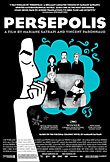
Persepolis
Release Date: December 25, 2007
Director: Vincent Paronnaud, Marjane Satrapi
Writer: Vincent Paronnaud, Marjane Satrapi
Cast: Chiara Mastroianni, Catherine Deneuve, Danielle Darrieux
Frequently asked questions about Marjane Satrapi
Who is Marjane Satrapi?, Marjane Satrapi biography, Marjane Satrapi life story, Marjane Satrapi age, Marjane Satrapi facts, Marjane Satrapi birthplace, Marjane Satrapi photos, Marjane Satrapi videos, Marjane Satrapi career

Lamine Yamal
Professional footballer

Sam Altman
Entrepreneur, Investor, CEO

Kylian Mbappe
Professional footballer

Alice Weidel
Politician, Economist

Erling Haaland
Professional footballer

Giorgia Meloni
Politician, Journalist


Hongjoong
Singer, Rapper, Songwriter, Composer

Ludacris
Rapper, Actor

Kwon Eunbi
Singer

Sarah Wayne Callies
Actress, Screenwriter, Producer, Director

LaTavia Roberson
Singer, Actress, Entrepreneur

Lady Gaga
Singer, Musician, Songwriter, Actress, Producer
Lamine Yamal
Professional footballer

Delcy Rodriguez
Politician, Lawyer, Diplomat

Taylor Swift
Singer, Musician, Songwriter

Jean Jacques Rousseau
Philosopher, Writer, Composer
