
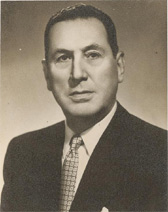
Juan Peron
Founder of Peronism and Architect of Argentina’s Third Way
Born on September 8, 1895
Died on July 1, 1974
Age at death: 79
Profession: Politician, Military Officer, Former President
Place of Birth: Near Lobos, Buenos Aires Province, Argentina
Place of Death: Olivos, Buenos Aires Province, Argentina
Juan Domingo Perón was one of the most influential and controversial political leaders in Argentine history. Serving as President of Argentina in two distinct periods, from 1946 to 1955 and again from 1973 to 1974, he founded the political movement known as Peronism, which claimed to represent a “third way” between capitalism and socialism and continues to shape Argentine politics to this day.
Juan Domingo Perón was born on October 8, 1895, near the town of Lobos in Buenos Aires Province, Argentina. After spending part of his childhood with his family in Patagonia, he later settled in Buenos Aires, where he entered a military academy and graduated in 1913. He subsequently joined the Argentine Army and steadily advanced through the ranks, being promoted to colonel in 1939.
During the late 1930s and early 1940s, Perón was assigned to special missions in Chile and Italy, experiences that significantly influenced his political thinking, particularly his views on corporatism and state organization. In 1943, Perón emerged as a key figure among a group of young officers who seized power in Argentina. Rapidly rising within the new regime, he became Minister of Labor and Social Welfare, where he laid the foundations of his political movement.
As labor minister, Perón brought trade unions under government supervision and worked to improve the living conditions of low-income workers, whom he famously referred to as “the shirtless ones.” His growing popularity led to further promotions, including Minister of War and Vice President of Argentina. In 1945, following a coup led by groups demanding constitutional governance, Perón was arrested. However, mass strikes organized by labor unions and strongly supported by Eva Peron forced his release.
Shortly thereafter, in 1945, Perón married Eva Peron, who would become his most influential political ally. On June 4, 1946, Perón was elected President of Argentina. During his presidency, he ruled through an authoritarian system heavily reliant on police power and strict state control over social and economic life. He increased wages and expanded social benefits, securing strong support from the working class, while simultaneously strengthening the loyalty of the armed forces through military programs and salary increases.
To suppress opposition, Perón closed newspapers, imposed strict controls on education, and filled the National Congress and Supreme Court with members of his own party. In order to secure re-election, he amended the constitution prior to the 1951 elections. Throughout this period, Eva Perón played a crucial role, despite holding no formal government office. She supported labor unions, secured women’s suffrage in 1947, provided food, money, and medical aid to the poor, and contributed to improvements in hospitals and housing. At the same time, she enforced strict censorship by shutting down newspapers and magazines.
By 1955, Perón had accumulated powerful enemies. His confrontations with the Catholic Church led to his excommunication, while rising inflation and allegations of corruption fueled public discontent. On September 19, 1955, a military coup overthrew his government. Perón fled Argentina, first seeking refuge in Paraguay before eventually settling in Madrid, Spain.
In 1961, while living in exile, Perón married María Estela Martínez Cartas, a former dancer who later became known as Isabel Perón. Despite his absence, Peronist supporters maintained the political movement in Argentina. In the 1973 elections, Peronist candidates achieved victory, paving the way for Perón’s return. He was once again elected President of Argentina, with Isabel Perón chosen as Vice President.
During his third presidential term, Perón sought to reduce the influence of the United States over Argentina and strengthen relations with Third World countries. He attempted to control wages and prices but simultaneously suppressed left-wing opposition through force and repression, which led to renewed political violence and instability.
Juan Domingo Perón died on July 1, 1974, in Olivos, Argentina, at the age of 79. Following his death, his wife Isabel Perón assumed the presidency but was unable to manage Argentina’s escalating economic and social crises. On March 24, 1976, the military seized power, removing Isabel Perón from office and marking the end of the Peronist era in government.
Juan Domingo Perón was married three times. His first marriage was to Aurelia Tizón in 1929; the couple divorced in 1938. His second marriage was to Eva Peron on October 21, 1945; she died of uterine cancer on July 26, 1952. His third marriage was to María Estela Martínez Cartas (Isabel Perón) in 1961.
Source: Biyografiler.com
Frequently asked questions about Juan Peron
Who is Juan Peron?, Juan Peron biography, Juan Peron life story, Juan Peron age, Juan Peron facts, Juan Peron birthplace, Juan Peron photos, Juan Peron videos, Juan Peron career
Related Biographies

Lamine Yamal
Professional footballer

Sam Altman
Entrepreneur, Investor, CEO

Erling Haaland
Professional footballer

Kylian Mbappe
Professional footballer

Giorgia Meloni
Politician, Journalist

Alice Weidel
Politician, Economist


Hongjoong
Singer, Rapper, Songwriter, Composer

Ludacris
Rapper, Actor

Kwon Eunbi
Singer

Sarah Wayne Callies
Actress, Screenwriter, Producer, Director

LaTavia Roberson
Singer, Actress, Entrepreneur
Lamine Yamal
Professional footballer

Sydney Sweeney
Actress
Sam Altman
Entrepreneur, Investor, CEO

Abbie Cornish
Actress

Ma Huateng
Entrepreneur, Inventor

Sergey Lavrov
Diplomat, Politician