
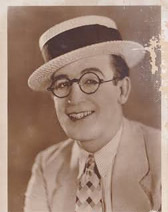
Harold Lloyd
The bespectacled daredevil whose optimistic “Glasses Character,” skyscraper comedy and legendary clock-hanging scene made him one of the greatest stars of silent cinema
Born on April 20, 1893
Died on March 8, 1971
Age at death: 78
Profession: Actor, Comedian, Film Producer, Director
Place of Birth: Burchard, Nebraska, United States
Place of Death: Beverly Hills, California, United States
Harold Lloyd, full name Harold Clayton Lloyd Sr., was born on April 20, 1893, in Burchard, Nebraska, United States. An American actor, comedian, producer and filmmaker, Harold Lloyd became one of the defining figures of silent-film comedy alongside Charlie Chaplin and Buster Keaton. Appearing in roughly 200 films during a screen career extending from the 1910s to the late 1940s, he created the optimistic, ambitious and apparently ordinary young man known as the “Glasses Character.” His most enduring image comes from the 1923 comedy Safety Last!, in which he hangs from the hands of a clock high above a city street—an image that became one of the most recognizable visual symbols in the history of cinema.
Early Life and Family Background
Harold Lloyd was the son of James Darsie Lloyd and Elizabeth Fraser Lloyd. He grew up in financially unstable circumstances, and his family moved frequently during his childhood. His parents eventually separated, and Lloyd developed a particularly close relationship with his adventurous and frequently unemployed father.
The family's constant movement exposed Harold Lloyd to different communities and encouraged his ability to adapt quickly to unfamiliar environments. From an early age he became interested in performance, imitation and entertaining audiences. He participated in amateur theatrical productions while still a child and later gained experience with repertory companies.
He studied in Denver and San Diego and pursued dramatic training in San Diego. By adolescence, acting was no longer simply an interest; it had become the profession he wanted to pursue.
From Theatre to Motion Pictures
In 1913, Harold Lloyd and his father moved to California. The move followed a financial settlement received by his father after an accident. James Darsie Lloyd attempted several business ventures, while his son continued searching for opportunities as an actor.
When the Edison Film Company came to San Diego looking for extras, Harold Lloyd obtained a tiny role in The Old Monk's Tale. Although his appearance lasted only a few seconds, the experience convinced him that the rapidly expanding motion-picture industry offered opportunities that conventional theatre could not.
He subsequently moved toward Los Angeles and found work as an extra. During this period he famously used ingenuity simply to gain access to studio lots, where hundreds of aspiring performers were competing for even the smallest jobs.
Meeting Hal Roach
One of the decisive events of Harold Lloyd's professional life was meeting Hal Roach. At the time, both men were still trying to establish themselves in the emerging film industry. Roach eventually became a producer and studio owner, while Lloyd developed into the performer around whom many of his early comedies were constructed.
Their collaboration became one of the most productive partnerships of early American screen comedy. Under Roach's production system, Lloyd learned not only how to perform for the camera but how cinematic comedy could be created through framing, editing, timing, physical movement and increasingly elaborate visual situations.
Before developing the screen personality that made him famous, Harold Lloyd experimented with characters including Willie Work and Lonesome Luke.
Lonesome Luke
Lonesome Luke became Harold Lloyd's first sustained comic character. The costume and physical presentation deliberately resembled the comic-tramp tradition that had become enormously popular through Charlie Chaplin.
The character appeared in dozens of short films between 1915 and 1917. Although commercially useful, Lloyd eventually became dissatisfied with the imitation. He understood that long-term success required a character audiences could identify specifically with him rather than with an established comic tradition.
Abandoning Lonesome Luke therefore became one of the most important creative decisions of his career.
The Creation of the Glasses Character
In 1917, Harold Lloyd began developing what he called his “Glass Character.” Instead of exaggerated comic clothing, he appeared in an ordinary suit, tie and straw hat, with a pair of horn-rimmed glasses transforming his otherwise conventional appearance into an immediately recognizable screen image.
The glasses did not represent intellectual weakness or eccentricity. Lloyd's new character was an energetic young American determined to succeed. He might be a clerk, student, doctor, wealthy heir or inexperienced young man, but he was generally ambitious, romantic, optimistic and convinced that effort could overcome almost any obstacle.
This made the character fundamentally different from Charlie Chaplin's Little Tramp. Chaplin frequently positioned his outsider against poverty, social injustice and authority. Buster Keaton, meanwhile, developed an impassive protagonist navigating a world of machines, architecture and physical catastrophe.
Harold Lloyd's hero usually wanted to participate in modern society rather than escape it. He wanted the job, the girl, social acceptance, financial success or recognition. His comedy therefore became closely connected with the energy and aspirations of rapidly urbanizing United States society during the 1910s and 1920s.
The 1919 Explosion
In August 1919, Harold Lloyd suffered an accident that could easily have ended both his career and his life. During a publicity photo session, he was handed what was believed to be a harmless prop bomb. The device was actually explosive.
It detonated while he was holding it near his face. The explosion temporarily damaged his eyesight and severely injured his right hand. He lost the thumb and index finger of that hand.
Doctors initially feared that his vision might not recover. It eventually did, and Harold Lloyd made the remarkable decision to continue performing the highly physical comedy that had already become central to his work.
A specially designed prosthetic glove concealed the injury on screen. Audiences watching his subsequent films could therefore easily remain unaware that the performer climbing buildings, hanging above streets and executing complex physical comedy was doing so with a seriously damaged right hand.
From Short Comedies to Feature Films
By the beginning of the 1920s, Harold Lloyd's films had grown from one-reel shorts into longer two- and three-reel productions. Increasing popularity encouraged Lloyd and Hal Roach to experiment with feature-length comedy.
A Sailor-Made Man in 1921 became his first feature-length comedy. It was followed by Grandma's Boy and Dr. Jack in 1922. These films demonstrated that Lloyd's character could sustain longer narratives combining romance, physical comedy and personal transformation.
Grandma's Boy was particularly important because its protagonist begins as a frightened young man and gradually discovers courage. The theme of apparently ordinary people discovering extraordinary abilities became central to Lloyd's screen identity.
Safety Last!
Released in 1923, Safety Last! became the film most closely associated with Harold Lloyd. The story follows an ambitious young man who moves to the city hoping to become successful enough to marry his sweetheart.
The film gradually builds toward an extraordinary skyscraper-climbing sequence. What begins as a publicity stunt forces Lloyd's character to climb the exterior of a tall building while encountering increasingly absurd obstacles.
The climax shows him hanging from the hands of a giant clock above the streets of Los Angeles. The image became one of the defining photographs of silent cinema and remains recognizable even among audiences who have never watched the complete film.
The sequence was carefully engineered rather than recklessly improvised. Rooftop sets, camera angles and carefully selected locations created the illusion of enormous uninterrupted drops while reducing—but by no means eliminating—the danger to the performers. Lloyd still worked several stories above protected surfaces, and his damaged right hand made the physical demands even more remarkable.
The idea for Lloyd's “thrill comedy” developed after he watched professional climber Bill Strother, known as the Human Spider, scale a building. Strother subsequently participated in Safety Last!. The combination of suspense and laughter became one of Lloyd's most distinctive contributions to screen comedy.
Marriage to Mildred Davis
On February 10, 1923, Harold Lloyd married actress Mildred Davis, who had appeared as his leading lady in numerous films. Their professional and romantic relationship had developed during one of the most important phases of his career.
After their marriage, Mildred Davis largely withdrew from acting. They had two biological children, Gloria Lloyd and Harold Lloyd Jr., and adopted Marjorie Elizabeth Lloyd.
The marriage continued until Mildred's death in 1969.
Girl Shy and Romantic Comedy
In 1924, Harold Lloyd starred in Girl Shy as Harold Meadows, a painfully shy young man who writes a book offering romantic advice despite having virtually no experience with women.
The film combined romantic comedy with one of Lloyd's increasingly sophisticated race-against-time finales. Its mixture of embarrassment, romance and frantic urban movement demonstrated how the Glasses Character could operate beyond straightforward stunt comedy.
By this period, Lloyd had gained increasing creative and financial control over his productions. After separating professionally from Hal Roach, he produced his own films and became one of the most independent major stars in Hollywood.
The Freshman
The Freshman was released in 1925 and became one of Harold Lloyd's greatest commercial successes. He played Harold Lamb, an inexperienced college student obsessed with becoming popular.
Believing that popularity can be achieved by imitating the behavior he has seen in movies, Harold repeatedly misunderstands how others perceive him. His desperate efforts to join the social elite culminate in a chaotic football game.
The film perfectly expressed Lloyd's recurring theme of aspiration. His protagonist wants desperately to belong, suffers humiliation, refuses to surrender and ultimately proves himself through persistence.
The Kid Brother
In 1927, Harold Lloyd starred in The Kid Brother, often regarded as one of the most accomplished films of his silent career. He played Harold Hickory, the youngest son in a physically imposing family.
Initially regarded as weak compared with his father and brothers, Harold is forced by circumstances to demonstrate courage and resourcefulness. The film combines rural comedy, romance, family conflict and an extended action climax.
The emotional development of Harold Hickory distinguishes The Kid Brother from Lloyd's more purely urban comedies. The protagonist's victory is not merely physical; it represents his emergence from the shadow of his family.
Speedy and the End of the Silent Era
Speedy in 1928 became Harold Lloyd's final silent feature. Set largely in New York City, the film follows Harold “Speedy” Swift as he attempts to protect an old horse-drawn streetcar business from powerful competitors.
The film preserves valuable images of New York during the late 1920s and includes an appearance by baseball legend Babe Ruth. It also demonstrates Lloyd's continuing fascination with modern urban movement, transportation, crowds and technological change.
By the time Speedy appeared, however, another technological revolution was transforming the film industry: synchronized sound.
Commercial Power and Independence
At his peak, Harold Lloyd was among the most commercially successful performers in the world. His films generated enormous box-office revenues, and his production arrangements gave him substantial control over both his work and its financial returns.
Unlike many actors who simply appeared in studio assignments, Lloyd participated closely in story construction, gag development, preview screenings and editing. He used audience reactions to refine his films, sometimes restructuring sequences after test screenings to improve comic timing.
His success made him extraordinarily wealthy. In 1928, Variety identified him as the highest-paid film star, reflecting the commercial scale his productions had achieved.
The Arrival of Sound
Harold Lloyd did not reject talking pictures. His first sound feature, Welcome Danger, appeared in 1929 and became a major commercial success.
Yet the cultural environment was changing quickly. Only days after the film's opening period, the Wall Street Crash of 1929 marked the beginning of a severe economic crisis. Lloyd's optimistic, upwardly mobile American go-getter had been created during an era of economic expansion and social confidence; the Great Depression altered the mood of his audience.
He continued making sound films, including Feet First, Movie Crazy, The Cat's-Paw, The Milky Way and Professor Beware. Several contained excellent individual sequences, but none restored the extraordinary cultural dominance he had enjoyed during the 1920s.
Movie Crazy
Released in 1932, Movie Crazy is frequently regarded as one of Harold Lloyd's strongest sound films. Lloyd played Harold Hall, an aspiring actor whose attempts to establish himself in Hollywood repeatedly produce disaster.
The film allowed Lloyd to satirize the industry in which he had become enormously successful. Its comedy of embarrassment, mistaken identity and ambition retained much of the structure of his silent work while making effective use of dialogue.
The Sin of Harold Diddlebock
After almost a decade away from starring roles, Harold Lloyd returned to cinema in 1947 for The Sin of Harold Diddlebock, written and directed by Preston Sturges.
The concept imagined an older version of the familiar Lloyd character confronting middle age after years of routine employment. The production also involved billionaire producer Howard Hughes.
The film did not achieve the success expected from the collaboration. It was subsequently re-edited and reissued under the title Mad Wednesday. It became Lloyd's final starring feature.
Greenacres
The enormous financial success of his films enabled Harold Lloyd to build one of the most spectacular private estates of Hollywood's golden age. His Beverly Hills residence became known as Greenacres.
Construction took several years, and the vast Mediterranean-inspired estate contained dozens of rooms surrounded by extensive gardens, fountains and recreational facilities. The property symbolized Lloyd's transformation from a financially insecure Nebraska childhood to extraordinary Hollywood wealth.
Greenacres became a major part of the Lloyd family's private life and later acquired historical significance. In 1984, the surviving estate was placed on the National Register of Historic Places.
Photography and Other Interests
After reducing his film work, Harold Lloyd devoted extraordinary energy to numerous hobbies. His interests included painting, chess, bowling, microscopy, automobiles, audio technology, dog breeding and photography.
Photography became especially important. Lloyd developed an intense interest in stereoscopic, or 3-D, photography and eventually accumulated close to 300,000 stereo slides. His photographic subjects ranged from landscapes and travel to Hollywood personalities and models.
Among the celebrities he photographed was Marilyn Monroe. His photographic archive later became an important secondary dimension of his artistic work, revealing a technically curious personality who remained fascinated by visual technology long after his acting career had slowed.
Private Life and Personality
Harold Lloyd's enormous wealth gave him the freedom to pursue an unusually wide range of interests. He collected automobiles, raised Great Danes, bowled enthusiastically and invested heavily in sophisticated photographic and high-fidelity audio equipment.
Accounts of his private life also describe a complicated contrast between his public image and personal behavior. He could be socially open-minded in some areas while maintaining conservative, even Victorian attitudes toward the upbringing of his daughters.
Biographical accounts have also described Lloyd as having numerous extramarital relationships, and rumors circulated concerning possible children outside his marriage. Such claims, however, should be distinguished from the securely documented facts of his family life.
Shriners and Philanthropy
One of the less widely remembered dimensions of Harold Lloyd's later life was his extensive involvement with the Shriners. In 1949, he served as Imperial Potentate, the organization's highest-ranking position.
During that period, he traveled extensively across the United States, visiting approximately 130 temples and addressing hundreds of thousands of members. His involvement was not merely ceremonial.
For roughly the final two decades of his life, Lloyd devoted substantial time to supporting the network of Shriners Hospitals for Children. During the 1960s, he served in senior leadership positions connected with the hospitals, including president and chairman of the board.
Honorary Academy Award
In 1953, Harold Lloyd received an Honorary Academy Award recognizing him as a master comedian and good citizen.
The award formally acknowledged a career that had helped define American screen comedy before the Academy's competitive awards had become an established institution. It also reinforced Lloyd's position beside Charlie Chaplin and Buster Keaton as one of the foundational figures of feature-length physical comedy.
Control of His Film Library
A crucial factor in Harold Lloyd's changing reputation after the silent era was his ownership and control of much of his film library. Unlike many silent performers whose films circulated widely through inexpensive television packages, Lloyd was highly protective of the way his work was exhibited.
He believed that commercial interruptions destroyed the carefully constructed rhythm of his comedy. As a result, many of his major films were less visible on television than the work of some contemporaries.
This contributed to a paradox: one of the most commercially successful movie stars of the 1920s became less familiar to later mass audiences than Charlie Chaplin or Buster Keaton. Subsequent restorations, theatrical screenings, home-video releases and preservation projects substantially changed that situation.
Preservation of His Films
A fire at Harold Lloyd's property in 1943 destroyed nitrate film material and contributed to the loss of some early works. Nevertheless, Lloyd succeeded in preserving a remarkably substantial portion of his major film output.
More than eighty titles from his extensive filmography are known to survive, while virtually all of his major feature films remain available. Preservation and restoration work involving institutions such as UCLA Film & Television Archive and the Harold Lloyd Trust has helped make his films accessible to modern audiences.
Safety Last! and The Freshman were selected for preservation in the National Film Registry of the Library of Congress, reflecting their cultural, historical and aesthetic importance.
Death
Harold Lloyd died on March 8, 1971, at his home in Beverly Hills, California, from prostate cancer. He was 77 years old.
He had outlived the silent era that made him famous by more than four decades and had witnessed cinema evolve from short, primitive one-reel productions into color, widescreen and technologically sophisticated modern filmmaking.
Cultural Impact
Harold Lloyd's importance lies not simply in the number of successful films he made but in the type of screen hero he created. His Glasses Character was one of cinema's first great embodiments of the modern American everyman: ordinary in appearance but extraordinary in ambition.
His films transformed the architecture of the modern city into comic machinery. Elevators, automobiles, streetcars, crowds, department stores, college campuses and skyscrapers became obstacles through which his characters pursued love and success.
The skyscraper sequences were especially influential. Rather than separating suspense from comedy, Lloyd discovered that fear could intensify laughter. Audiences could laugh at the hero while simultaneously worrying that he might fall.
The clock sequence from Safety Last! ultimately transcended the film itself. It has been referenced, imitated and parodied across cinema, television, advertising and popular culture, becoming an instantly recognizable symbol of both silent comedy and the dangerous physical ingenuity of early filmmaking.
Alongside Charlie Chaplin and Buster Keaton, Harold Lloyd remains one of the central figures through whom the development of silent comedy is understood. Yet his distinctive contribution was different from either of theirs: the bespectacled young man was not a tramp or a stone-faced outsider but an ambitious participant in modern life, constantly climbing—sometimes literally—toward success.
Major Feature Films
1921 – A Sailor-Made Man – The Boy – Silent Comedy Film1922 – Grandma's Boy – Grandma's Boy – Silent Comedy Film
1922 – Dr. Jack – Dr. Jackson – Silent Comedy Film
1923 – Safety Last! – The Boy – Silent Comedy Film
1923 – Why Worry? – Harold Van Pelham – Silent Comedy Film
1924 – Girl Shy – Harold Meadows – Silent Romantic Comedy Film
1924 – Hot Water – Hubby – Silent Comedy Film
1925 – The Freshman – Harold Lamb – Silent Comedy Film
1926 – For Heaven's Sake – J. Harold Manners – Silent Comedy Film
1927 – The Kid Brother – Harold Hickory – Silent Comedy Film
1928 – Speedy – Harold “Speedy” Swift – Silent Comedy Film
1929 – Welcome Danger – Harold Bledsoe – Comedy Film
1930 – Feet First – Harold Horne – Comedy Film
1932 – Movie Crazy – Harold Hall – Comedy Film
1934 – The Cat's-Paw – Ezekiel Cobb – Comedy Film
1936 – The Milky Way – Burleigh Sullivan – Comedy Film
1938 – Professor Beware – Dean Lambert – Comedy Film
1947 – The Sin of Harold Diddlebock – Harold Diddlebock – Comedy Film
1950 – Mad Wednesday – Harold Diddlebock – Re-edited Release of The Sin of Harold Diddlebock
Early Film Appearances
1913 – The Old Monk's Tale – Extra – Short Film1913 – The Twelfth Juror – Early Appearance – Short Film
1913 – Cupid in a Dental Parlor – Early Appearance – Short Comedy
1913 – Hulda of Holland – Early Appearance – Short Film
1913 – His Chum the Baron – Early Appearance – Short Film
1913 – A Little Hero – Early Appearance – Short Film
1913 – Rory O' the Bogs – Early Appearance – Short Film
1914 – Twixt Love and Fire – Early Appearance – Short Comedy
1914 – Sealed Orders – Early Appearance – Short Film
1914 – Samson – Early Appearance – Drama
1914 – The Sandhill Lovers – Hal Lloyd – Short Film
1914 – The Patchwork Girl of Oz – Early Appearance – Fantasy Adventure
1915 – Beyond His Fondest Hopes – Early Appearance – Short Film
1915 – Pete, the Pedal Polisher – Early Appearance – Short Comedy
1915 – Close-Cropped Clippings – Early Appearance – Short Comedy
1915 – Hogan's Romance Upset – Early Appearance – Short Comedy
1915 – Willie Runs the Park – Early Appearance – Short Comedy
1915 – Just Nuts – Willie Work – Short Comedy
1915 – Love, Loot and Crash – Early Appearance – Short Comedy
1915 – Their Social Splash – Early Appearance – Short Comedy
1915 – Miss Fatty's Seaside Lovers – With Roscoe “Fatty” Arbuckle – Short Comedy
1915 – From Italy's Shores – Early Appearance – Short Film
1915 – Courthouse Crooks – Unemployed Young Man – Short Comedy
1915 – The Hungry Actors – Early Appearance – Short Comedy
1915 – The Greater Courage – Early Appearance – Short Film
1915 – A Submarine Pirate – Cook – Short Comedy
Lonesome Luke Films – 1915
1915 – Spit-Ball Sadie – Lonesome Luke – Short Comedy1915 – Terribly Stuck Up – Lonesome Luke – Short Comedy
1915 – A Mixup for Mazie – Lonesome Luke – Short Comedy
1915 – Some Baby – Lonesome Luke – Short Comedy
1915 – Fresh from the Farm – Lonesome Luke – Short Comedy
1915 – Giving Them Fits – Lonesome Luke – Short Comedy
1915 – Bughouse Bellhops – Lonesome Luke – Short Comedy
1915 – Tinkering with Trouble – Lonesome Luke – Short Comedy
1915 – Great While It Lasted – Lonesome Luke – Short Comedy
1915 – Ragtime Snap Shots – Lonesome Luke – Short Comedy
1915 – A Foozle at the Tee Party – Lonesome Luke – Short Comedy
1915 – Ruses, Rhymes and Roughnecks – Lonesome Luke – Short Comedy
1915 – Peculiar Patients' Pranks – Lonesome Luke – Short Comedy
1915 – Lonesome Luke, Social Gangster – Lonesome Luke – Short Comedy
Lonesome Luke Films – 1916
1916 – Lonesome Luke Leans to the Literary – Lonesome Luke – Short Comedy1916 – Luke Lugs Luggage – Lonesome Luke – Short Comedy
1916 – Lonesome Luke Lolls in Luxury – Lonesome Luke – Short Comedy
1916 – Luke, the Candy Cut-Up – Lonesome Luke – Short Comedy
1916 – Luke Foils the Villain – Lonesome Luke – Short Comedy
1916 – Luke and the Rural Roughnecks – Lonesome Luke – Short Comedy
1916 – Luke Pipes the Pippins – Lonesome Luke – Short Comedy
1916 – Lonesome Luke, Circus King – Lonesome Luke – Short Comedy
1916 – Luke's Double – Lonesome Luke – Short Comedy
1916 – Them Was the Happy Days! – Lonesome Luke – Short Comedy
1916 – Luke and the Bomb Throwers – Lonesome Luke – Short Comedy
1916 – Luke's Late Lunchers – Lonesome Luke – Short Comedy
1916 – Luke Laughs Last – Lonesome Luke – Short Comedy
1916 – Luke's Fatal Flivver – Lonesome Luke – Short Comedy
1916 – Luke's Society Mixup – Lonesome Luke – Short Comedy
1916 – Luke's Washful Waiting – Lonesome Luke – Short Comedy
1916 – Luke Rides Roughshod – Lonesome Luke – Short Comedy
1916 – Luke, Crystal Gazer – Lonesome Luke – Short Comedy
1916 – Luke's Lost Lamb – Lonesome Luke – Short Comedy
1916 – Luke Does the Midway – Lonesome Luke – Short Comedy
1916 – Luke Joins the Navy – Lonesome Luke – Short Comedy
1916 – Luke and the Mermaids – Lonesome Luke – Short Comedy
1916 – Luke's Speedy Club Life – Lonesome Luke – Short Comedy
1916 – Luke and the Bang-Tails – Lonesome Luke – Short Comedy
1916 – Luke, the Chauffeur – Lonesome Luke – Short Comedy
1916 – Luke's Preparedness Preparations – Lonesome Luke – Short Comedy
1916 – Luke, the Gladiator – Lonesome Luke – Short Comedy
1916 – Luke, Patient Provider – Lonesome Luke – Short Comedy
1916 – Luke's Newsie Knockout – Lonesome Luke – Short Comedy
1916 – Luke's Movie Muddle – Lonesome Luke – Short Comedy
1916 – Luke, Rank Impersonator – Lonesome Luke – Short Comedy
1916 – Luke's Fireworks Fizzle – Lonesome Luke – Short Comedy
1916 – Luke Locates the Loot – Lonesome Luke – Short Comedy
1916 – Luke's Shattered Sleep – Lonesome Luke – Short Comedy
Lonesome Luke Films – 1917
1917 – Lonesome Luke's Lovely Rifle – Lonesome Luke – Short Comedy1917 – Luke's Lost Liberty – Lonesome Luke – Short Comedy
1917 – Luke's Busy Day – Lonesome Luke – Short Comedy
1917 – Luke's Trolley Troubles – Lonesome Luke – Short Comedy
1917 – Lonesome Luke, Lawyer – Lonesome Luke – Short Comedy
1917 – Luke Wins Ye Ladye Faire – Lonesome Luke – Short Comedy
1917 – Lonesome Luke's Lively Life – Lonesome Luke – Short Comedy
1917 – Lonesome Luke on Tin Can Alley – Lonesome Luke – Short Comedy
1917 – Lonesome Luke's Honeymoon – Lonesome Luke – Short Comedy
1917 – Lonesome Luke, Plumber – Lonesome Luke – Short Comedy
1917 – Stop! Luke! Listen! – Lonesome Luke – Short Comedy
1917 – Lonesome Luke, Messenger – Lonesome Luke – Short Comedy
1917 – Lonesome Luke, Mechanic – Lonesome Luke – Short Comedy
1917 – Lonesome Luke's Wild Women – Lonesome Luke – Short Comedy
1917 – Lonesome Luke Loses Patients – Lonesome Luke – Short Comedy
1917 – Birds of a Feather – Lonesome Luke – Short Comedy
1917 – From Laramie to London – Lonesome Luke – Short Comedy
1917 – Love, Laughs and Lather – Lonesome Luke – Short Comedy
1917 – Clubs Are Trump – Lonesome Luke – Short Comedy
1917 – We Never Sleep – Lonesome Luke – Short Comedy
The Glasses Character / The Boy – 1917
1917 – Over the Fence – The Boy – Short Comedy1917 – Pinched – The Boy – Short Comedy
1917 – By the Sad Sea Waves – The Boy – Short Comedy
1917 – Bliss – The Boy – Short Comedy
1917 – Rainbow Island – The Boy – Short Comedy
1917 – The Flirt – The Boy – Short Comedy
1917 – All Aboard – The Boy – Short Comedy
1917 – Move On – The Boy – Short Comedy
1917 – Bashful – The Boy – Short Comedy
1917 – Step Lively – The Boy – Short Comedy
1917 – The Big Idea – The Boy – Short Comedy
The Glasses Character / The Boy – 1918
1918 – The Tip – The Boy – Short Comedy1918 – The Lamb – The Boy – Short Comedy
1918 – Hit Him Again – The Boy – Short Comedy
1918 – Beat It – The Boy – Short Comedy
1918 – A Gasoline Wedding – The Boy – Short Comedy
1918 – Look Pleasant, Please – The Boy – Short Comedy
1918 – Here Come the Girls – The Boy – Short Comedy
1918 – Let's Go – The Boy – Short Comedy
1918 – On the Jump – The Boy – Short Comedy
1918 – Follow the Crowd – The Boy – Short Comedy
1918 – Pipe the Whiskers – The Boy – Short Comedy
1918 – It's a Wild Life – The Boy – Short Comedy
1918 – Hey There! – The Boy – Short Comedy
1918 – Kicked Out – The Boy – Short Comedy
1918 – The Non-Stop Kid – The Boy – Short Comedy
1918 – Two-Gun Gussie – The Boy – Short Comedy
1918 – Fireman Save My Child – The Boy – Short Comedy
1918 – The City Slicker – The Boy – Short Comedy
1918 – Sic 'Em, Towser – The Boy – Short Comedy
1918 – Somewhere in Turkey – The Boy – Short Comedy
1918 – Are Crooks Dishonest? – The Boy – Short Comedy
1918 – An Ozark Romance – The Boy – Short Comedy
1918 – Kicking the Germ Out of Germany – The Boy – Short Comedy
1918 – That's Him – The Boy – Short Comedy
1918 – Bride and Gloom – The Boy – Short Comedy
1918 – Two Scrambled – The Boy – Short Comedy
1918 – Bees in His Bonnet – The Boy – Short Comedy
1918 – Swing Your Partners – The Boy – Short Comedy
1918 – Why Pick on Me? – The Boy – Short Comedy
1918 – Nothing But Trouble – The Boy – Short Comedy
1918 – Back to the Woods – The Boy – Short Comedy
1918 – Hear 'Em Rave – The Boy – Short Comedy
1918 – Take a Chance – The Boy – Short Comedy
1918 – She Loves Me Not – The Boy – Short Comedy
The Glasses Character / The Boy – 1919
1919 – Wanted – $5,000 – The Boy – Short Comedy1919 – Going! Going! Gone! – The Boy – Short Comedy
1919 – Ask Father – The Boy – Short Comedy
1919 – On the Fire – The Boy – Short Comedy
1919 – I'm on My Way – The Boy – Short Comedy
1919 – Look Out Below – The Boy – Short Comedy
1919 – The Dutiful Dub – The Boy – Short Comedy
1919 – Next Aisle Over – The Boy – Short Comedy
1919 – A Sammy in Siberia – The Boy – Short Comedy
1919 – Just Dropped In – The Boy – Short Comedy
1919 – Young Mr. Jazz – The Boy – Short Comedy
1919 – Crack Your Heels – The Boy – Short Comedy
1919 – Ring Up the Curtain – The Boy – Short Comedy
1919 – Si, Senor – The Boy – Short Comedy
1919 – Before Breakfast – The Boy – Short Comedy
1919 – The Marathon – The Boy – Short Comedy
1919 – Pistols for Breakfast – The Boy – Short Comedy
1919 – Swat the Crook – The Boy – Short Comedy
1919 – Off the Trolley – The Boy – Short Comedy
1919 – Spring Fever – The Boy – Short Comedy
1919 – Billy Blazes, Esq. – Billy Blazes – Short Comedy
1919 – Just Neighbors – The Boy – Short Comedy
1919 – At the Old Stage Door – The Boy – Short Comedy
1919 – Never Touched Me – The Boy – Short Comedy
1919 – A Jazzed Honeymoon – The Boy – Short Comedy
1919 – Count Your Change – The Boy – Short Comedy
1919 – Chop Suey & Co. – The Boy – Short Comedy
1919 – Heap Big Chief – The Boy – Short Comedy
1919 – Don't Shove – The Boy – Short Comedy
1919 – Be My Wife – The Boy – Short Comedy
1919 – The Rajah – The Boy – Short Comedy
1919 – He Leads, Others Follow – The Boy – Short Comedy
1919 – Soft Money – The Boy – Short Comedy
1919 – Count the Votes – The Boy – Short Comedy
1919 – Pay Your Dues – The Boy – Short Comedy
1919 – His Only Father – The Boy – Short Comedy
1919 – Bumping into Broadway – The Boy – Short Comedy
1919 – Captain Kidd's Kids – The Boy – Short Comedy
1919 – From Hand to Mouth – The Boy – Short Comedy
The Glasses Character – 1920–1921 Shorts
1920 – His Royal Slyness – The Boy – Short Comedy1920 – Haunted Spooks – The Boy – Short Comedy
1920 – An Eastern Westerner – The Boy – Short Comedy
1920 – High and Dizzy – The Boy – Short Comedy
1920 – Get Out and Get Under – The Boy – Short Comedy
1920 – Number, Please? – The Boy – Short Comedy
1921 – Now or Never – The Boy – Short Comedy
1921 – Among Those Present – The Boy – Short Comedy
1921 – I Do – The Boy – Short Comedy
1921 – Never Weaken – The Boy – Short Comedy
Source: Biyografiler.com
Frequently asked questions about Harold Lloyd
Who is Harold Lloyd?, Harold Lloyd biography, Harold Lloyd life story, Harold Lloyd age, Harold Lloyd facts, Harold Lloyd birthplace, Harold Lloyd photos, Harold Lloyd videos, Harold Lloyd career
Related Biographies

Lamine Yamal
Professional footballer

Erling Haaland
Professional footballer

Austin Abrams
Actor

Keanu Reeves
Actor

Kylian Mbappe
Professional footballer

Bad Bunny
Rapper, Songwriter


Hongjoong
Singer, Rapper, Songwriter, Composer

Ludacris
Rapper, Actor

Kwon Eunbi
Singer

Sarah Wayne Callies
Actress, Screenwriter, Producer, Director

LaTavia Roberson
Singer, Actress, Entrepreneur
Kylian Mbappe
Professional footballer
Lamine Yamal
Professional footballer

Luiz Inacio Lula da Silva
Politician, President

Zhang Yiming
Entrepreneur, Software Developer

Nicki Minaj
Rapper, Singer, Songwriter, Actress

Mao Zedong
Revolutionary Leader, Politician