
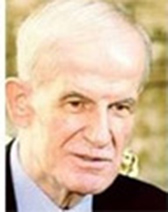
Hafez al-Assad
Born on October 6, 1930
Died on June 10, 2000
Age at death: 70
Profession: Former Head of State
Place of Birth: Qardaha, Syria
Place of Death:
Hafez al-Assad served as President of the Syrian Arab Republic between 1971 and 2000.
Hafez al-Assad was born on October 6, 1930, in the town of Qardaha in the Latakia Governorate, as the child of a poor Alawite family. His childhood passed under conditions of serious financial hardship, and from an early age he aspired to become a soldier. In 1955, he graduated from the Homs Military Academy as a pilot officer and was sent to the Soviet Union in 1958 to receive night combat training. After returning to Syria, he served in the armed forces for many years and, through his achievements, rose to the position of commander of the air fleet.
In 1961, Hafez al-Assad opposed Syria’s withdrawal from the United Arab Republic, a Pan-Arab project led by Egyptian President Gamal Abdel Nasser. As a result of this opposition, he was dismissed from the armed forces in the same year. After leaving the military, he assumed a key role in the military wing of the Ba'ath Party, of which he had been a member since the age of sixteen, and played an important role in the 1963 coup. In 1965, he was appointed Commander of the Air Force, and following the overthrow of the moderate wing by the radical and pro-independence faction within the Syrian branch of the Ba'ath Party in 1966, he was appointed Minister of Defense in February 1966 in recognition of his services.
Between 1969 and 1970, Hafez al-Assad played an active role in the power struggle between the civilian and military wings of the Ba'ath Party. He emerged successfully from this period, which was intensified by internal divisions over which side to support during the Jordanian civil war between Palestinian guerrillas and the Jordanian army. On November 13, 1970, he seized power through a bloodless coup. In March 1971, he was elected President of Syria through a public referendum and held this position until his death.
The period during which Assad governed the country coincided with some of the most turbulent years in the Middle East. Relations with neighboring Iraq, ruled by the sister Ba'ath Party, were consistently strained. In October 1973, he sided with Egypt during its war against Israel; however, following defeat, relations between Syria and Egypt also deteriorated.
In the following years, Hafez al-Assad strengthened relations with the Soviet Union. A 20-year Treaty of Friendship and Cooperation was signed in 1980, followed in 1982 by another agreement providing for arms and technical assistance from the Soviet Union. His visit to the country in 1984 further deepened bilateral relations.
He provided extensive support to the Palestine Liberation Organization (PLO), but following disagreements with its leadership, he attempted to form new Syria-aligned organizations within the movement. In 1991, he restored relations with PLO leader Yasser Arafat.
Domestically, the Assad administration faced strong opposition from the Muslim Brotherhood. Harsh measures were taken to suppress this opposition, culminating in February 1982 with the large-scale destruction of the city of Hama, a stronghold of the Muslim Brotherhood, resulting in the deaths of an estimated 10,000 to 20,000 people. This event became known as the Hama Massacre. Maintaining strict personal control over both party and state institutions, Hafez al-Assad was re-elected president four more times, in 1978, 1985, 1991, and 1999.
Hafez al-Assad married Anisa Makhlouf in 1957. He had children named Bashar al-Assad, Basil al-Assad, Maher al-Assad, Bushra al-Assad, Majd al-Assad, and Bushra al-Assad.
Hafez al-Assad died on June 10, 2000, at the age of 70 from lung cancer. Following his death, the presidency of Syria was assumed by his son, Bashar al-Assad.
Source: Biyografiler.com
Frequently asked questions about Hafez al-Assad
Who is Hafez al-Assad?, Hafez al-Assad biography, Hafez al-Assad life story, Hafez al-Assad age, Hafez al-Assad facts, Hafez al-Assad birthplace, Hafez al-Assad photos, Hafez al-Assad videos, Hafez al-Assad career
Related Biographies

Lamine Yamal
Professional footballer

Erling Haaland
Professional footballer

Kylian Mbappe
Professional footballer

Austin Abrams
Actor

Bad Bunny
Rapper, Songwriter

Sam Altman
Entrepreneur, Investor, CEO


Hongjoong
Singer, Rapper, Songwriter, Composer

Ludacris
Rapper, Actor

Kwon Eunbi
Singer

Sarah Wayne Callies
Actress, Screenwriter, Producer, Director

LaTavia Roberson
Singer, Actress, Entrepreneur
Lamine Yamal
Professional footballer

Amber Heard
Actress, Model
Bad Bunny
Rapper, Songwriter
Erling Haaland
Professional footballer
Kylian Mbappe
Professional footballer
Austin Abrams
Actor