
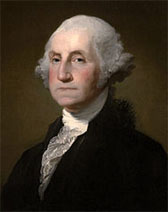
George Washington
Former President of the United States of America
Born on February 22, 1732
Died on December 14, 1799
Age at death: 67
Profession: Former President, Military Commander, Statesman, Politician
Place of Birth: Wakefield, Virginia, British America
Place of Death: Mount Vernon, Virginia, United States
George Washington ranks first in the order of Presidents of the United States and is recognized as the first President of the nation.
George Washington was born in 1732 in Wakefield, Virginia, as one of ten children of a wealthy planter family. His father, Augustine Washington (1693–1743), and his mother, Mary Ball Washington (1708–1789), were of English origin. He lost his father at the age of eleven; his older half-brother from his father’s previous marriage played a significant role in his upbringing. After an irregular and brief formal education, Washington began working in land surveying and cartography at the age of fourteen. At sixteen, he joined an expedition exploring the uncharted regions around the Shenandoah River in western Virginia.
In his youth, Washington fought Native American tribes during conflicts aimed at expanding Virginia’s territory. At the age of twenty-one, he joined the militia and in 1752 was appointed deputy commander. That same year, following the death of his half-brother Lawrence Washington, he inherited the Mount Vernon estate on the Potomac River. Also in 1752, he was promoted to major and appointed discipline officer of one of Virginia’s four military districts.
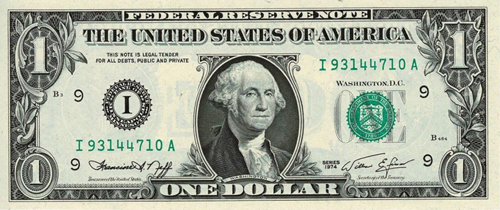
As French forces strengthened their presence in the Ohio River region and pressured British settlers to leave lands claimed by Britain, the Governor of Virginia assigned young Major George Washington in 1753 to deliver a message demanding French withdrawal. Washington traveled more than 800 kilometers, by boat, horseback, and on foot, reaching areas near Lake Erie. His accounts of this journey provided the first reliable information about life beyond the Allegheny Mountains.
When the French refused to withdraw, Washington returned the following year as a lieutenant colonel leading several hundred troops into the Ohio River region. In 1754, he took part in the conflict between France and Britain that escalated into the Seven Years’ War. After initial success against a French unit, Washington was forced to surrender following a counterattack, though he and his men were allowed to return to Virginia. In 1755, despite illness, he demonstrated great bravery in battle against the French; after General Edward Braddock was killed, Washington helped the defeated army retreat safely. He was then promoted to colonel and placed in command of Virginia’s forces, tasked with defending a 650-kilometer frontier with poorly equipped troops. Recovering from illness, he later participated in the capture of Fort Duquesne in 1758, located near present-day Pittsburgh.
After leaving the army, Washington was elected to the Virginia House of Burgesses. In January 1759, he married Martha Dandridge Custis, a wealthy widow with two children, and devoted himself to tobacco farming. From 1765 onward, he opposed British colonial administration and advocated independence. As a member of the Virginia legislature in 1774 and 1775, he took part in debates that led to war between Britain and the American colonies.
Following the Declaration of Independence on July 4, 1776, and growing unrest in Massachusetts, the Second Continental Congress appointed George Washington as Commander-in-Chief of the Continental Army. This was an immense challenge: the thirteen colonies were divided, Congress lacked absolute authority, and Washington’s troops were volunteers who could leave at will. Nevertheless, he compelled the British navy to abandon Boston through strategic bluffing.
Washington then attempted to defend New York but was defeated by superior British forces, leading to his famous retreat across New Jersey. Despite dire conditions, he revived American morale by capturing a British outpost on Christmas night in 1776. Over the following years, he endured both defeats and victories, often transforming setbacks into successes. During the harsh winter of 1777–1778, he and his poorly supplied army endured extreme hardship at Valley Forge in Pennsylvania. French entry into the war provided crucial assistance, and in 1781 British forces were defeated at the Siege of Yorktown. The Revolutionary War effectively ended on October 19, 1781, when British General Charles Cornwallis surrendered.
In 1783, the Treaty of Paris formally recognized the independence of the United States. Washington returned to Mount Vernon but soon reentered public life. As a Virginia delegate to the Constitutional Convention in Philadelphia, he was elected president of the convention. With the ratification of the federal Constitution, the United States was established, and on April 30, 1789, George Washington was inaugurated as the nation’s first President.
In the presidential election of 1789, Washington received 69 electoral votes, while John Adams received 34, becoming the first Vice President. In 1792, Washington was unanimously re-elected, again with Adams as Vice President. During his presidency, Washington worked tirelessly to establish the new government, creating executive departments, a judicial system, and a tax structure. The first ten amendments to the Constitution, known as the Bill of Rights, were completed in 1791, securing fundamental human rights.
Washington maintained U.S. neutrality during the wars following the French Revolution and signed the Jay Treaty with Britain in 1794, postponing a potentially devastating war. He also resolved disputes with Spain through the Pinckney Treaty, addressing borders in Florida and Louisiana. Declining a third term, he retired in 1797 to Mount Vernon, setting a lasting democratic precedent.
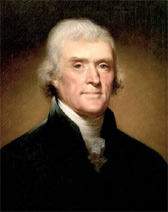
George Washington died of pneumonia on December 14, 1799, at the age of sixty-seven, at his home in Mount Vernon, Virginia, where he was laid to rest. Americans honored him as the founder of the nation and the “Father of His Country.” He shaped the American presidency, voluntarily relinquished power, and established enduring democratic traditions. His name was given to a U.S. state and to the nation’s capital, and his likeness appears on the Mount Rushmore National Memorial alongside Thomas Jefferson, Theodore Roosevelt, and Abraham Lincoln.
Source: Biyografiler.com
Frequently asked questions about George Washington
Who is George Washington?, George Washington biography, George Washington life story, George Washington age, George Washington facts, George Washington birthplace, George Washington photos, George Washington videos, George Washington career
Related Biographies

Lamine Yamal
Professional footballer

Kylian Mbappe
Professional footballer

Erling Haaland
Professional footballer

Sam Altman
Entrepreneur, Investor, CEO

Bad Bunny
Rapper, Songwriter

Brad Pitt
Actor


Hongjoong
Singer, Rapper, Songwriter, Composer

Ludacris
Rapper, Actor

Kwon Eunbi
Singer

Sarah Wayne Callies
Actress, Screenwriter, Producer, Director

LaTavia Roberson
Singer, Actress, Entrepreneur
Erling Haaland
Professional footballer

Tim Berners Lee
Computer Scientist, Professor

Amber Heard
Actress, Model
Brad Pitt
Actor
Lamine Yamal
Professional footballer

Tim Roth
Actor, Director