
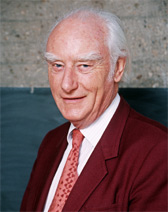
Francis Crick
Co-discoverer of the DNA Double Helix
Born on June 8, 1916
Died on July 28, 2004
Age at death: 88
Profession: Biologist, Physicist, Neurologist
Place of Birth: Weston Favell, Northampton, England
Place of Death: San Diego, California, United States
Francis Crick, whose full name was Francis Harry Compton Crick, was born on June 8, 1916, in Weston Favell, a small English town near Northampton. He was the son of Harry Crick and Annie Elizabeth Crick. He completed Northampton Grammar School at the age of fourteen and won a scholarship to Mill Hill School in London, where he studied mathematics, physics, and chemistry alongside his close friend John Shilston. At the age of twenty-one, he graduated from University College London with a Bachelor of Science degree in Physics.
Francis Crick initially pursued a career in physics. During his doctoral research, conducted under physicist Edward Neville da Costa Andrade, he worked on measuring the viscosity of water at high temperatures—a project he later described as “the dullest problem imaginable.” During World War II, a bomb destroyed his laboratory equipment, leading him to abandon physics as a long-term career.
After the war, in 1947, Francis Crick made a decisive transition into biology, a shift he later described as requiring him to “almost be reborn.” He believed that the revolutionary advances made in physics could also be achieved in biology. Under the direction of Honor Bridget Fell, he spent nearly two years at Cambridge’s Strangeways Laboratory studying the physical properties of cytoplasm.
Crick later joined the Cavendish Laboratory in Cambridge, working alongside Max Perutz and John Kendrew. At the time, the laboratory was led by Lawrence Bragg, who had received the Nobel Prize at the age of twenty-five. In 1950, Crick completed his doctorate at Caius College on protein X-ray crystallography and began working at the Medical Research Council’s Laboratory of Molecular Biology in Cambridge.
The defining achievement of Francis Crick’s career came in 1953, when he, together with James D. Watson and Maurice Wilkins, discovered the double-helix structure of the DNA molecule. Their work was built upon crucial experimental findings by Rosalind Franklin and Wilkins, who had successfully imaged DNA using X-ray diffraction techniques. Using Franklin’s data, Crick and Watson proposed the correct structural model of DNA.
Upon realizing the significance of the discovery, Francis Crick famously ran to the Eagle Pub in Cambridge and announced to the patrons, “We have found the secret of life.” Years later, he recalled the disbelief that followed, noting that the scientific community took many years to fully grasp the importance of the discovery.
Contrary to prevailing belief at the time, Crick and Watson argued that genetic information was carried not by proteins but by DNA. They identified the four nucleotide bases—adenine, cytosine, thymine, and guanine—and demonstrated how their pairing encoded genetic information. In their 1953 paper, they wrote: “We wish to suggest a structure for deoxyribose nucleic acid… which has novel features of considerable biological interest.”
For their discovery of the molecular structure of DNA and its role in heredity, Francis Crick, Watson, and Wilkins shared the 1962 Nobel Prize in Physiology or Medicine. Crick was elected a Fellow of the Royal Society in 1959 in recognition of his contributions to genetics.
In 1939, Crick made another major theoretical contribution by explaining why nuclear fission occurs in certain atomic nuclei but not others, using the analogy of a liquid drop—work that influenced later developments in nuclear physics.
In 1977, Francis Crick left England and moved to the United States, where he became J.W. Kieckhefer Distinguished Research Professor at the Salk Institute in La Jolla, California. There, he shifted his focus toward neuroscience and the scientific study of human consciousness. In his later years, he worked primarily as a theorist, exploring neuroanatomy, neurophysiology, psychology, and behavior.
In his book Life Itself: Its Origin and Nature, Francis Crick proposed the controversial hypothesis of directed panspermia—the idea that life on Earth may have originated from microorganisms deliberately sent by an advanced extraterrestrial civilization.
Francis Crick was married twice: first to Ruth Doreen Dodd (1940–1947), and later to Odile Speed (1949–2004). He had three children: Michael Francis Compton Crick, Gabrielle Anne Crick, and Jacqueline Marie-Therese Crick.
Francis Crick died on July 28, 2004, in San Diego, California, at the age of eighty-eight, from colon cancer. His discovery of the DNA double helix remains one of the most important scientific breakthroughs in human history, transforming biology, medicine, biotechnology, and our understanding of life itself.
Books
1957 – On Protein Synthesis
1966 – Molecules and Men
1981 – Life Itself: Its Origin and Nature
1994 – The Astonishing Hypothesis: The Scientific Search for the Soul
Source: Biyografiler.com
Frequently asked questions about Francis Crick
Who is Francis Crick?, Francis Crick biography, Francis Crick life story, Francis Crick age, Francis Crick facts, Francis Crick birthplace, Francis Crick photos, Francis Crick videos, Francis Crick career

Lamine Yamal
Professional footballer

Erling Haaland
Professional footballer

Taylor Swift
Singer, Musician, Songwriter

Kylian Mbappe
Professional footballer

Ilya Sutskever
Computer Scientist, Researcher

Andrew Garfield
Actor

Hoyt Richards
Model, Actor

Dieter Schwarz
Businessperson, Entrepreneur

Giovanni Ferrero
Businessperson

Cynthia Erivo
Singer, Actress, Songwriter, Producer

Mike Markkula
Businessperson, Entrepreneur

Carol Burnett
Actress, Singer

Sam Altman
Entrepreneur, Investor, CEO
Andrew Garfield
Actor
Kylian Mbappe
Professional footballer
Erling Haaland
Professional footballer
Lamine Yamal
Professional footballer

Sydney Sweeney
Actress