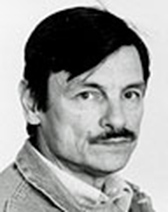
Andrei Tarkovsky
Poetic Master of Time and Memory
Born on April 4, 1932
Age: 94
Profession: Film Director, Screenwriter
Place of Birth: Zavrazhe, Volga River region, Russian SFSR
Andrei Tarkovsky was a renowned Russian film director and screenwriter, widely regarded as one of the most influential auteurs in the history of world cinema.
Andrei Tarkovsky was born on April 4, 1932, in Zavrazhye, a town located along the Volga River within the borders of what is now Russia. His mother, Maria Ivanovna, was an actress, while his father, Arseniy Tarkovsky, was a celebrated poet and translator. In 1935, Tarkovsky moved with his family to Moscow, the city where he would spend most of his youth.
Two major events marked Tarkovsky’s childhood. With the outbreak of World War II, his father Arseniy Tarkovsky joined the army. In 1939, Tarkovsky and his sister Marina Tarkovskaya were sent to the small town of Yuryevets to live with relatives on their mother’s side. After Arseniy returned from the war in 1943—having lost an arm— the family reunited in Moscow. However, unable to readjust to family life after the trauma of war, Arseniy divorced Maria. From that point on, Tarkovsky lived with his mother, grandmother, and sister.
During his school years, Tarkovsky regularly engaged in painting and music. In 1951, he enrolled at the Moscow Institute of Oriental Languages but was forced to leave due to illness. In 1954, he entered the All-Union State Institute of Cinematography (VGIK), where he studied film for six years. One of the most important figures in his artistic development was his mentor Mikhail Ilyich Romm, who recognized Tarkovsky’s talent early on and supported him until his death in 1971.
In 1958, Tarkovsky made his first directorial attempt with the short film The Concentrate. Due to limited equipment at the institute, students often worked in small groups. As a result, Tarkovsky collaborated with his classmate Vasily Shukshin on an adaptation of an Ernest Hemingway story titled The Killers. The most significant outcome of this collaborative period, however, was The Steamroller and the Violin, which he co-directed with Andrei Konchalovsky. This film served as Tarkovsky’s graduation project and marked his first major artistic success, foreshadowing the themes and visual language of his later work.
Tarkovsky’s first feature-length film, Ivan’s Childhood, based on a story by Vladimir Bogomolov, premiered in Moscow in 1962 and won the Golden Lion at the Venice Film Festival the same year. While this achievement brought him international recognition, it also subjected him to ideological pressure within the Soviet Union. His 1969 film Andrei Rublev, which received an award at the Cannes Film Festival, was heavily censored by Soviet authorities and was not officially released until 1973. His deeply autobiographical film The Mirror, completed in 1974, faced severe bureaucratic obstacles and reached Western European cinemas only a year later.
Between 1971 and 1972, Tarkovsky directed Solaris, an adaptation of a science fiction novel by Stanislaw Lem. Although the subject of space exploration was relatively acceptable to Soviet authorities, Tarkovsky used the film to deliver profound philosophical critiques. His 1979 film Stalker, adapted from Roadside Picnic by the Strugatsky brothers, became the last film he shot in the Soviet Union.
In 1982, Tarkovsky traveled to Italy to make Nostalghia, a Soviet–Italian co-production written by the poet Tonino Guerra. The film reflected a recurring theme in Tarkovsky’s life and art: the anguish of an artist unable to live in his homeland and consumed by longing for it while abroad.
After completing his final film, The Sacrifice, in late 1985, Andrei Tarkovsky passed away on December 26, 1986, in Paris, due to lung cancer. His legacy endures through his uniquely spiritual, poetic, and philosophical approach to cinema, which continues to influence filmmakers and audiences around the world.
Source: Biyografiler.com
Frequently asked questions about Andrei Tarkovsky
Who is Andrei Tarkovsky?, Andrei Tarkovsky biography, Andrei Tarkovsky life story, Andrei Tarkovsky age, Andrei Tarkovsky facts, Andrei Tarkovsky birthplace, Andrei Tarkovsky photos, Andrei Tarkovsky videos, Andrei Tarkovsky career
Related Biographies

Lamine Yamal
Professional footballer

Kylian Mbappe
Professional footballer

Erling Haaland
Professional footballer

Sam Altman
Entrepreneur, Investor, CEO

Austin Abrams
Actor

Bad Bunny
Rapper, Songwriter


Hongjoong
Singer, Rapper, Songwriter, Composer

Ludacris
Rapper, Actor

Kwon Eunbi
Singer

Sarah Wayne Callies
Actress, Screenwriter, Producer, Director

LaTavia Roberson
Singer, Actress, Entrepreneur

Pedro Sanchez
Politician
Lamine Yamal
Professional footballer

Adam Sandler
Actor

Cillian Murphy
Actor
Austin Abrams
Actor

Brad Pitt
Actor