
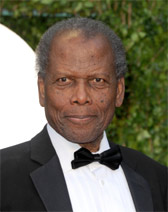
Sidney Poitier
A pioneering Oscar-winning actor who broke racial barriers in Hollywood
Born on February 20, 1927
Died on January 6, 2022
Age at death: 95
Profession: Actor, Director
Place of Birth: Miami, Florida, United States
Place of Death: Los Angeles, California, United States
Sidney Poitier was a groundbreaking Bahamian-American actor, director, and diplomat who became one of the most influential figures in the history of cinema. Widely recognized for his dignified screen presence and trailblazing roles, Sidney Poitier made history as the first Black actor to win the Academy Award for Best Actor, redefining representation in Hollywood during an era of deep racial division.
Early Life and Background
Sidney Poitier, February 20, 1927 tarihinde United States’ın Florida eyaletindeki Miami kentinde doğmuştur. Although born in the United States, he was of Bahamian origin and grew up on Cat Island in the Bahamas, a small and rural community with a population of around 4,000. His father, Reginald James Poitier, worked as a traveling tomato farmer, and his early life was shaped by modest economic conditions and a close-knit island environment.
At the age of ten, Sidney Poitier moved with his family to Nassau, where he encountered a more urban and socially complex environment. By fifteen, he was sent to Miami to live with his brother, and shortly thereafter he relocated to New York City, where he struggled through a series of low-paying jobs, including dishwashing. These formative experiences exposed him to the realities of racial inequality in America, an issue that would later define many of his roles.
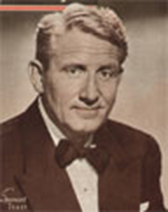
After serving in the military, Sidney Poitier began pursuing acting, eventually landing a small role in the Broadway production Lysistrata. His early theatrical work laid the foundation for a career that would soon intersect with major figures of American cinema, including Tony Curtis and Spencer Tracy.
Career Beginnings and Breakthrough
Sidney Poitier gained early recognition with his role in No Way Out (1950), where he starred alongside Richard Widmark. His performance signaled the arrival of a new kind of leading man—one who challenged racial stereotypes and embodied intelligence, dignity, and moral strength.
His breakthrough came with The Defiant Ones (1958), in which he starred opposite Tony Curtis. The film earned him his first Academy Award nomination, marking a historic moment in Hollywood. During this period, Sidney Poitier also became associated with socially conscious cinema, contributing to a broader cultural shift alongside actors like Harry Belafonte and James Baldwin in the fight for civil rights representation.
Academy Award and Global Recognition
In 1964, Sidney Poitier won the Academy Award for Best Actor for his performance in Lilies of the Field (1963), becoming the first Black actor to receive this honor. His portrayal of a traveling handyman helping a group of German-speaking nuns build a chapel resonated deeply with audiences and critics alike.
This achievement positioned Sidney Poitier alongside legendary actors such as Marlon Brando and Gregory Peck, while also paving the way for future generations of actors including Denzel Washington and Will Smith. His success was not only artistic but also symbolic, representing a breakthrough in an industry long dominated by racial exclusion.
Iconic Roles and Cinematic Legacy
Throughout the 1960s and 1970s, Sidney Poitier starred in a series of influential films that remain central to his legacy. Among his most celebrated works are To Kill a Mockingbird (referred to culturally alongside his era), The Defiant Ones, To Sir, with Love, In the Heat of the Night, and Guess Who's Coming to Dinner, where he starred with Katharine Hepburn and Spencer Tracy.
His role in In the Heat of the Night (1967), portraying detective Virgil Tibbs, became particularly iconic and later expanded into sequels such as They Call Me MISTER Tibbs!. These performances combined commercial success with social commentary, solidifying Sidney Poitier’s place in film history.
Over his career, he appeared in more than 50 productions, directed nine films, and also worked as a producer and screenwriter. His later roles included appearances in Sneakers (1992) and The Jackal (1997), demonstrating his enduring relevance across decades.
Diplomatic Roles and Honors
Beyond cinema, Sidney Poitier served as a diplomat for the Bahamas, including his role as ambassador to Japan and his involvement with UNESCO. He also held a position connected to The Walt Disney Company as a board member between 1998 and 2003, reflecting his influence beyond the film industry.
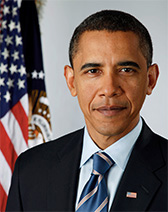
In 1974, he was knighted as a Knight Commander of the Order of the British Empire, granting him the title “Sir.” In 2009, Barack Obama awarded Sidney Poitier the Presidential Medal of Freedom, the highest civilian honor in the United States, recognizing his cultural and humanitarian contributions.
Personal Life
Sidney Poitier married Juanita Hardy in 1950, and the couple later divorced in 1965. In 1976, he married Canadian actress Joanna Shimkus. He had six daughters—two from his first marriage and four from his second—named Beverly, Pamela, Sherri, Gina, Anika, and Sidney Tamiia.
Despite his global fame, Sidney Poitier maintained a composed and dignified public image, often reflecting the values he portrayed on screen. His life stood as a bridge between cultures, identities, and generations.
Death
Sidney Poitier passed away on January 6, 2022, in Los Angeles, California, at the age of 95.
Selected Filmography
2004 – Tell Them Who You Are – (Documentary)
2001 – Ralph Bunche: An American Odyssey – (Documentary)
1997 – The Jackal – (Feature Film)
1995 – Wild Bill: A Hollywood Maverick – (Documentary)
1992 – Sneakers – (Feature Film)
1988 – Shoot to Kill – (Feature Film)
1988 – Little Nikita – (Feature Film)
1977 – A Piece of the Action – (Feature Film)
1975 – Let's Do It Again – (Feature Film)
1974 – Uptown Saturday Night – (Feature Film)
1974 – The Wilby Conspiracy – (Feature Film)
1972 – A Warm December – (Feature Film)
1971 – The Organization – (Feature Film)
1971 – Buck and the Preacher – (Feature Film)
1970 – They Call Me MISTER Tibbs! – (Feature Film)
1967 – Guess Who's Coming to Dinner – (Feature Film)
1967 – In the Heat of the Night – (Feature Film)
1966 – To Sir, with Love – (Feature Film)
1965 – The Bedford Incident – (Feature Film)
1965 – The Greatest Story Ever Told – (Feature Film)
1965 – Duel at Diablo – (Feature Film)
1965 – A Patch of Blue – (Feature Film)
1963 – Lilies of the Field – (Feature Film)
1963 – The Long Ships – (Feature Film)
1958 – The Defiant Ones – (Feature Film)
1958 – Porgy and Bess – (Feature Film)
1957 – Something of Value – (Feature Film)
1957 – Edge of the City – (Feature Film)
1955 – Blackboard Jungle – (Feature Film)
1950 – No Way Out – (Feature Film)
Awards and Honors
1957 – BAFTA Award for Best Actor
1958 – Academy Award Nomination for Best Actor
1963 – Academy Award for Best Actor
1964 – Golden Globe Award for Best Actor
1974 – Knight Commander of the Order of the British Empire
1992 – AFI Life Achievement Award
1995 – SAG Life Achievement Award
1999 – Kennedy Center Honors
2001 – Grammy Award for The Measure of a Man
2002 – Honorary Academy Award
2009 – Presidential Medal of Freedom awarded by Barack Obama
2011 – Film Society of Lincoln Center Gala Tribute
Source: Biyografiler.com
News about Sidney Poitier

2026 Oscars: “One Battle After Another” Dominates a Historic Night
The 98th Academy Awards, held on March 15, 2026, delivered a ceremony packed with major victories, emotional speeches, historic milestones, and a few ...
Frequently asked questions about Sidney Poitier
Who is Sidney Poitier?, Sidney Poitier biography, Sidney Poitier life story, Sidney Poitier age, Sidney Poitier facts, Sidney Poitier birthplace, Sidney Poitier photos, Sidney Poitier videos, Sidney Poitier career
Related Biographies



Lamine Yamal
Professional footballer

Sam Altman
Entrepreneur, Investor, CEO

Kylian Mbappe
Professional footballer

Alice Weidel
Politician, Economist

Erling Haaland
Professional footballer

Giorgia Meloni
Politician, Journalist


Hongjoong
Singer, Rapper, Songwriter, Composer

Ludacris
Rapper, Actor

Kwon Eunbi
Singer

Sarah Wayne Callies
Actress, Screenwriter, Producer, Director

LaTavia Roberson
Singer, Actress, Entrepreneur

Kaia Gerber
Model, Actress
Lamine Yamal
Professional footballer
Sam Altman
Entrepreneur, Investor, CEO

Austin Abrams
Actor

Zohran Mamdani
Politician, Musician
Kylian Mbappe
Professional footballer