
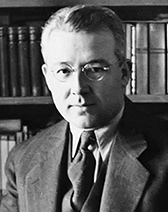
Sabahattin Ali
Born on February 25, 1907
Died on April 2, 1948
Age at death: 41
Profession: Poet, Writer, Journalist
Place of Birth: Edirne, Turkey
Place of Death: Bulgaria
Sabahattin Ali was born on 25 February 1907 in Eğridere, a town connected to the Gümülcine Sanjak of the Edirne Province. He was a writer, poet, teacher, and journalist who played a crucial role in the development of modern Turkish literature. He died on 2 April 1948 in Bulgaria at the age of 41.
Sabahattin Ali is regarded as one of the most influential figures in Turkish literature, producing numerous important short stories, novels, and poems. In his works, he approached Anatolian people from a different perspective, focusing on their sufferings, sorrows, and inner worlds. His 1937 novel Kuyucaklı Yusuf is considered one of his most significant works and reflects his realist literary style.
Sabahattin Ali was born to Hüsniye Hanım and Ali Sabahattin Bey, a infantry captain whose frequent duty changes caused the family to move often. Because of this, Ali spent his childhood years in cities such as Istanbul, Çanakkale, and Edremit, attending various schools. He first studied at Balıkesir Teacher Training School and later continued at Istanbul Primary Teacher Training School, from which he graduated in 1926. His earliest writings were published in 1925 in a magazine called “Irmak” in Balıkesir.
After working for about a year as a primary school teacher in Yozgat, Sabahattin Ali was sent to Germany by the Ministry of National Education in 1928. He studied in Postdam and Berlin, returning to Turkey in 1930. Upon his return, he worked as a primary school teacher in Orhaneli and later as a German language teacher in secondary schools in Aydın and Konya. He also served at the Ministry of National Education’s Publications Directorate and the State Conservatory. His first short story, “Bir Orman Hikayesi,” was published on 30 September 1930 in the magazine “Resimli Ay.”
Despite starting his career as a German teacher, Sabahattin Ali was arrested on charges of communist propaganda and later for allegedly criticizing state officials. During this period, he was dismissed from civil service. However, after writing a poem praising Mustafa Kemal ATATÜRK, he was reinstated in state institutions. In order to counter the socialist image attributed to him, he also wrote a play titled “Esirler.”
In 1932, while in Konya, Sabahattin Ali was arrested again after reading a poem in a social gathering that was claimed to insult Mustafa Kemal ATATÜRK. He was sentenced to one year in prison and served time in Konya and Sinop prisons. He was released in 1933 under a general amnesty. On 15 January 1934, he published the poem “Benim Aşkım” in Varlık Magazine to demonstrate his loyalty to Atatürk, a request reportedly encouraged by Hikmet Bayur, who was serving as a minister at the time. Later that year, he began working at the Ministry of Publications.
Sabahattin Ali married Aliye Ali on 16 May 1935. He completed his military service in 1936. In September 1937, his wife gave birth to their daughter Filiz Ali. In 1938, he started teaching Turkish at the Music Teachers’ School, a position he held until being conscripted again in 1940. After returning from military service in 1941, he worked as a German teacher at the Ankara State Conservatory until his dismissal in 1945.
Throughout his literary career, Sabahattin Ali wrote three novels: Kuyucaklı Yusuf (1937), İçimizdeki Şeytan (1940), and Kürk Mantolu Madonna (1943). In Kürk Mantolu Madonna, the character Maria Puder is described as resembling the Virgin Mary depicted in painter Andrea del Sarto’s artwork “Madonna delle Arpie.” The novel later became one of the most widely read and discussed works in Turkish literature.
The publication of İçimizdeki Şeytan led to a major conflict between Sabahattin Ali and nationalist circles, particularly with Nihal Atsız. Although Ali won the lawsuit he filed against Atsız, public reactions continued, resulting in his removal from the Ankara State Conservatory. Around the same period, the newspapers he wrote for were shut down due to political pressures.
Following these events, Sabahattin Ali decided to pursue journalism in Istanbul. In 1945, he co-founded the satirical magazine Markopaşa with Aziz Nesin and Rıfat Ilgaz. They later published other political humor magazines such as Malum Paşa, Öküz Paşa, and Merhum Paşa between 1946 and 1947. In 1948, Ali was arrested once more due to an article published in these magazines and served three months in prison.
In 1934, Sabahattin Ali compiled his poems inspired by folk poetry in the book “Dağlar ve Rüzgâr,” which was reissued in 1943. His short story collections include Değirmen (1935), Kağnı (1936), Ses (1937), Kağnı-Ses (1943), Yeni Dünya (1943), and Sırça Köşk (1947). He also produced numerous translations, including works by Max Kemmerich, Sophocles, Heinrich von Kleist, Adelbert von Chamisso, E. T. A. Hoffmann, Ignazio Silone, Friedrich Hebbel, and Alexander Pushkin.
Many studies and books have been written about Sabahattin Ali, including works by Kemal Sülker, Asım Bezirci, Kemal Bayram, Filiz Ali Laslo, Atilla Özkırımlı, Reşit Ertüzün, Hikmet Altınkaynak, Ramazan Korkmaz, and Elisabeth Siedel. These works analyze his life, literary output, and political struggles in depth.
Due to constant surveillance and increasing pressure, Sabahattin Ali attempted to flee abroad. On 2 April 1948, while trying to cross into Bulgaria, he was murdered near the border by Ali Ertekin, a smuggler allegedly connected to the National Intelligence services. His death remains one of the most tragic and controversial events in Turkish literary history.
Sabahattin Ali remained married to Aliye Ali until his death and was the father of one daughter, Filiz Ali. In his novels and stories, he explored the depths of the human soul with remarkable sensitivity. He did not hesitate to portray human weaknesses and posed difficult moral and psychological questions. His mastery in expressing passion and emotional complexity secured him a lasting place among the most important writers of his era.
Poems such as “Leylim Ley” and “Aldırma Gönül,” which are still widely known today, are among Sabahattin Ali’s works and have been composed by artists such as Zülfü Livaneli, Ahmet Kaya, Sezen Aksu, Edip Akbayram, and others. Despite a life filled with hardship, political persecution, and a tragic death, his works continue to be studied, read, and appreciated for their deep insight into human nature and society.
Works:
Poetry:
1934 – Mountains and Winds
1937 – The Frog’s Serenade (together with Other Poems)
Poems Set to Music:
“Prison Song V” (Aldırma Gönül – Kerem Güney, Edip Akbayram)
“Eşkiya Dünyaya” (Zülfü Livaneli)
“Leylim Ley” (Zülfü Livaneli)
“Prison Song I” (I Was Like an Eagle in the Skies / My Shy Beloved – Deniz Akyürek)
“Prison Song II” (One Heart Remained in Your Palm – Grup Çağrı)
“Prison Song III” (The Days Do Not Pass – Ahmet Kaya)
“Like Children” (Sezen Aksu)
“The Girl Kidnapper” (Ahmet Kaya)
“Dark Fate” (Ahmet Kaya)
“Melancholy” (Ali Kocatepe, Nükhet Duru)
“As Before” (I Am Still in Love with You – Ali Kocatepe, Nükhet Duru)
“Mountains” (My Dwelling Is the Mountains – Sadık Gürbüz / Mountains, Mountains – Sezen Aksu)
“I Was Like an Eagle in the Skies” (Grup Çağrı, Volkan Konak)
“The Days Do Not Pass” (Selva Erdener & Turkuvaz Beşlisi, Turgay Erdener)
Short Stories:
1935 – The Mill
1936 – The Ox Cart
1937 – Singer Melek
1937 – The Voice
1943 – The Ox Cart – The Voice (two books together)
1943 – New World
1947 – The Glass Pavilion
The Truck
1997 – Complete Short Stories 1 (together with The Mill, The Ox Cart, and The Voice)
A Forest Story
Novels:
1937 – Kuyucaklı Yusuf
1940 – The Devil Within Us
1943 – Madonna in a Fur Coat
Source: Biyografiler.com
Frequently asked questions about Sabahattin Ali
Who is Sabahattin Ali?, Sabahattin Ali biography, Sabahattin Ali life story, Sabahattin Ali age, Sabahattin Ali facts, Sabahattin Ali birthplace, Sabahattin Ali photos, Sabahattin Ali videos, Sabahattin Ali career
Related Biographies

Lamine Yamal
Professional footballer

Erling Haaland
Professional footballer

Kylian Mbappe
Professional footballer

Austin Abrams
Actor

Bad Bunny
Rapper, Songwriter

Sam Altman
Entrepreneur, Investor, CEO


Hongjoong
Singer, Rapper, Songwriter, Composer

Ludacris
Rapper, Actor

Kwon Eunbi
Singer

Sarah Wayne Callies
Actress, Screenwriter, Producer, Director

LaTavia Roberson
Singer, Actress, Entrepreneur

Amber Heard
Actress, Model
Lamine Yamal
Professional footballer
Bad Bunny
Rapper, Songwriter
Erling Haaland
Professional footballer
Kylian Mbappe
Professional footballer
Austin Abrams
Actor