
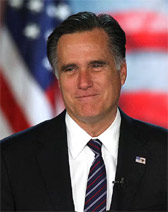
Mitt Romney
Born on March 12, 1947
Age: 79
Profession: Politician, Business Leader
Place of Birth: Detroit, Michigan, United States
Willard Mitt Romney is an American business executive and politician whose career has uniquely bridged high-level corporate leadership and national politics. Best known as the Republican Party’s nominee in the 2012 United States presidential election, Romney has served as Governor of Massachusetts and later as United States Senator from Utah. His public identity has long been associated with managerial competence, fiscal discipline, and a technocratic governing style shaped by decades in business and public service.
Early Life and Political Lineage
Willard Mitt Romney was born on March 12, 1947, in Detroit, Michigan, into a family already deeply embedded in American industrial and political life. He was raised within the Church of Jesus Christ of Latter-day Saints, an influence that would later shape both his ethical framework and public demeanor. His father, George W. Romney, was a towering figure in postwar American industry, serving as president of American Motors Corporation during a formative period for the U.S. automotive sector.
George Romney later transitioned into politics, serving six years as Governor of Michigan and emerging as a national figure during the 1968 Republican presidential primaries, where he competed against figures such as Richard Nixon and Ronald Reagan. Although his presidential ambitions ultimately faded, George Romney later joined the Nixon administration as Secretary of Housing and Urban Development, placing the Romney family at the center of Republican political networks during a pivotal era.
Education, Faith, and Global Exposure
Mitt Romney began his higher education at Stanford University in 1965, where he met Ann Davies, who would become his wife and lifelong partner. In 1966, he suspended his studies to fulfill a religious obligation, serving as a Mormon missionary in France for approximately two and a half years. This experience exposed him to international culture and public engagement at an early age.
After returning to the United States, Romney resumed his education and married Ann Davies on March 21, 1969. He completed his undergraduate degree at Brigham Young University, graduating with highest honors in English Literature. He later attended Harvard University, earning both a Juris Doctor from Harvard Law School and an MBA from Harvard Business School in 1975. During this period, he studied alongside future leaders in law, finance, and government, and was awarded the prestigious Baker Scholar distinction.
Corporate Leadership and Bain Capital
Mitt Romney launched his professional career at Bain & Company, a leading management consulting firm where he worked closely with founder Bill Bain. Rising rapidly through the ranks, Romney became a vice president and developed a reputation for analytical rigor and corporate restructuring expertise.
In 1984, Romney co-founded Bain Capital, transforming it into one of the most influential private equity firms in the United States. Under his leadership, the firm played a central role in building and expanding major consumer brands such as Staples and Domino’s Pizza, reshaping industries through leveraged buyouts and growth-oriented investments.
When Bain & Company itself fell into severe financial distress in 1990, Romney returned as interim CEO at the request of senior partners. His successful turnaround of the firm reinforced his national reputation as a crisis manager capable of restoring institutional stability under pressure.
Olympic Turnaround and National Recognition
At the dawn of the 21st century, Mitt Romney was called upon to lead one of the most high-profile rescue efforts in modern American sports administration. The Salt Lake City Winter Olympics were beset by corruption scandals and financial collapse. Romney was appointed President and CEO of the Salt Lake Organizing Committee.
Working closely with federal officials and security agencies in the post–September 11 environment, Romney eliminated a $379 million deficit, rebuilt public trust, and coordinated more than 23,000 volunteers. His collaboration with national leaders and Olympic officials elevated his profile, positioning him as a capable executive on the national stage.
Massachusetts Governorship and Bipartisan Governance
Mitt Romney entered elected office in 2002 after defeating Democratic candidates to become the 70th Governor of Massachusetts. Governing a state with an overwhelmingly Democratic legislature, Romney worked alongside figures such as Deval Patrick and legislative leaders from the opposing party, relying heavily on negotiation and compromise.
His most enduring achievement was the implementation of a statewide universal health insurance system. This policy later served as a foundational model for federal health care reforms enacted under President Barack Obama, a connection that became a focal point of national debate during Romney’s later presidential campaign.
Presidential Ambitions and Party Leadership
Mitt Romney first pursued the presidency during the 2008 Republican primaries, competing against John McCain and other party heavyweights. Although he did not secure the nomination, Romney emerged as a leading figure within the party’s economic policy wing.
In 2012, Romney successfully secured the Republican nomination, defeating rivals including Newt Gingrich and Rick Santorum. He selected Paul Ryan as his running mate, aligning himself with the party’s fiscal conservative agenda. In the general election, Romney faced incumbent President Barack Obama in a closely watched contest that centered on economic recovery and health care reform.
Despite a disciplined campaign and strong debate performances, Romney was defeated in the November 2012 election, concluding his bid for the presidency.
United States Senate and Institutional Independence
In 2018, Mitt Romney returned to electoral politics by running for the United States Senate from Utah. Elected decisively, he assumed office in January 2019 and quickly became one of the Senate’s most independent Republican voices.
During his tenure, Romney frequently diverged from party leadership and presidents of his own party, including Donald Trump, emphasizing constitutional responsibility and institutional norms. His positions aligned him more closely with centrist figures such as John McCain and Jeff Flake, reinforcing his reputation as a principled, if sometimes isolated, figure within contemporary Republican politics.
Personal Life
Mitt Romney married Ann Romney in 1969. Together they raised five sons—Tagg, Matt, Craig, Josh, and Ben—who have periodically appeared in public life during Romney’s campaigns. Family, faith, and personal discipline have remained defining elements of Romney’s public identity throughout his career.
Source: Biyografiler.com
Frequently asked questions about Mitt Romney
Who is Mitt Romney?, Mitt Romney biography, Mitt Romney life story, Mitt Romney age, Mitt Romney facts, Mitt Romney birthplace, Mitt Romney photos, Mitt Romney videos, Mitt Romney career
Related Biographies

Lamine Yamal
Professional footballer

Erling Haaland
Professional footballer

Sam Altman
Entrepreneur, Investor, CEO

Kylian Mbappe
Professional footballer

Giorgia Meloni
Politician, Journalist

Alice Weidel
Politician, Economist


Hongjoong
Singer, Rapper, Songwriter, Composer

Ludacris
Rapper, Actor

Kwon Eunbi
Singer

Sarah Wayne Callies
Actress, Screenwriter, Producer, Director

LaTavia Roberson
Singer, Actress, Entrepreneur
Lamine Yamal
Professional footballer

Zhang Zhidong
Entrepreneur, Engineer
Alice Weidel
Politician, Economist

Elena Andreyevna Rybakina
Professional Tennis Player
Erling Haaland
Professional footballer
Sam Altman
Entrepreneur, Investor, CEO