
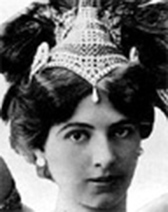
Mata Hari
The Legendary Femme Fatale and World War I Spy
Born on August 7, 1876
Died on October 15, 1917
Age at death: 41
Profession: Dancer
Place of Birth: Leeuwarden, Netherlands
Place of Death: Vincennes, France
Mata Hari, born Margaretha Geertruida Zelle, became one of the most infamous and enigmatic figures of the First World War. Her stage name, meaning “Eye of the Dawn” in Malay/Indonesian, symbolized the exotic persona she crafted in Parisian high society. Celebrated as a seductive dancer and later condemned as a German spy, Mata Hari was executed by French firing squad in 1917. Her dramatic life and controversial trial transformed her into a symbol of espionage, intrigue, and the archetypal femme fatale.
Early Life and Marriage
Mata Hari was born on August 7, 1876, in Leeuwarden, the Netherlands. Her father was a hat manufacturer whose early financial success collapsed into bankruptcy during her adolescence. She received part of her education in a convent, but her family’s economic decline altered her life path.
At age 19, she answered a newspaper advertisement placed by Dutch colonial officer Rudolf “John” MacLeod. The two married soon after. The marriage produced two children, Norman and Non, and took her first to Amsterdam and later to the Dutch East Indies (present-day Indonesia), particularly Java. Immersed in local culture, she developed a fascination with traditional dance and Eastern aesthetics—elements she would later reinvent as part of her public persona.
The marriage deteriorated due to MacLeod’s alcoholism and volatile behavior. After returning to Europe, Mata Hari separated from her husband and eventually moved to Paris, where she sought financial independence through performance.
Rise to Fame in Paris
In Paris, Mata Hari reinvented herself as an exotic dancer claiming Eastern royal origins. Her performances blended theatrical mystique with sensual choreography, captivating audiences in elite salons and fashionable clubs. She quickly gained popularity not only among art enthusiasts but also among aristocrats, diplomats, military officers, and political elites.
Her fame extended beyond France to cities such as London, Vienna, Berlin, and Rome. The mystique surrounding her identity, combined with her relationships among influential men, positioned her within circles where political and military conversations frequently occurred. In the atmosphere of pre-war Europe, such proximity to power would later prove dangerous.
Espionage and World War I
During World War I, Mata Hari’s lifestyle and cross-border travel aroused suspicion. According to French authorities, she was recruited by German intelligence and assigned the code name H21. She reportedly received training in espionage and was later accused of transmitting military information through coded letters disguised as personal correspondence.
French counterintelligence became suspicious and allegedly proposed that she work as a double agent. However, trust was thin. In Belgium, several French agents connected to her network were arrested and executed by German forces, intensifying doubts about her loyalty. Whether she was a highly effective spy or merely a scapegoat remains debated among historians.
On February 13, 1917, Mata Hari was arrested in Paris. Authorities claimed that she possessed suspicious funds—approximately 30,000 marks—allegedly received from German intelligence. She defended herself by stating the money was a personal gift, but the court found her explanations unconvincing.
Trial and Execution
Convicted of espionage and accused of causing the deaths of thousands of French soldiers, Mata Hari was sentenced to death. Her trial has often been criticized as lacking substantial evidence and being influenced by wartime hysteria.
On October 15, 1917, she was executed by firing squad at Vincennes. Witnesses noted her composure; she reportedly refused a blindfold and faced her executioners with calm defiance. One of her final remarks is remembered as:
“What will the French gain by killing me? Will they win the war?”Accounts suggest that although fifteen soldiers formed the firing squad, only one bullet proved fatal. Her death sealed her legend.
Legacy and Historical Debate
The story of Mata Hari continues to provoke debate among historians. Some argue she was an opportunistic socialite entangled in espionage beyond her understanding; others suggest she functioned as a minor intelligence source exaggerated for political convenience. Regardless of the factual extent of her activities, her execution turned her into a symbol of seduction, betrayal, and wartime paranoia.
Over the decades, her life has inspired numerous films, biographies, and literary works. She remains one of the most famous female figures associated with espionage in world history, embodying the complex intersection of gender, power, and propaganda during the First World War.
Source: Biyografiler.com
Frequently asked questions about Mata Hari
Who is Mata Hari?, Mata Hari biography, Mata Hari life story, Mata Hari age, Mata Hari facts, Mata Hari birthplace, Mata Hari photos, Mata Hari videos, Mata Hari career

Lamine Yamal
Professional footballer

Erling Haaland
Professional footballer

Austin Abrams
Actor

Keanu Reeves
Actor

Kylian Mbappe
Professional footballer

Bad Bunny
Rapper, Songwriter


Hongjoong
Singer, Rapper, Songwriter, Composer

Ludacris
Rapper, Actor

Kwon Eunbi
Singer

Sarah Wayne Callies
Actress, Screenwriter, Producer, Director

LaTavia Roberson
Singer, Actress, Entrepreneur
Erling Haaland
Professional footballer
Lamine Yamal
Professional footballer
Keanu Reeves
Actor

Sadio Mane
Professional footballer

Ma Huateng
Entrepreneur, Inventor

Michael Jordan
Professional Basketball Player