
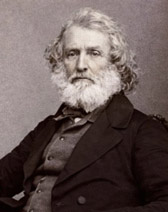
George Everest
The surveyor whose name became the world’s highest peak
Born on July 4, 1790
Died on December 1, 1866
Age at death: 76
Profession: Engineer
Place of Birth: England
Place of Death:
George Everest was a British surveyor and geographer whose name became permanently associated with the highest mountain on Earth, Mount Everest, despite the remarkable fact that he never saw it. Serving as Surveyor General of British India, George Everest played a decisive role in the scientific mapping of the Indian subcontinent during the 19th century. His work on the monumental Great Trigonometrical Survey laid the foundations for modern cartography in South Asia and established his reputation as one of the most influential figures in the history of geodesy.
Early Life and Background
George Everest was born on July 4, 1790, though his exact birthplace remains uncertain. Historical accounts suggest either Greenwich, England, or his family’s estate near Brecknockshire in Wales. He was baptized on January 27, 1791, at St Alfege Church in Greenwich. The eldest son of William Tristram Everest and Lucetta Mary Smith, he grew up in a well-established family with legal and civic standing, as his father was both a lawyer and a magistrate.
He received his early education at the Royal Military College in Marlow, Buckinghamshire, before continuing his studies at the Royal Military Academy in Woolwich. These institutions, known for training engineers and artillery officers, provided George Everest with a strong foundation in mathematics and technical sciences—skills that would define his later contributions to surveying and cartography.
Career Beginnings
In 1806, even before reaching the official age requirement, George Everest joined the East India Company. Commissioned as a second lieutenant in the Bengal Artillery, he was sent to India, where his career would unfold. Early on, he distinguished himself through his aptitude in mathematics and astronomy, disciplines essential for precise geographical measurement.
In 1814, he was assigned to Java, where he worked under Stamford Raffles to map the island. This assignment proved crucial in developing his practical surveying skills. Upon returning to Bengal, he contributed to improving British geographical knowledge of major river systems, including the Ganges River and the Hooghly River. His work attracted the attention of William Lambton, the leader of the Great Trigonometrical Survey, who appointed him as his chief assistant.
The Great Trigonometrical Survey
The Great Trigonometrical Survey was one of the most ambitious scientific projects of the 19th century, aiming to measure the entire Indian subcontinent with unprecedented accuracy. George Everest became deeply involved in the project, helping to measure a meridian arc stretching approximately 2,400 kilometers from Cape Comorin (present-day Kanyakumari) to the northern regions near Nepal.
These efforts required years of fieldwork under extreme conditions, including harsh climates and difficult terrain. In 1820, George Everest contracted malaria and temporarily relocated to the Cape of Good Hope in South Africa to recover. Despite recurring health issues, he returned to India in 1821 and resumed his duties with determination.
Following the death of William Lambton in 1823, George Everest assumed leadership of the survey. Under his direction, the project expanded further into central India, including regions corresponding to modern Madhya Pradesh. His insistence on precision and scientific rigor significantly improved the quality and reliability of the survey’s data.
Surveyor General of India
After a brief return to the United Kingdom in 1825 due to health concerns, George Everest spent several years refining his methods and advocating for better instruments. During this period, he was elected a Fellow of the Royal Society in 1827, reflecting his growing scientific reputation.
In 1830, he returned to India and was appointed Surveyor General. Under his leadership, the meridian arc from Cape Comorin to the northern limits of British India was completed in 1841. Among his key collaborators was his student and successor Andrew Scott Waugh, who would later play a decisive role in naming the world’s highest mountain.
The Naming of Mount Everest
Although George Everest is globally recognized through the mountain that bears his name, he had no direct involvement in its discovery or measurement. The peak, initially referred to as “Peak B” and later “Peak XV,” was identified as the highest mountain in the world through calculations conducted by Radhanath Sikdar and observations organized under Andrew Scott Waugh.
In 1856, Waugh proposed naming the mountain after his predecessor, citing the absence of a widely recognized local name. Ironically, George Everest opposed this decision. He argued that geographical features should retain indigenous names and expressed concern that his surname would be difficult for local populations to pronounce.
Despite his objections, the Royal Geographical Society officially adopted the name Mount Everest in 1865. The decision immortalized George Everest in global geography, even though he had never seen the mountain himself.
Later Life and Recognition
After retiring from his official duties, George Everest returned to London. In 1846, he married Emma Wing, who was significantly younger than him, and the couple had six children. His later years were marked by continued engagement with scientific institutions and recognition for his contributions.
In 1847, he published his major work on the measurement of India’s meridional arc, earning him the Gold Medal of the Royal Astronomical Society. He was also affiliated with the Royal Asiatic Society and the Royal Geographical Society. His honors included promotion to colonel in 1854 and appointment as a Knight Commander of the Order of the Bath in 1861.
Death
George Everest spent his final years in London. He died on December 1, 1866, at his residence in Hyde Park Gardens at the age of 76. He was buried at St Andrew’s Church in Hove, near Brighton.
Although he never witnessed the mountain that carries his name, George Everest remains a central figure in the history of scientific surveying. His meticulous work helped transform geography into a precise science, and his legacy endures not only in maps and measurements but also in the enduring symbolism of Mount Everest.
Aftermath and First Ascent of Everest
Decades after George Everest’s death, the mountain named in his honor became a focal point for exploration and human endurance. On May 29, 1953, the summit of Mount Everest was reached for the first time by Edmund Hillary and Tenzing Norgay. Their achievement marked a defining moment in mountaineering history and further solidified the global recognition of the name Everest.
Today, despite the dangers and the loss of many lives, the mountain stands as a symbol of ambition, resilience, and exploration—an enduring testament indirectly tied to the scientific legacy of George Everest.
Source: Biyografiler.com
Frequently asked questions about George Everest
Who is George Everest?, George Everest biography, George Everest life story, George Everest age, George Everest facts, George Everest birthplace, George Everest photos, George Everest videos, George Everest career

Lamine Yamal
Professional footballer

Erling Haaland
Professional footballer

Austin Abrams
Actor

Keanu Reeves
Actor

Kylian Mbappe
Professional footballer

Bad Bunny
Rapper, Songwriter


Hongjoong
Singer, Rapper, Songwriter, Composer

Ludacris
Rapper, Actor

Kwon Eunbi
Singer

Sarah Wayne Callies
Actress, Screenwriter, Producer, Director

LaTavia Roberson
Singer, Actress, Entrepreneur

Fatih Akin
Film Director, Screenwriter

James Cameron
Film Director, Screenwriter, Producer

Doja Cat
Rapper

Steven Soderbergh
Film Director, Screenwriter, Producer

Roman Polanski
Film Director, Screenwriter

Penelope Cruz
Actress