
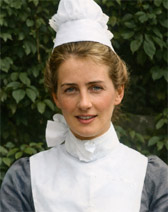
Edith Cavell
Symbol of humanitarian courage during World War I
Born on December 4, 1865
Died on October 12, 1915
Age at death: 50
Profession: Nurse
Place of Birth: Swardeston, Norfolk, United Kingdom
Place of Death: Schaerbeek, Brussels, Belgium
Edith Cavell was a British nurse remembered for her extraordinary humanitarian work during World War I. She treated wounded soldiers from both sides without discrimination and played a central role in helping approximately 200 Allied soldiers escape from German-occupied Belgium. Her actions led to her arrest, trial, and execution by German authorities, transforming her into a global symbol of moral courage, compassion, and resistance. Her story resonated across nations, becoming one of the most powerful human narratives of the war.
Early Life and Background
Edith Louisa Cavell, 4 Aralık 1865 tarihinde United Kingdom’ın Norfolk bölgesindeki Swardeston köyünde doğmuştur. She was the eldest of four children born to Frederick Cavell, an Anglican priest, and Louisa Sophia Warming. Growing up in a deeply religious household alongside her siblings Florence Mary Cavell, Mary Lilian Cavell, and John Frederick Scott Cavell, she was instilled with strong moral values rooted in duty, compassion, and faith.
Her early education took place at Norwich High School for Girls, followed by further schooling in Clevedon and Peterborough. Between 1890 and 1895, she worked as a governess in Belgium, gaining international experience. When her father fell seriously ill, she returned to England to care for him—an experience that proved निर्ण decisive in her decision to pursue nursing.
Medical Training and Professional Career
In December 1895, Edith Cavell began her nursing career at the Fountain Fever Hospital in Tooting. Determined to advance professionally, she enrolled at the London Hospital, where she trained under the influential nurse Eva Luckes. Her dedication quickly became evident.
In 1897, she served during a typhoid epidemic in Maidstone, earning the Maidstone Typhoid Medal for her service. After completing her training, she worked as a private nurse and later held supervisory roles at institutions such as St Pancras Hospital and St Leonard’s Hospital, gaining recognition as a disciplined and capable leader in the field of nursing.
Advancing Nursing in Belgium
In 1907, Belgian royal surgeon Antoine Depage invited Edith Cavell to Brussels to become the head matron of a newly established nursing school at the Berkendael Medical Institute. At the time, nursing in Belgium was not yet fully professionalized. Cavell’s leadership played a critical role in modernizing nursing education and establishing professional standards.
She also launched the journal L’infirmière in 1910, further contributing to the development of nursing as a respected profession. Through her efforts, numerous hospitals and training institutions in Belgium adopted structured nursing education, solidifying her influence in the country’s medical system.
World War I and Humanitarian Resistance
When World War I broke out in 1914, Edith Cavell was in United Kingdom visiting her mother. Driven by a strong sense of duty, she returned to Brussels, where German forces had occupied the city. The clinic and nursing school where she worked were converted into a Red Cross hospital, treating soldiers from all sides as well as civilians.
Beginning in November 1914, Cavell became part of a clandestine network that helped Allied soldiers escape German-occupied territory. Alongside figures such as Prince Reginald Charles Alfred de Croÿ and Marie de Croÿ, she sheltered wounded British and French soldiers, arranged their treatment, and guided them toward neutral Netherlands. In total, she assisted around 200 individuals in escaping.
Arrest, Trial, and Execution
Such activities were considered a violation of German military law. On August 5, 1915, Edith Cavell was arrested by German authorities and imprisoned at Saint-Gilles Prison. Over the course of ten weeks, she was interrogated multiple times and ultimately admitted to helping dozens of soldiers and civilians escape.
She was tried by a German military court alongside several others, including Marie de Croÿ. Convicted not of espionage but of “war treason,” she was sentenced to death. Despite diplomatic appeals from countries including the United States, the sentence was upheld.
On the morning of October 12, 1915, at the age of 49, Edith Cavell was executed by firing squad at the Tir National in Schaerbeek, Brussels. Her death provoked international outrage and became a powerful symbol used in Allied narratives during the war.
Final Words and Moral Legacy
On the night before her execution, Edith Cavell spoke with Anglican chaplain H. Stirling Gahan, expressing the ethical principles that guided her life:
“Patriotism is not enough. I must have no hatred or bitterness towards anyone.”These words encapsulated her unwavering commitment to humanity over nationalism, reflecting the deep moral conviction shaped by her upbringing and faith. Her refusal to abandon compassion—even in the face of death—cemented her legacy as one of the most profound humanitarian figures of the early 20th century.
Aftermath and Historical Significance
Following the war, Edith Cavell’s remains were returned to United Kingdom. A memorial service was held at Westminster Abbey, after which she was buried at Norwich Cathedral, near her birthplace. Her story continues to be remembered both in Belgium and internationally as a defining example of courage, ethical conviction, and humanitarian duty during wartime.
Source: Biyografiler.com
Frequently asked questions about Edith Cavell
Who is Edith Cavell?, Edith Cavell biography, Edith Cavell life story, Edith Cavell age, Edith Cavell facts, Edith Cavell birthplace, Edith Cavell photos, Edith Cavell videos, Edith Cavell career

Lamine Yamal
Professional footballer

Sam Altman
Entrepreneur, Investor, CEO

Kylian Mbappe
Professional footballer

Alice Weidel
Politician, Economist

Erling Haaland
Professional footballer

Giorgia Meloni
Politician, Journalist


Hongjoong
Singer, Rapper, Songwriter, Composer

Ludacris
Rapper, Actor

Kwon Eunbi
Singer

Sarah Wayne Callies
Actress, Screenwriter, Producer, Director

LaTavia Roberson
Singer, Actress, Entrepreneur
Lamine Yamal
Professional footballer

Xi Jinping
Politician, Statesman, Head of State

Brad Pitt
Actor

Neymar
Professional footballer
Kylian Mbappe
Professional footballer

Pedro Sanchez
Politician