
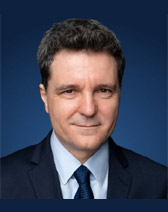
Nicușor Dan
Independent politician who rose from mathematical olympiads and urban anti-corruption activism to the Bucharest mayoralty and the presidency of Romania
Born on December 20, 1969
Age: 57
Profession: Politician, Mathematician, President
Place of Birth: Făgăraș, Brașov County, Romania
Nicușor Dan was born on December 20, 1969, in Făgăraș, a city in Brașov County, Romania. A Romanian politician, mathematician and civic activist, Nicușor Dan has served as President of Romania since May 26, 2025. Before entering national politics, he pursued an academic career in mathematics and became widely known for defending Bucharest’s historic architecture, green spaces and urban planning regulations. He served as Mayor of Bucharest from 2020 until 2025 and won the presidency as an independent, reformist and pro-European candidate.
Early Life and Mathematical Talent
Nicușor Dan grew up in Făgăraș, where he displayed an exceptional aptitude for mathematics from an early age. He studied at Radu Negru High School and participated in national mathematics competitions, quickly establishing himself as one of the most talented Romanian students of his generation.
In 1987 and 1988, Nicușor Dan represented Romania at the International Mathematical Olympiad. He won a gold medal with a perfect score in both competitions, receiving the maximum possible 42 points on each occasion. These achievements brought him national recognition before he had completed his secondary education.
His success in mathematical competitions later became an important part of his public and political identity. Supporters frequently presented his academic background as evidence of intellectual discipline, analytical ability and an inclination to approach complicated administrative problems through evidence, legal procedure and systematic reasoning.
University Education in Romania and France
After graduating from high school in 1988, Nicușor Dan moved to Bucharest and enrolled in the Faculty of Mathematics at the University of Bucharest. His university years coincided with the collapse of the communist government and the beginning of Romania’s difficult transition toward democracy and a market economy.
Nicușor Dan completed the initial stage of his university education in 1992 and subsequently moved to France. He was admitted to the prestigious École Normale Supérieure in Paris, where he continued his advanced mathematical studies.
He later studied at Paris-Sud University and undertook doctoral research at Paris 13 University, now known as Sorbonne Paris North University. In 1998, Nicușor Dan completed a doctorate in fundamental mathematics. His thesis examined advanced subjects involving Green currents and meromorphic continuation and was supervised by mathematicians Christophe Soulé and Daniel Barsky.
His years in France exposed Nicușor Dan to a highly competitive academic system and to institutions that placed strong emphasis on scientific research, advanced education and the systematic support of gifted students. These experiences later influenced his efforts to improve mathematical education in Romania.
Return to Romania and Academic Career
After completing his doctorate, Nicușor Dan returned to Romania in 1998. Rather than continuing his academic career permanently in Western Europe, he chose to work within Romania’s scientific and educational institutions.
Nicușor Dan became a researcher at the Simion Stoilow Institute of Mathematics of the Romanian Academy, one of the country’s leading centers for advanced mathematical research. His academic work placed him among researchers concerned with mathematical analysis, scientific publishing and the training of talented students.
He also became involved in initiatives intended to strengthen university-level education. In 2000, Nicușor Dan contributed to the foundation of the Școala Normală Superioară București, an institution created to provide advanced courses and research opportunities for successful students in mathematics and the natural sciences.
The project was partly inspired by the academic model of the École Normale Supérieure. It sought to reduce the gap between Romanian universities and elite international institutions while offering gifted students reasons to continue their studies and research careers in Romania.
Beginning of Urban Activism
The transition of Nicușor Dan from academic mathematics to public activism began with his concern about the development of Bucharest. During the years following the collapse of communism, many historic buildings were demolished, neglected or altered, while parks and protected urban areas came under increasing pressure from commercial construction.
Rapid real-estate development was frequently accompanied by disputes over permits, zoning plans and the relationship between property developers and municipal authorities. Nicușor Dan argued that inconsistent enforcement of planning regulations was damaging the architectural character of the capital and reducing public confidence in local government.
He became involved in campaigns against the destruction of protected buildings and the occupation of public green spaces. Unlike activists who relied primarily on demonstrations and public statements, Nicușor Dan placed particular emphasis on administrative law, technical planning documents and court proceedings.
Foundation of the Save Bucharest Association
In 2006, Nicușor Dan founded the Save Bucharest Association. The organization sought to protect the city’s architectural heritage, public parks and legally protected areas while challenging construction projects considered inconsistent with urban planning regulations.
The association investigated municipal decisions, obtained planning documents and brought legal cases against public authorities and property developments. Its work focused on the demolition of historic buildings, construction in protected districts, the reduction of green space and the approval of projects through procedures that the organization considered unlawful.
Under the leadership of Nicușor Dan, the association initiated hundreds of administrative and judicial actions. Some cases resulted in the suspension or cancellation of permits and urban planning decisions. These campaigns made him one of Romania’s most recognizable civic activists.
Supporters viewed Nicușor Dan as a determined defender of public space who was willing to confront powerful commercial and political interests. Developers and some municipal officials accused him of obstructing investment and delaying projects, but he maintained that predictable development depended on the consistent application of the law.
First Campaign for Mayor of Bucharest
Nicușor Dan entered electoral politics in 2012, when he ran as an independent candidate for Mayor of Bucharest. His campaign focused on urban planning, transparent municipal administration, public transport, the protection of historic buildings and opposition to unauthorized construction.
He did not win the election, but his campaign attracted notable support among younger, university-educated and reform-oriented voters. His result demonstrated that an independent activist without the organization or financial resources of a major political party could establish a meaningful electoral presence in the capital.
The campaign also transformed Nicușor Dan from a specialist urban activist into a wider political figure. His supporters increasingly regarded the problems of Bucharest as symptoms of broader weaknesses involving corruption, patronage and ineffective public administration.
Creation of the Save Bucharest Union
In 2015, Nicușor Dan helped transform the civic movement surrounding him into a political organization by founding the Save Bucharest Union. The party developed directly from the campaigns of the Save Bucharest Association but expanded its objectives beyond architecture and urban planning.
The new movement promoted transparency, professional public administration, environmental protection, responsible public procurement and resistance to political patronage. It attracted lawyers, economists, engineers, entrepreneurs and civic activists who wanted to challenge Romania’s established political parties.
Nicușor Dan again ran for Mayor of Bucharest in 2016. He finished behind Gabriela Firea, but the strong result achieved by his party demonstrated that the movement had become an important force in the politics of the capital.
Foundation of the Save Romania Union
Following its success in Bucharest, the Save Bucharest Union expanded nationally and became the Save Romania Union. Nicușor Dan served as the founding leader of the new organization.
The party campaigned against corruption, opaque decision-making and the politicization of public institutions. It promoted judicial independence, environmental protection, administrative modernization and the recruitment of political candidates from professional and civic backgrounds.
Unlike Romania’s traditional political organizations, the Save Romania Union did not initially define itself through a detailed left-wing or right-wing ideology. It presented administrative reform, integrity and the rule of law as priorities capable of bringing together voters from different social and political backgrounds.
In the December 2016 parliamentary election, the Save Romania Union became the third-largest party in the Romanian Parliament. Nicușor Dan was elected as a member of the Chamber of Deputies of Romania.
Departure from Party Leadership
In 2017, ideological disagreements emerged within the Save Romania Union over a proposed constitutional referendum concerning the legal definition of marriage. A progressive section of the party wanted the organization to campaign officially against defining marriage exclusively as the union of a man and a woman.
Nicușor Dan argued that the party should remain neutral. He believed that the movement had been created to fight corruption and reform public administration and that taking a formal position on socially divisive questions could drive away voters who supported institutional reform but held different cultural views.
After the party decided to oppose the proposed constitutional amendment, Nicușor Dan resigned as general chairman and left the organization in June 2017. His departure illustrated the difficulty of maintaining a broad anti-corruption movement without developing a clearer ideological identity.
He nevertheless remained in the Chamber of Deputies of Romania as an independent member until the end of the parliamentary term in 2020. His work continued to concentrate on local administration, planning law, public institutions and urban development.
Return to the Bucharest Mayoral Contest
Nicușor Dan ran for Mayor of Bucharest for a third time in 2020. He again competed as an independent, but his candidacy received support from the National Liberal Party and the alliance formed around the Save Romania Union.
The decision by opposition parties to support a common candidate prevented the reformist and center-right vote from being divided. Nicușor Dan campaigned against incumbent mayor Gabriela Firea, focusing on the financial condition of the municipality, infrastructure failures and the need to restore legality to urban planning.
He won the election with approximately 42.8 percent of the vote and formally assumed office on October 29, 2020. His victory marked the culmination of almost fifteen years of civic activism and repeated electoral campaigns in the Romanian capital.
Financial Challenges in Bucharest
When Nicușor Dan became mayor, Bucharest faced major financial and administrative problems. The municipal government had accumulated substantial unpaid obligations, while several companies owned by the city depended heavily on public subsidies or faced financial instability.
Nicușor Dan placed the stabilization of the municipal budget among his first priorities. His administration reviewed spending, restructured city-owned companies and attempted to restore confidence among contractors, lenders and institutions working with the municipality.
These policies required financial restraint and were criticized by residents and political opponents who expected faster improvements in visible public services. Supporters argued that sustainable investment was impossible until the city addressed accumulated debts, unreliable budgeting and administrative disorder.
District Heating and Public Infrastructure
One of the most serious problems inherited by the administration of Nicușor Dan was Bucharest’s deteriorating district heating network. Large sections of the underground system were several decades old and suffered from frequent leaks, interruptions and major energy losses.
Hundreds of thousands of residents experienced repeated disruptions to heating and hot-water services. The administration expanded the replacement of old pipelines and sought national and European financing for long-term modernization.
The scale of the deterioration meant that immediate improvement was difficult. Repair and replacement projects also caused temporary disruption, while failures continued in sections that had not yet been modernized. Critics argued that progress was too slow, while supporters emphasized that the city was finally investing in infrastructure neglected by previous administrations.
Nicușor Dan also promoted investment in buses, trams and other forms of public transport. His administration sought to modernize vehicles, repair transport infrastructure and reduce the financial instability of municipal service providers.
Urban Planning as Mayor
As mayor, Nicușor Dan continued to apply the urban-planning principles associated with his earlier civic work. His administration reviewed development plans, challenged permits considered unlawful and attempted to restrict construction in protected areas.
He argued that Bucharest required a coherent citywide development strategy rather than a collection of exceptions approved for individual property projects. His administration also sought to strengthen the authority of the central municipality over major urban planning decisions.
Bucharest’s administrative structure divides important responsibilities between the city government and six sector administrations. This division frequently creates disputes over construction permits, public transport, maintenance, parks and infrastructure investment.
Developers and political opponents accused Nicușor Dan of creating uncertainty and delaying construction. He responded that genuine predictability required stable rules and equal enforcement rather than the approval of projects through personal connections or political influence.
Criticism of His Mayoral Administration
The mayoral record of Nicușor Dan remained controversial. Residents continued to experience traffic congestion, heating failures, damaged roads, sanitation problems and delays in the completion of infrastructure projects.
His restrained and highly technical communication style also became a political weakness. Critics argued that he did not explain decisions effectively and sometimes failed to provide citizens with a persuasive account of his long-term plans for the capital.
Supporters maintained that Nicușor Dan was less interested in expensive short-term projects designed to produce favorable publicity. They argued that his administration concentrated instead on repairing finances, infrastructure and regulatory institutions that had deteriorated over many years.
His approach reinforced the contrasting interpretations that followed him throughout his career. Admirers viewed him as methodical and principled, while opponents considered him slow, excessively cautious and insufficiently responsive to immediate public demands.
Reelection as Mayor
In the June 2024 local election, Nicușor Dan sought a second term as an independent candidate. His campaign received support from reformist and center-right political organizations, although he maintained his formal independence.
He won the election decisively with approximately 48 percent of the vote. The result placed him well ahead of his principal rivals and demonstrated that many Bucharest voters supported his emphasis on financial stabilization, planning law and long-term infrastructure repair.
His second term was expected to continue the modernization of the heating network, public transport and urban planning system. It was interrupted after approximately one year by his election to the presidency of Romania.
The Annulled 2024 Presidential Election
Romania entered an unprecedented political crisis following the presidential election held in late 2024. Independent nationalist candidate Călin Georgescu unexpectedly finished first in the opening round after conducting a campaign driven heavily by social media.
The Constitutional Court of Romania subsequently annulled the election after intelligence reports and official investigations raised concerns about campaign irregularities, online manipulation and suspected foreign interference.
The cancellation generated intense national debate over electoral integrity, constitutional authority and public trust in democratic institutions. Supporters of the decision argued that the state had a responsibility to protect the election from unlawful interference, while critics claimed that the annulment had disregarded the choices of voters.
A new presidential election was scheduled for May 2025. The crisis created a highly polarized environment in which Romania’s European orientation, institutional credibility and relationship with Western allies became central campaign issues.
Independent Presidential Campaign
In December 2024, Nicușor Dan announced that he would run for president as an independent candidate. He entered the contest without the formal organization of a major national party but received support from pro-European, reformist and urban voters.
His campaign emphasized honest public administration, judicial independence, state reform, economic stability and Romania’s continued alignment with the European Union and NATO.
Nicușor Dan presented himself as an institutional reformer rather than a conventional party politician. His academic career, civic activism and work as mayor allowed him to argue that he had developed outside the patronage structures of the traditional political system.
His challenge was to unite pro-European voters divided among liberal, social-democratic and reformist political organizations. His reserved speaking style and limited experience in national foreign policy were initially considered weaknesses, but his participation in debates strengthened his image as a serious and methodical candidate.
First Round of the 2025 Election
The first round of the repeated presidential election was held on May 4, 2025. Nationalist candidate George Simion, leader of the Alliance for the Union of Romanians, finished first with approximately 41 percent of the vote.
Nicușor Dan received approximately 21 percent and narrowly secured second place ahead of Crin Antonescu, who had been supported by the governing coalition. The result allowed him to advance to the runoff despite beginning the campaign behind several better-established candidates.
The second round became a contest between sharply different political directions. George Simion emphasized nationalism, opposition to further military support for Ukraine and hostility toward sections of the European political establishment.
Nicușor Dan defended Romania’s Western orientation, anti-corruption reform and continued cooperation with European and Atlantic partners. He also attempted to reach voters concerned about living costs, inequality and the limited effectiveness of public institutions.
Election as President
The presidential runoff was held on May 18, 2025. Nicușor Dan received approximately 53.6 percent of the vote and defeated George Simion, who obtained around 46.4 percent.
Nicușor Dan performed particularly strongly in Bucharest, other major cities, Transylvania and among sections of the Romanian community living abroad. High turnout helped him overcome the substantial advantage his opponent had achieved in the first round.
His victory was interpreted internationally as confirmation that Romania would remain within the political mainstream of the European Union and continue fulfilling its commitments to NATO and Ukraine.
After the election, Nicușor Dan acknowledged that many citizens who had voted for his opponent had legitimate concerns about economic insecurity, regional inequality and distrust of political institutions. He argued that ignoring those concerns would deepen polarization.
Inauguration as President
Nicușor Dan took the constitutional oath before a joint session of the Romanian Parliament on May 26, 2025. He succeeded acting president Ilie Bolojan, who had temporarily exercised presidential responsibilities following the departure of Klaus Iohannis.
In his inaugural address, Nicușor Dan called for the comprehensive reform of state institutions and greater participation by civil society in public decision-making. He stated that the presidency should remain accessible to citizens and contribute to restoring trust between society and government.
He also drew attention to Romania’s serious fiscal problems. Nicușor Dan argued that the state required responsible public finances, more effective use of European funding and economic policies capable of maintaining confidence among citizens, companies and investors.
Presidential Role and Constitutional Responsibilities
Romania has a semi-presidential political system in which executive authority is divided between the president and the government. The president exercises important responsibilities in foreign policy, national security, defence and the appointment of senior officials.
The president nominates a candidate for prime minister, represents Romania at international meetings, chairs the Supreme Council of National Defence and serves as commander-in-chief of the armed forces.
Nicușor Dan entered office promising to strengthen judicial independence, improve the functioning of state institutions and promote greater transparency. His background in civic litigation and administrative law shaped his emphasis on procedure, documentation and institutional accountability.
His presidency also began during a period of political fragmentation. Cooperation among parties with different economic and ideological priorities became essential for the formation of governments and the implementation of fiscal reforms.
Economic and Fiscal Challenges
One of the most urgent issues confronting Nicușor Dan as president was Romania’s large budget deficit. The country faced pressure to reduce public spending, improve tax collection and comply with European fiscal commitments without creating excessive hardship for households.
Nicușor Dan supported a more predictable economic policy and the efficient use of funding available through European programs. He emphasized administrative reform, infrastructure investment and the elimination of wasteful expenditure.
Although the president does not directly prepare the national budget, the office can influence political negotiations and the appointment of governments. Nicușor Dan used the authority of the presidency to encourage parties to accept responsibility for difficult fiscal decisions.
His economic position remained consistent with his earlier work as mayor: long-term stability required accurate accounts, enforceable rules and the willingness to address structural problems before promising new expenditure.
European Union and NATO Policy
Nicușor Dan strongly supports Romania’s membership in the European Union and NATO. He regards both organizations as essential to national security, economic development and Romania’s international influence.
His presidency has emphasized Romania’s strategic location on NATO’s eastern frontier and its importance in the Black Sea region. He supports the modernization of the armed forces, stronger European defence capabilities and close cooperation with the United States and other allied governments.
Nicușor Dan has also argued that Romania must strengthen its administrative ability to use European development and recovery funds. European investment remains important for transport, energy, healthcare, education and regional development.
His European policy combines support for deeper cooperation with demands for more effective domestic institutions. He maintains that membership alone cannot produce development unless national and local authorities are capable of designing projects, following regulations and using available resources efficiently.
Russia and Support for Ukraine
Nicușor Dan considers Russia’s military and political activities in Eastern Europe a serious threat to Romanian security. He supports the sovereignty and territorial integrity of Ukraine and favors continued Romanian political, humanitarian and military assistance.
Romania shares a border with Ukraine and has played an important logistical role in the movement of agricultural products and humanitarian assistance. The security of the Black Sea and neighboring Moldova has also remained central to Romanian foreign policy.
Nicușor Dan argues that supporting Ukraine is directly connected to Romania’s own security. In his view, a successful use of military force to alter borders would create long-term instability throughout Eastern Europe.
He also supports closer cooperation between Romania and Moldova, including economic integration, energy connections, cultural relations and Moldova’s European Union membership process.
Political Identity
Nicușor Dan is generally described as a centrist, reformist, pro-European and anti-corruption politician. His career developed largely outside Romania’s traditional party structures, first through civic organizations and later through independent electoral campaigns.
He has avoided defining himself through a rigid left-wing or right-wing ideological position. His political priorities have instead focused on the rule of law, transparent administration, institutional efficiency, fiscal responsibility and Romania’s Western orientation.
This approach has allowed Nicușor Dan to attract support from liberal, conservative and politically independent voters. It has also created criticism that his social and economic positions are sometimes insufficiently clear.
His departure from the Save Romania Union demonstrated his preference for keeping broad reform movements open to people with different cultural beliefs. Supporters view this as evidence of political independence, while critics argue that it sometimes reflects a reluctance to take decisive positions on divisive social issues.
Leadership and Communication Style
Nicușor Dan is known for a calm, restrained and highly analytical public style. He frequently explains political and administrative questions through statistics, legal documents and technical details rather than emotional speeches or populist slogans.
Supporters regard him as honest, intellectually capable and resistant to political pressure. His mathematical background and years of legal activism have reinforced his image as a politician who relies on evidence and procedure.
Critics describe his decision-making process as slow and sometimes excessively cautious. They argue that technical accuracy does not always produce the rapid political decisions required during economic or institutional crises.
His communication style has also divided opinion. Admirers value his seriousness and lack of theatrical behavior, while opponents maintain that he can appear distant and may struggle to translate complex policies into persuasive public messages.
Personal Life
Nicușor Dan has been in a long-term relationship with Mirabela Grădinaru for more than two decades. She has worked in the private sector and has supported several of his civic and political activities.
The couple have two children: a daughter born in May 2016 and a son born in May 2022. They are not formally married, and Mirabela Grădinaru is generally described as his life partner.
Nicușor Dan has maintained a comparatively private and modest family image. His public appearances with his children and his reserved approach to personal publicity have reinforced his reputation as an unconventional political leader.
Position in Contemporary Romanian Politics
The career of Nicușor Dan represents an unusual transition from academic mathematics to civic activism, party politics, municipal government and the presidency. His rise was not based on an established political family, a major party organization or a conventional ministerial career.
His public identity was built through mathematical achievement, legal campaigns against urban development decisions and repeated demands for transparent administration. These experiences made him one of the most recognizable representatives of Romania’s civil-society-based reform movement.
As Mayor of Bucharest, Nicușor Dan was required to move from opposition and legal activism to the practical management of a financially and technically complicated city. As president, he assumed responsibility for helping guide a country facing fiscal instability, political fragmentation and serious regional security risks.
Supporters view Nicușor Dan as an independent and principled leader capable of protecting Romania’s democratic and European direction. Critics question whether his cautious personality and limited party organization will allow him to manage repeated political crises effectively.
From two perfect scores at the International Mathematical Olympiad to the presidency of Romania, the career of Nicușor Dan remains one of the most distinctive in contemporary European politics.
Selected Offices and Positions
- 1998–2020 – Researcher at the Simion Stoilow Institute of Mathematics of the Romanian Academy
- 2000 – Co-founder of the Școala Normală Superioară București
- 2006 – Founder of the Save Bucharest Association
- 2015–2016 – Founder and Leader of the Save Bucharest Union
- 2016–2017 – Founding Leader of the Save Romania Union
- 2016–2020 – Member of the Chamber of Deputies of Romania
- 2020–2024 – First Term as Mayor of Bucharest
- 2024–2025 – Second Term as Mayor of Bucharest
- 2025–Present – President of Romania
Source: Biyografiler.com
Frequently asked questions about Nicușor Dan
Who is Nicușor Dan?, Nicușor Dan biography, Nicușor Dan life story, Nicușor Dan age, Nicușor Dan facts, Nicușor Dan birthplace, Nicușor Dan photos, Nicușor Dan videos, Nicușor Dan career